Can Wood Be Recycled?
You can recycle most clean, untreated wood by taking it to designated facilities where it’s sorted, chipped, and transformed into mulch or woodchips. Recycling wood is a great way to reduce waste and support sustainability efforts.
But remember, not all wood is accepted—painted or treated wood usually can’t be recycled.
Avoid putting wood in curbside bins since it contaminates recycling and can’t be processed there. Make sure the wood is free of paint, chemicals, or nails to qualify for recycling.
It’s a simple step that helps protect the environment.
Curious about how wood recycling works or where to recycle your wood properly? Keep exploring to learn more about the process and find nearby recycling centers that accept wood.
Key Takeaways
- Most untreated, clean, and unpainted wood qualifies for recycling into mulch, woodchips, or other environmentally friendly products.
- Treated or chemically altered wood is hazardous waste and must be disposed of separately from recyclable wood.
- Proper recycling involves cleaning, removing metal, chipping, and grading wood to ensure environmental safety and compliance.
- Wood should be taken to designated drop-off locations and not placed in curbside recycling bins to avoid contamination.
- Recycling wood reduces landfill waste, conserves natural resources, and supports sustainable landscaping and economic benefits.
Can Wood Be Recycled?
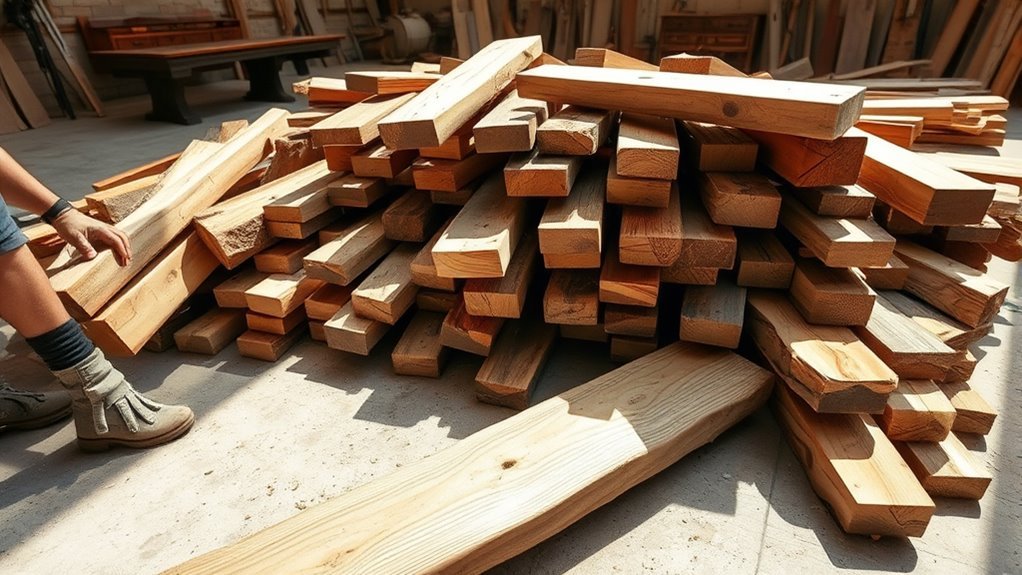
How can you tell if wood is recyclable? Generally, most untreated, clean, and unpainted wood qualifies for recycling. If the wood looks natural and hasn’t been painted, stained, or pressure-treated, it’s likely recyclable.
Most untreated, clean, and unpainted wood is recyclable when it looks natural and hasn’t been treated or stained.
Recycling facilities sort wood by grade, with Grade A being the cleanest and most suitable for reuse. These facilities use shredders and magnets to break down scrap wood into chips or panel products.
By recycling wood, you help reduce landfill waste and support eco-friendly products. Recycled wood can be turned into mulch, woodchips, furniture, or even biomass fuel.
Just remember, if the wood is contaminated or treated, it usually can’t go into recycling and needs proper disposal. Checking the wood’s condition guarantees you’re recycling responsibly and effectively.
Reasons Wood Should Not Go in Curbside Recycling
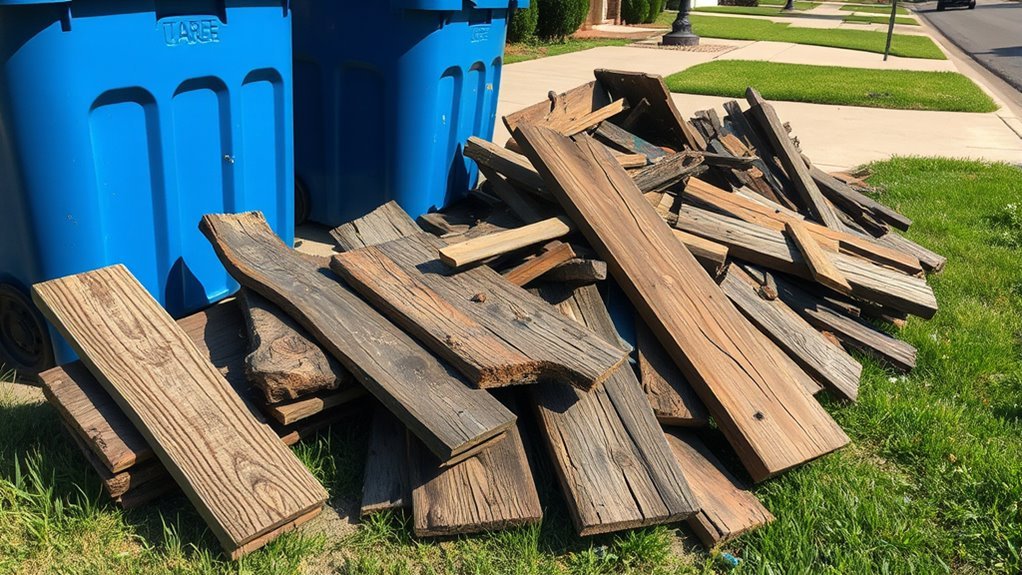
While recycling clean, untreated wood is beneficial, not all wood belongs in your curbside recycling bin. Curbside programs usually accept paper, plastics, and glass—not bulky or organic materials like wood.
When you toss wood into these bins, it contaminates the recycling stream, which is meant to be residue-free. Most Material Recovery Facilities (MRFs) aren’t equipped to handle wood, so it can cause processing issues or even spoil other recyclable materials.
Instead of being recycled, the wood you place curbside often ends up in landfills. To support effective wood recycling efforts, it’s better to take wood to designated facilities where it’s properly processed into mulch or woodchips.
This way, it doesn’t disrupt the recycling system or contribute to waste. It’s a simple step that helps keep the whole process running smoothly!
What Types of Wood Can Be Recycled?
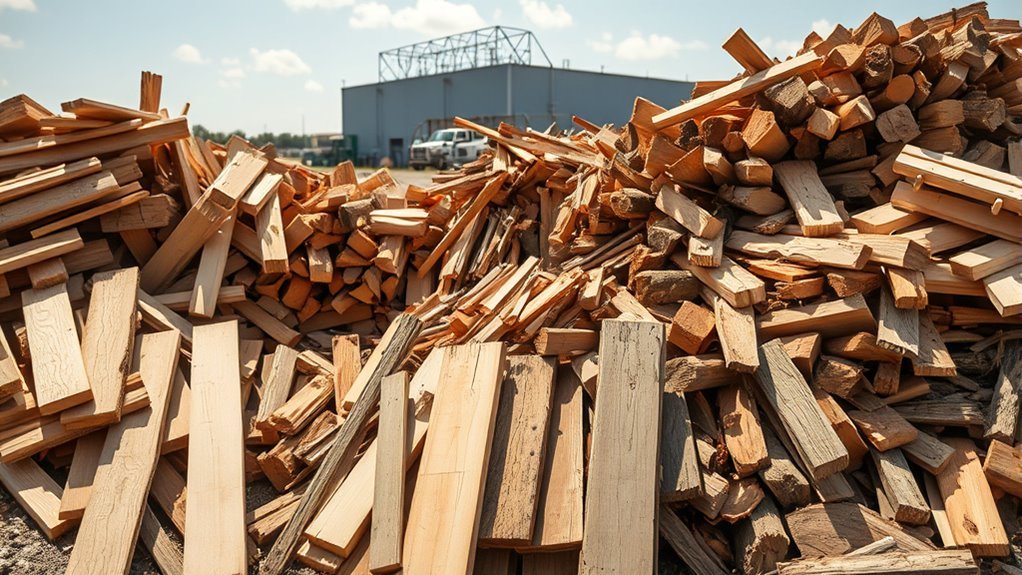
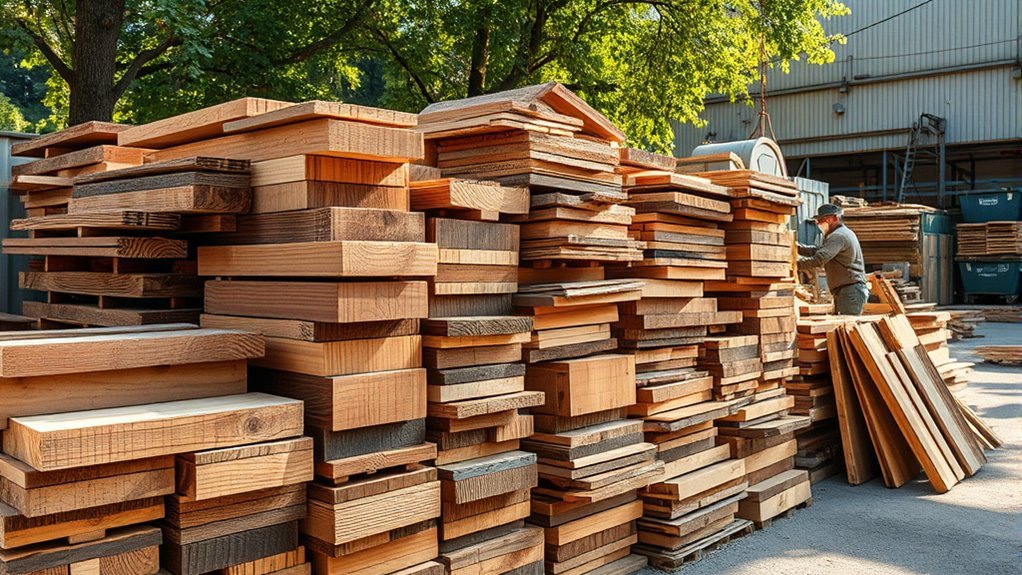
You can recycle untreated, unpainted wood like pallets, branches, and clean construction scraps.
However, wood that’s painted, stained, or chemically treated usually isn’t accepted due to contamination.
It’s important to separate suitable wood from unsuitable materials before recycling to guarantee proper processing.
Suitable Wood Types
Because recycling wood depends on its condition and type, you’ll want to focus on untreated, clean wood like shipping pallets, branches, and construction lumber. Untreated wood is ideal because it’s free from harmful chemicals, stains, and paint that can interfere with recycling processes.
You can also recycle plywood and untreated wood from construction projects, as long as they’re clean and free of nails, staples, or other fasteners. Before recycling, make sure the wood isn’t pressure-treated or chemically altered, since those types typically aren’t accepted.
Unsuitable Wood Materials
Not all wood qualifies for recycling, especially when it’s been altered or damaged. You should avoid recycling wood that contains chemical treatments or biological decay. These materials can contaminate the process and harm the environment.
Here are some wood types you’ll want to exclude from your recycling efforts:
- Pressure-treated wood, due to harmful chemicals
- Painted, stained, or varnished wood with surface coatings
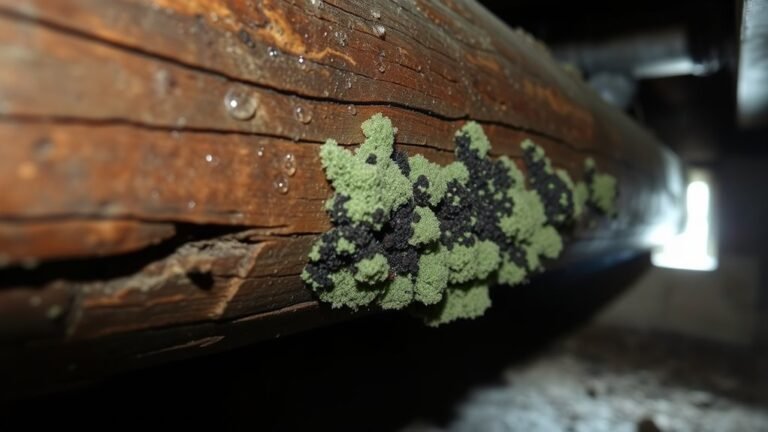
- Wood rotted by fungi, insects, or other biological factors
- Chemically treated or hazardous wood waste, especially pre-2007
If you come across these wood materials, it’s best to dispose of them following local regulations. This helps prevent environmental damage.
Stick to untreated and clean wood types to guarantee your recycling efforts are effective and safe.
How Clean and Treated Wood Differ in Recycling
When you recycle clean wood, it’s easier to turn it into products like mulch or paneling since it’s free of chemicals.
Treated wood, however, contains preservatives or paints that complicate recycling and often require special disposal. You’ll need to handle treated wood carefully because it’s usually classified as hazardous waste.
Most recycling facilities won’t accept treated wood, so you have to be extra cautious with it.
Clean Wood Recycling
How can you tell if wood is suitable for recycling? Clean wood is untreated, unpainted, and free from chemical processing. That makes it perfect for recycling.
You can recycle clean wood because it can be safely processed into mulch or other products. Plus, it doesn’t pose any health or environmental risks.
Look for these signs to identify clean wood:
- No paint, stains, or finishes
- No chemical treatments like pressure-treating
- Free of nails, screws, or other contaminants
- No signs of rot or mold
Treated Wood Disposal
Why can’t treated wood be recycled like clean wood? Treated wood contains chemical preservatives such as arsenic, copper, and chromated copper arsenate (CCA). These chemicals make it unsuitable for standard recycling processes.
Unlike clean, untreated wood that you can easily recycle into mulch or other sustainable products, treated wood demands special disposal methods to prevent environmental harm. You can’t just toss treated wood into regular recycling streams because it risks contaminating the entire batch.
Instead, you must take treated wood to designated hazardous waste facilities equipped to handle these chemicals safely. By keeping treated wood separate and disposing of it properly, you help avoid chemical contamination and ensure compliance with environmental regulations.
This distinction is really important for responsible wood recycling and protecting the environment. So, always make sure you know where to take your treated wood for safe disposal!
Where to Take Wood for Recycling and Disposal
Although you might be tempted to toss old wood in your curbside recycling bin, most facilities can’t process it properly. It could also contaminate other recyclables.
Instead, take untreated, clean wood to designated locations for recycling or disposal. Wooden pallets in good condition can often be reused or recycled at places like the Drop-Off Station or Recovery Yard.
Here’s where to take wood for recycling and disposal:
- Drop-Off Station or Recovery Yard for pallets and wood waste
- 2950 E. Ellsworth Road and 7891 Jackson Road for proper wood recycling
- Facilities that turn wood into mulch, woodchips, or other products
- Recovery Yard, which charges fees based on volume (per cubic yard)
Avoid putting wood in your recycling bin to keep the process efficient and contamination-free. It really helps make sure everything gets recycled the right way.
Creative Ways to Reuse Old Wood
When you have old wood lying around, you can transform it into beautiful and functional pieces that breathe new life into your space. Using recycled wood, you can craft furniture like tables, shelves, or decorative accents that add character and extend the material’s lifespan.
You might also create garden planters, birdhouses, or picture frames, turning waste into charming DIY projects. Recycled wood can be cut and assembled into unique wall art or signage, giving your home a rustic touch.
For practical uses, upcycle discarded wood into coat racks, candle holders, or storage crates. These creative approaches not only enhance your décor but also help reduce landfill waste. Plus, they promote sustainability and resource efficiency through smart reuse of recycled wood.
How Old Wood Becomes Mulch and Woodchips
Before recycled wood can be turned into mulch and woodchips, it goes through a thorough cleaning and processing phase at specialized facilities. During wood recycling, old wood is cleaned to remove nails, staples, and other contaminants.
Then, it’s shredded into small pieces, screened, and graded for various uses. This process guarantees the mulch and woodchips are safe and effective for gardening and landscaping.
Here’s what happens during wood recycling:
- Old wood is cleaned and treated to eliminate metal and debris
- Wood is chipped into small, manageable pieces
- Mulch and woodchips are sorted by size and quality
- Finished products support soil health, erosion control, and sustainable landscaping
What You Need to Know About Wood Recycling Rules in 2023/2024
Since wood recycling rules have evolved in 2023/2024, you need to understand how different wood types are classified and handled to comply with regulations and recycle responsibly. Wood waste is now sorted into grades A through D, based on treatment and contamination levels.
Grade A wood, which is untreated and clean, can be recycled into products like mulch or panel boards. However, treated or chemically altered wood, such as pressure-treated lumber, is classified as hazardous waste and must be disposed of properly.
The Wood Waste Regulations require you to inspect, separate, and manage contaminated or hazardous wood waste separately from clean wood. Following these updated rules guarantees you handle wood waste safely and support environmentally sound recycling and disposal practices.
Benefits of Wood Recycling for the Environment and Economy
Understanding how to classify and manage wood waste properly sets the stage for appreciating the significant benefits wood recycling brings to both the environment and the economy. When you recycle wood, you reduce landfill waste and cut down on harmful methane emissions, which improves environmental health.
Plus, recycled wood supports sustainability by being turned into mulch, biomass fuel, or panels. This helps conserve natural forests and lowers the demand for new timber.
Here’s why wood recycling matters:
- Decreases environmental pollution and methane emissions
- Promotes sustainable resource use through repurposing
- Saves money by reducing disposal and manufacturing costs
- Supports conservation efforts by lowering timber demand
Frequently Asked Questions
Can Wood Go on the Recycle Bin?
No, you can’t put wood in your curbside recycle bin. Instead, take clean, untreated wood to special recycling centers.
This helps prevent contamination and makes sure the wood gets properly processed into mulch or other useful materials. It’s a better way to recycle wood and keep things running smoothly.
What Types of Wood Can’t Be Recycled?
Imagine tossing old, painted fence boards into your recycling bin—you shouldn’t. You can’t recycle treated, painted, or chemically coated wood since it contains hazardous materials that contaminate recycling processes and harm the environment.
Always check before recycling wood. It’s better to be safe and avoid causing problems for recycling facilities. Just a little extra care goes a long way!
How Can I Dispose of Old Wood?
You can dispose of old wood by donating pallets in good condition, or taking discarded wood to Drop-Off Stations or Recovery Yards. Make sure to remove nails and contaminants first.
Also, avoid putting wood in curbside bins. It’s just not the right place for it.
What Are 5 Things That Cannot Be Recycled?
Some things you can’t recycle include plastic bags, greasy pizza boxes, and dirty aluminum foil. Also, plastic-coated paper and hazardous waste like batteries are off-limits.
Don’t let these items throw a wrench in your recycling efforts. Just be sure to dispose of them properly instead.
Conclusion
You might think wood recycling is too complicated or not worth the effort, but it’s actually easier and more beneficial than you expect. By recycling or creatively reusing wood, you’re reducing landfill waste and helping the environment thrive.
Even treated wood can often be recycled if you know where to take it. So, don’t toss that old wood—give it new life and make a positive impact today!
Recycling wood is a simple way to support sustainability and conserve natural resources. Whether it’s pallets, furniture, or scraps, finding ways to recycle wood helps cut down on pollution and saves energy. So next time you wonder, “Can wood be recycled?” remember it’s definitely possible and worth doing. Taking these small steps not only benefits the environment but also promotes a cleaner, greener future for all.