Can Wood Conduct Electricity?
You can’t rely on dry wood to conduct electricity because it lacks moisture and free ions needed for current flow. Dry wood is actually a pretty good insulator in most cases.
However, once wood absorbs water, its conductivity rises sharply, turning it into a potential electrical hazard.
Wet wood allows electricity to move easily, increasing risks of shocks and fire. Moisture, environmental conditions, and damage all impact this change.
So, it’s important to understand when wood becomes dangerous and how to stay safe around it.
If you want to learn more about how wood’s conductivity changes and what that means for electrical safety, there’s definitely more to explore. It’s a surprising topic that affects everyday situations more than you might think!
Key Takeaways
- Dry wood is an excellent insulator because it lacks free electrons and moisture needed to conduct electricity.
- Moisture in wood introduces free ions, significantly increasing its electrical conductivity.
- Wood conductivity rises sharply above 20% moisture content due to water providing conductive pathways.
- Wet or damp wood can conduct electricity and pose serious safety hazards, especially near power sources.
- Always treat wet wood as a potential electrical hazard and avoid relying on it for insulation.
Why Dry Wood Doesn’t Conduct Electricity
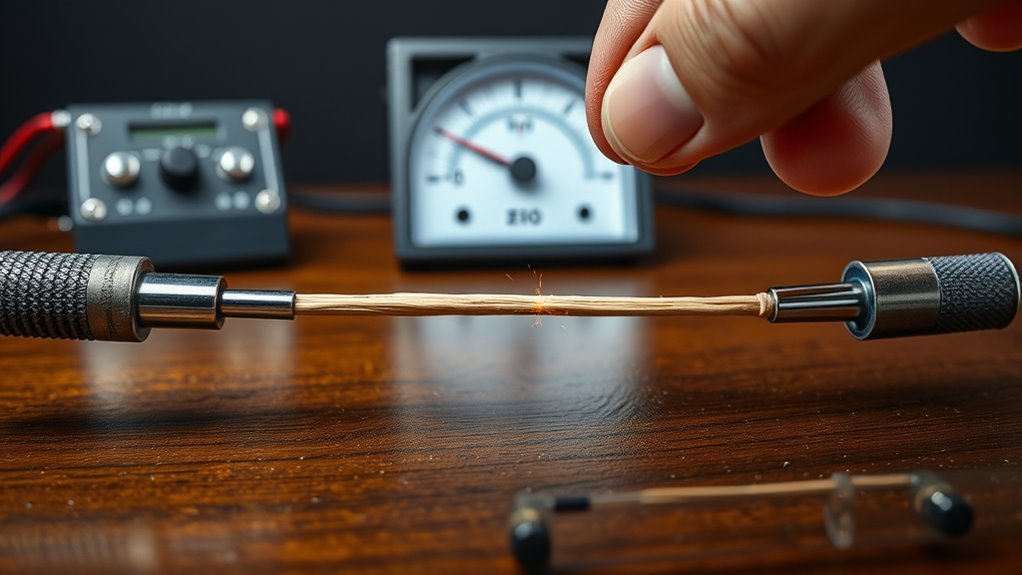
Although wood is a natural material, dry wood doesn’t conduct electricity because it lacks free electrons and moisture, both essential for carrying electrical current. When you look closely at dry wood, you’ll find its fibrous cell structure doesn’t have free charge carriers needed to transmit electricity.
Without water molecules, dry wood offers no conductive pathway for the current to flow. This absence of moisture makes dry wood an excellent insulator.
If you ever need to prevent electrical flow, dry wood is a reliable choice because it resists conduction rather than allowing it. So, when dealing with electrical applications, dry wood’s poor conductivity serves as a protective barrier, keeping you safe from unwanted electrical currents.
How Moisture Makes Wood Conduct Electricity
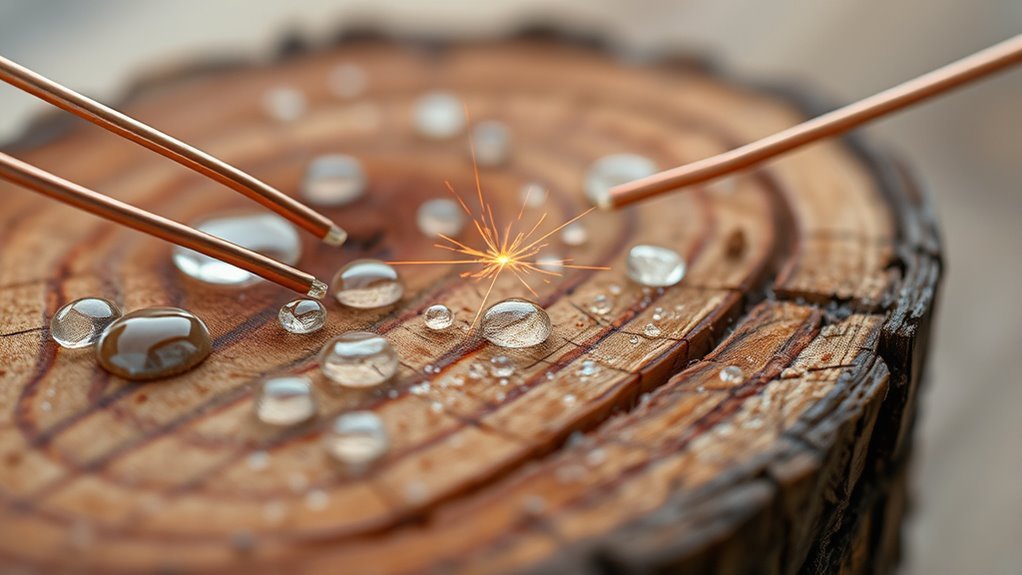
When moisture enters wood, it introduces water molecules that help carry electrical current. You’ll notice that wet wood contains dissolved salts and minerals in the water, which generate free ions and electrons.
These charged particles enable electricity to flow through the wood, reducing its resistance. As the moisture content rises above about 20%, wood becomes markedly more conductive.
Charged particles in moist wood lower resistance, making it significantly more conductive above 20% moisture content.
The more water present, the easier it is for electrical current to pass through. So, when you come across wet wood, you’re dealing with a natural conductor rather than an insulator.
This transformation happens because the water acts as a medium for charge carriers, turning otherwise non-conductive wood into a pathway for electricity. Understanding this helps you see why moisture is key to wood’s electrical behavior.
When Does Wood Actually Conduct Electricity?
You’ll find that dry wood doesn’t conduct electricity because it lacks moisture and free electrons.
However, when wood contains water, it can allow electricity to pass through, making its conductivity vary with its condition.
Understanding when wood acts as an insulator or a conductor depends largely on how much moisture it holds.
Moisture’s Effect On Conductivity
Since wood itself isn’t a good conductor, it only carries electricity when moisture is present. Wet wood becomes conductive because water inside it contains dissolved minerals and ions that help electrons flow. The more moisture in the wood, the better it conducts electricity.
This means freshly cut or soaked wood is more likely to carry electrical current than dry wood. Environmental factors like rain or humidity can temporarily make wood wet enough to conduct electricity.
Here’s what affects wood’s conductivity due to moisture:
- Amount of moisture in the wood
- Presence of dissolved minerals and ions in the water
- Whether the wood is freshly cut or soaked
- Environmental conditions like rain and humidity
Understanding this helps you see when wood might unexpectedly conduct electricity. It’s pretty handy to know, especially if you’re working with wood around electrical sources!
Dry Wood Insulation
How well does dry wood resist electricity? Dry wood is an excellent insulator because it contains very few free electrons, which means it resists electrical flow effectively.
When wood is dry, moisture is absent, preventing the formation of conductive pathways within its fibrous structure. As a result, dry wood doesn’t conduct electricity under normal conditions and is often used for electrical insulation.
You can rely on dry wood’s insulating properties unless it becomes wet or damp. Increased moisture changes its ability to conduct electricity, but this is uncommon in untreated, dry wood.
Condition-Dependent Electrical Behavior
Although wood usually acts as an insulator, it can conduct electricity when its moisture content rises. When wood gets wet, water and minerals inside create pathways for electrical currents to flow, turning it into a conductor.
You should be aware that wood’s conductivity depends heavily on environmental conditions. Here are key factors that influence when wood conducts electricity:
- Wet conditions like rain or high humidity increase moisture content.
- Freshly cut wood often contains more water, enhancing conductivity.
- Dry wood has few free electrons, making it a poor conductor.
- Damage or exposure to water raises wood’s electrical response.
Which Environmental Factors Affect Wood’s Conductivity?
When you consider wood’s ability to conduct electricity, environmental factors like moisture, humidity, and temperature play crucial roles. Moisture is the key player because it provides liquid pathways that help electric current flow through the wood. The more moisture present, the better wood conducts electricity.
Humidity also affects this by increasing the moisture content in the wood, especially in damp or rainy conditions. Temperature impacts conductivity indirectly by altering how much moisture wood retains—warmer temperatures can dry wood out, while cooler, humid conditions keep it moist.
Additionally, minerals dissolved in the absorbed water improve conductivity. So, if you want to understand wood’s electrical behavior, pay close attention to how wet or dry the environment is, since moisture is what really makes the difference.
How Electricity Moves Through Trees and Wood During Lightning Strikes
Why does lightning often target trees during storms? It’s because wet wood inside trees contains moisture and minerals that increase electrical conductivity, making them better pathways for lightning’s massive energy.
When lightning strikes, it seeks the path of least resistance, often choosing tall, wet trees.
Here’s what happens during a strike:
- Electricity travels through the wet wood and sap.
- The intense heat causes sap to boil rapidly.
- Boiling sap creates pressure that cracks bark.
- The tree can suffer splits, limb falls, and other damage.
Normally, wood resists electricity, but moisture changes that. So, during storms, wet trees become temporary conductors, allowing lightning to pass through and cause damage.
Common Myths About Wood and Electricity
Even if you’ve heard that wood is a reliable insulator, that belief doesn’t hold up in all cases. Many people think dry wood can’t conduct electricity, but this isn’t entirely true.
Wood’s ability to conduct depends heavily on its condition. When wood is wet or damp, it can carry electrical current, making it unsafe near electrical sources.
Wood’s conductivity varies with moisture, becoming a risk when wet or damp near electrical sources.
The misconception that wood is always safe ignores how moisture changes its properties. If you assume wood’s insulating power works in every situation, you risk accidents, especially with untreated or moist wood.
Understanding these myths helps you avoid unsafe practices and recognize that wood’s conductivity varies. So, don’t rely on wood’s dry-state reputation—always consider its moisture level around electricity.
Why Wet Wood Is Risky for Electrical Safety
Moisture in wood changes its electrical properties considerably, turning what you might consider an insulator into a potential conductor. Wet wood contains water that allows electricity to flow, increasing the risk of shocks.
When you’re around wet wood, it can unintentionally connect electrical sources to you or other objects, creating hazardous conditions. Here are key reasons why wet wood is risky for electrical safety:
- Water in wet wood boosts its electrical conductivity, making shocks more likely.
- Wet wood can create dangerous bridges between live wires and people.
- Moisture can trigger electrical arcs and short circuits, raising fire risks.
- Handling wet wood without caution can lead to severe electrical accidents.
Always be aware that wet wood isn’t just damp—it can be a hidden electrical hazard.
How to Stay Safe Around Wood and Electrical Sources
Because wood can become a conductor when wet or damp, you should always treat it with caution around electrical sources. Always assume that wet wood poses a shock hazard, so keep a safe distance from wooden structures near electrical equipment.
Never rely on wood as insulation; instead, use proper materials designed to prevent electrical contact. Before inspecting or handling wooden objects close to electrical sources, make sure to turn off the power supply to avoid accidents.
If you need to trim trees or maintain wooden structures near power lines, contact qualified professionals who know how to work safely in these conditions. Staying aware and cautious will help you avoid electrical shocks and keep you safe around wood and electrical sources.
Frequently Asked Questions
Can Wood Hold Static Electricity?
Yes, you can hold static electricity on wood, especially when it’s dry and rough. You’ll notice the charge builds up but won’t flow through easily.
Moisture reduces this effect by letting the charge dissipate faster. So, if the wood is damp, it won’t hold static electricity as well.
What Are the Top 3 Best Conductors?
Imagine a race where silver, copper, and gold sprint effortlessly—silver wins with unmatched speed, copper follows closely, and gold shines steadily.
You’ll find these top three metals conduct electricity best, powering your world with minimal resistance. Cool, right?
What Are 20 Examples of Insulators?
You can find insulators in rubber, glass, plastic, wood, ceramic, porcelain, mica, air, paper, cotton, fiberglass, silicone, nylon, wool, dry wood, asphalt, resin, oil, quartz, and some plastics like PVC.
These materials are great at stopping electricity from flowing through them. So, they help keep us safe by preventing electric shocks.
Plus, they’re used in all sorts of everyday items and electrical equipment. That’s why it’s important to know about these insulators!
Is Wood a Good Conductor of Electricity?
No, wood isn’t a good conductor of electricity. You’ll find it mostly acts as an insulator, especially when dry.
But if it’s wet or damp, it can conduct electricity more easily, so be careful. Always keep that in mind around wood and electricity!
Conclusion
Now that you know dry wood won’t zap you like a Tesla coil, remember that moisture changes everything. When wood’s wet, it becomes a sneaky conductor, especially during storms or near electrical sources.
So, don’t let your curiosity turn into a jousting match with electricity—stay cautious around damp wood. Just like knights once avoided rusty armor, you should steer clear of wet wood to keep yourself safe from unexpected shocks.
In conclusion, while dry wood is a poor conductor of electricity, wet wood can be dangerous. Moisture allows electrical currents to pass through, making wet wood risky around power lines or electrical devices. Always be mindful of the wood’s condition before handling it near electricity. Staying safe means understanding that wood’s ability to conduct electricity depends largely on its moisture content. So, remember: dry wood is generally safe, but wet wood can conduct electricity and pose a serious hazard.