Can You Burn Coal in a Wood Stove?
You shouldn’t burn coal in a wood stove because it’s not designed for coal’s high heat and specific airflow needs. Wood stoves lack grates and proper ventilation required for coal to burn safely and efficiently.
Using coal can cause damage, increase harmful emissions, and heighten fire risks.
If you accidentally burn coal, you’ll need to take steps to protect your stove and home. Keep exploring to understand why coal and wood stoves don’t mix well. It’s important to know the risks so you can keep your heating safe and effective.
Key Takeaways
- Most wood stoves aren’t really made for burning coal because they don’t have the right airflow, grates, or heat-resistant materials.
- Trying to burn coal in a wood stove can actually damage the stove, create more soot, and lead to safety issues like chimney fires or toxic fumes.
- Coal releases harmful stuff like sulfur dioxide and carbon monoxide when it burns, which isn’t great for your health or the environment.
- If you accidentally burn coal, stop right away. Take out the coal, clean your stove, and get a professional to check for any damage.
- It’s best to stick with fuels meant for wood stoves, like seasoned hardwood. If you want to burn coal safely, you’ll need a stove that’s designed for multiple fuels.
Can You Burn Coal in a Wood Stove?
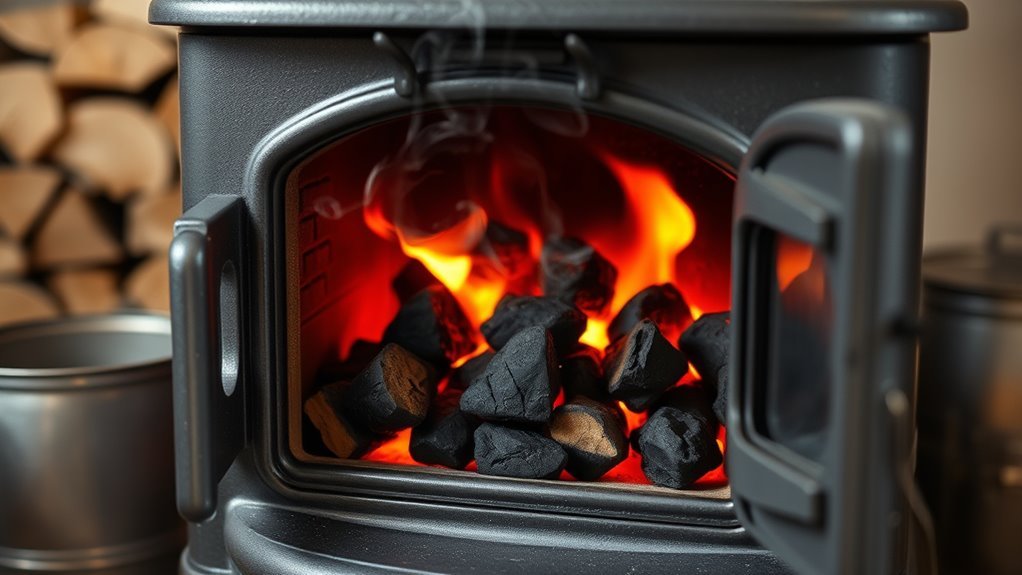
Although it might seem convenient, you shouldn’t burn coal in a wood stove because these stoves aren’t built for it. Wood stoves lack the proper airflow and grate needed for efficient coal combustion.
When you try burning coal in a wood stove, the airflow isn’t controlled from below, which is essential for burning coal properly. This improper combustion can cause damage to the stove by increasing soot buildup and corrosion from coal’s sulfur content.
Besides damaging your wood stove, burning coal this way poses serious safety risks, including incomplete combustion and potential hazards from overheating. To keep your stove safe and working well, stick to fuels designed for it and avoid burning coal unless your stove is specifically made or modified for that purpose.
Why Wood Stoves Aren’t Made for Coal
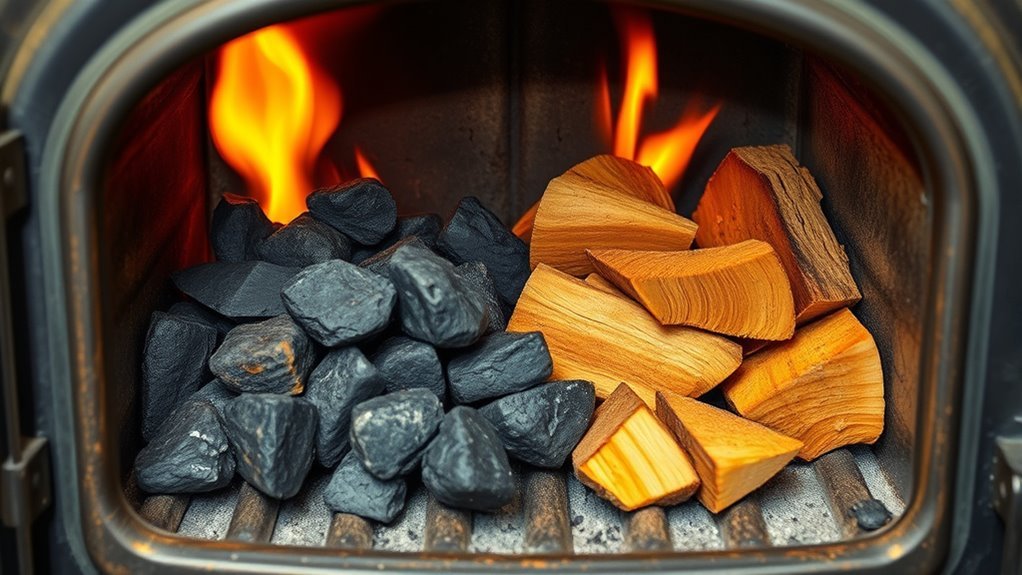
Because wood stoves are designed specifically for burning wood, they don’t have the necessary features to handle coal. Wood stoves lack the proper airflow system and grate required for effective coal burning, which needs different combustion conditions than wood.
When you burn coal in a wood stove, the structure isn’t built to withstand the higher heat output, leading to potential damage. Ash from coal is denser and more corrosive, and most wood stoves aren’t equipped to manage this residue properly.
Without the right airflow and ash handling, combustion becomes incomplete, increasing soot buildup and safety risks. So, using coal in a wood stove can harm your stove’s integrity and reduce its efficiency, making it unsuitable for this fuel type.
How Anthracite Coal Burns Differently in Wood Stoves
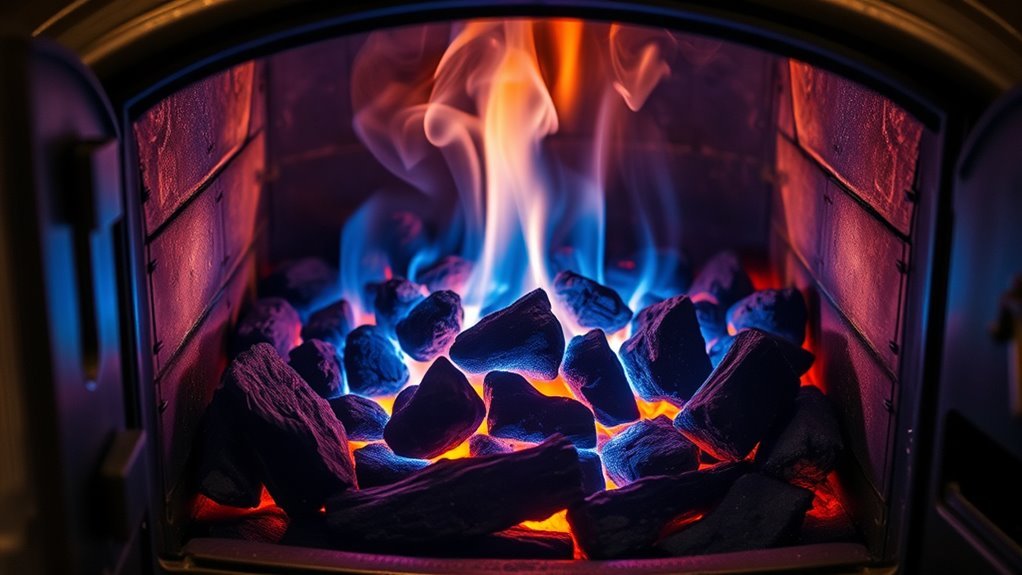
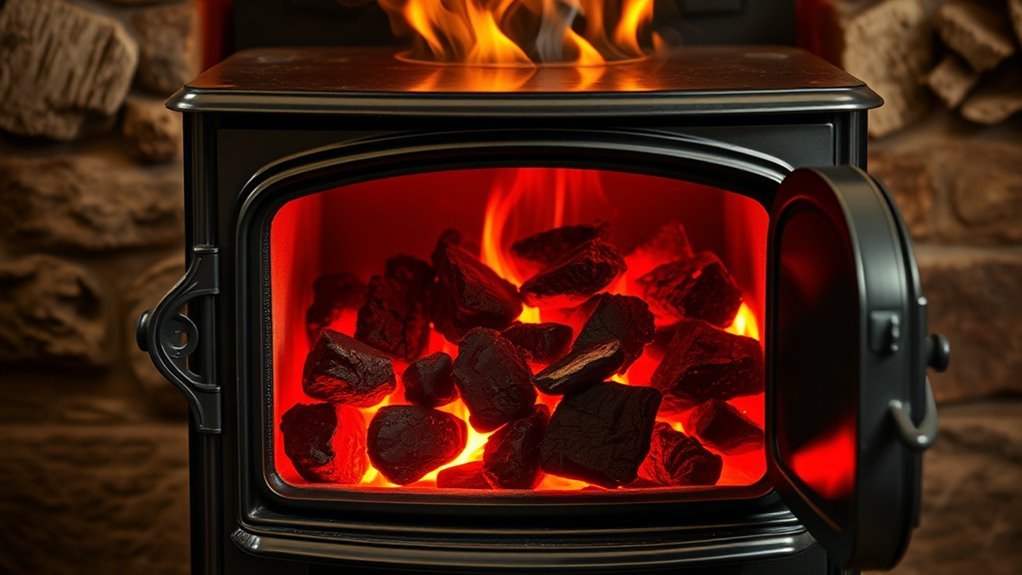
When you try to burn anthracite coal in a standard wood stove, you’ll quickly notice it behaves differently than wood. Anthracite coal has a high carbon content and low volatile matter, so it requires a dedicated grate and proper airflow from below to sustain combustion.
Most wood stoves lack these features, causing the fire to extinguish quickly. To achieve a steady burn, anthracite pieces need close contact, which helps maintain the combustion process.
Without adequate draft control and sufficient airflow, the coal won’t burn efficiently, producing minimal heat and poor combustion. Since standard wood stoves aren’t designed with these needs in mind, anthracite coal just won’t perform well unless you make specific adjustments to airflow and grate setup.
Wood Stoves vs. Multi-Fuel Stoves: Coal Burning Differences
Understanding why anthracite coal struggles in a standard wood stove leads us to compare wood stoves and multi-fuel stoves in their ability to burn coal. A typical wood stove lacks the grate and specialized airflow system needed for efficient coal burning. Without these, the combustion environment isn’t suitable, causing incomplete burning and excessive ash content.
In contrast, a multi-fuel stove features a raised grate and controlled airflow, allowing bottom-up air circulation that supports coal’s higher heat and residue output. This design guarantees complete combustion and manages ash buildup effectively.
If you want to burn coal safely and efficiently, a multi-fuel stove provides the right setup. Meanwhile, a wood stove’s design limits its coal burning capability and longevity. So, if coal is your fuel of choice, it’s worth considering the right stove for the job.
Risks of Burning Coal in Wood Stoves
You shouldn’t burn coal in a wood stove because it can damage the stove’s components due to higher heat and corrosive buildup. It also produces more harmful emissions and toxic fumes that your stove isn’t designed to handle.
Ignoring these risks can lead to safety hazards like chimney fires and carbon monoxide poisoning. So, it’s really best to stick to the fuels your stove was made for. That way, you keep your home safe and your stove in good shape.
Stove Damage Risks
Why risk damaging your stove by burning coal in it? Wood stoves aren’t designed like a coal stove to handle coal’s intense heat and chemical byproducts.
Burning coal in a wood stove often leads to incomplete combustion, causing soot buildup and residues that accelerate stove damage.
Coal combustion produces acids that cause corrosion and metal deterioration inside your stove, weakening its structure over time. This damage can warp metal parts and increase the risk of a chimney fire.
Plus, using coal in a wood stove usually voids your warranty, leaving you responsible for costly repairs or replacement.
To protect your stove’s longevity and safety, it’s best to avoid burning coal unless your stove is specifically built for it.
Emission and Safety Concerns
How safe is it to burn coal in a wood stove? It’s risky. Coal combustion in a wood stove produces higher emissions of pollutants like sulfur dioxide and particulate matter, increasing health risks.
Incomplete burning can release dangerous gases such as carbon monoxide, which is especially hazardous indoors. Using coal in a stove not built for it also raises safety issues, including creosote buildup that can spark chimney fires.
The intense heat and residue from coal can cause significant stove damage, compromising its safe operation. Plus, unpredictable fires and flare-ups can expose you to toxic fumes.
For your safety and health, it’s best to avoid burning coal in a wood stove designed solely for wood. It’s just not worth the risk.
Environmental Concerns When Burning Coal
When you burn coal in a wood stove, you release higher levels of harmful pollutants like sulfur dioxide and carbon monoxide. These emissions can not only harm the environment but also put you at risk of violating local air quality laws.
It’s important to understand how coal burning impacts both your health and the regulations in your area. Being aware can help you make safer choices and stay compliant with local rules.
Increased Pollutant Emissions
Although coal might seem like a convenient fuel, burning it in a wood stove releases considerably higher levels of harmful pollutants such as sulfur dioxide, carbon monoxide, and particulate matter. You’ll notice more soot and particulates, which severely degrade air quality.
This increased pollutant emission worsens the environmental impact, contributing to acid rain and respiratory issues for those nearby. Coal combustion also generates more smoke and tar than wood, amplifying pollution. Here’s a quick comparison:
| Pollutant | Wood Stove Emissions | Coal Stove Emissions |
|---|---|---|
| Carbon Monoxide | Moderate | High |
| Particulates (Soot) | Low | Very High |
| Sulfur Dioxide | Negligible | Significant |
Regulatory and Legal Issues
Because coal produces higher levels of harmful pollutants, burning it in a residential wood stove often violates local emissions regulations. You need to understand that coal combustion releases sulfur dioxide and particulate matter, which many environmental laws strictly control to protect air quality.
In fact, numerous regions enforce stove restrictions that ban or limit coal use in non-certified appliances like standard wood stoves. If you burn coal without proper permits or modifications, you risk exceeding permitted emissions levels, leading to fines or legal penalties.
Regulatory agencies require compliance with specific permits and stove standards designed for coal, which typical wood stoves don’t meet. So, before considering coal, make sure you check local regulations and avoid violating environmental laws by using coal improperly in your wood stove.
How Burning Coal Can Damage Your Stove and Chimney
If you choose to burn coal in a wood stove, you risk serious damage to both the stove and chimney. Coal produces sulfuric acid during combustion, which causes corrosion that eats away at metal parts in your stove and chimney.
The higher temperatures from burning coal increase creosote buildup, raising the chance of dangerous chimney fires. Plus, coal leaves behind dense residue and ash that can clog airways and accelerate wear on stove components not designed for coal.
This buildup not only damages your equipment but can also block airflow, leading to poor combustion and toxic fumes inside your home. Using coal in a wood stove not built for it can void warranties and result in costly repairs due to this extensive damage and deterioration.
Adding Small Coal Pieces to a Wood Stove
When you add small coal pieces to a wood stove, you’ll quickly find they don’t burn well on their own. Small coal requires a dedicated coal-burning environment with proper airflow from below, which standard wood stoves lack.
Without a grate and controlled airflow, combustion is incomplete, causing the fire to die out quickly. Trying to burn small coal in a wood stove not only limits heat output but also risks increased creosote buildup and potential stove damage.
For effective and safe coal burning, your stove must be compatible with coal fuels and designed to manage airflow properly. Ignoring stove compatibility and fire safety can lead to inefficient combustion and hazardous conditions, so it’s best to avoid adding small coal pieces to a wood stove.
Safe Fuel Alternatives to Burning Coal in Wood Stoves
Although you might be tempted to burn coal in your wood stove, choosing safe fuel alternatives like seasoned hardwoods or wood briquettes will protect your stove and improve heat efficiency.
Standard wood stoves aren’t designed for coal; instead, use multi-fuel stoves if you want to burn anthracite coal or smokeless fuels reliably.
Always follow stove guidelines to ensure fuel safety and avoid damage.
| Fuel Type | Heat Efficiency | Stove Compatibility |
|---|---|---|
| Seasoned Hardwoods | High | Wood Stoves |
| Wood Briquettes | Cleaner Burn | Wood Stoves |
| Anthracite Coal | Very High | Multi-Fuel Stoves |
Choosing the right fuel keeps your home warm and your stove safe.
What to Do If You Burn Coal by Mistake
Since coal isn’t meant for wood stoves, you should stop adding coal immediately once you realize the mistake. Leaving coal to burn can cause damage due to excessive heat and increased residue buildup. To protect your wood stove and guarantee safety, act quickly.
Remove any remaining coal to prevent overheating. Clean out the ash and residue promptly, as coal generates more than wood.
Watch for signs of damage like warping or corrosion. Schedule a professional inspection of your stove and chimney to confirm safety.
After handling coal misuse, switch back to wood fuel to maintain efficiency and avoid voiding warranties. Taking these steps helps preserve your wood stove’s lifespan and ensures safe operation.
Frequently Asked Questions
Can You Burn Wood and Coal at the Same Time in a Multi-Fuel Stove?
Yes, you can burn wood and coal at the same time in a multi-fuel stove. Just make sure to manage airflow properly, use the right coal type, and follow your stove’s instructions for safe, efficient heating.
It’s pretty straightforward once you get the hang of it. Just keep an eye on the fire and adjust things as needed to keep everything burning smoothly.
What Is the 3:2-10 Rule for Wood Stoves?
Think of a balanced recipe: the 3:2-10 rule means you use three parts seasoned wood, two parts kindling, and ten parts air to feed your stove.
This combo keeps your fire burning hot, clean, and efficient. It’s all about giving your wood stove the right mix so it works its best.
How Do You Operate a Coal Stove?
You operate a coal stove by loading coal evenly, adjusting airflow below with the grate, and controlling the draft via the ash pan or damper.
Start small, add larger pieces, and clean regularly to keep it safe and efficient.
It’s pretty straightforward once you get the hang of it. Just take it step by step and don’t rush the process.
What Are the Downsides of Using a Coal Stove?
Imagine your coal stove suddenly leaks carbon monoxide, putting your family at risk. You’ll face frequent maintenance due to corrosive ash.
It also means higher pollution inside your home, which isn’t great for your health. Plus, there are safety hazards like unexpected chimney fires if you don’t stay vigilant.
Conclusion
You shouldn’t burn coal in your wood stove—it’s just not designed for it. For example, imagine you add anthracite coal to your stove to save money, but the intense heat cracks the stove’s firebrick and clogs your chimney with creosote buildup.
This can lead to costly repairs or even a dangerous chimney fire. Stick to seasoned wood or invest in a multi-fuel stove made for coal to keep your home safe and your stove intact.
Burning coal in a wood stove is risky because wood stoves don’t handle coal’s intense heat well. Using the right fuel is key for safety and efficiency. So, if you want to burn coal, make sure you have a stove designed for it. Otherwise, stick with wood to avoid damage and potential hazards. Keeping your wood stove in good shape means safer heating and fewer expensive repairs down the line.