How Hot Does a Wood Fire Get?
You can expect a wood fire to reach between 500°F and 1,500°F, depending on the type of wood, moisture level, and airflow. Hardwoods like oak burn hotter and longer, while softwoods burn cooler and faster.
Properly seasoned wood and good ventilation help your fire burn hotter and cleaner. Open fires can spike even higher in hotspots, while wood stoves maintain steady heat safely.
If you want to maximize efficiency and safety, there’s more to explore about managing your fire. Understanding how hot a wood fire gets can help you get the best warmth and performance from your burn.
Key Takeaways
- Wood fires typically reach temperatures between 500°F and 1,500°F depending on wood type and conditions.
- Hardwoods like oak burn hotter, often between 700°C and 900°C (1,292°F to 1,652°F).
- Properly seasoned wood produces hotter, more consistent fires, usually reaching 1,100°F to 1,500°F internally.
- Open wood fires can have hotspots up to 1,832°F, while enclosed wood stoves maintain steady temps around 700°F to 800°F.
- Adequate airflow and ventilation are essential to achieving and sustaining high wood fire temperatures.
It really makes a difference in how hot your fire gets!
Typical Temperature Ranges of Wood Fires
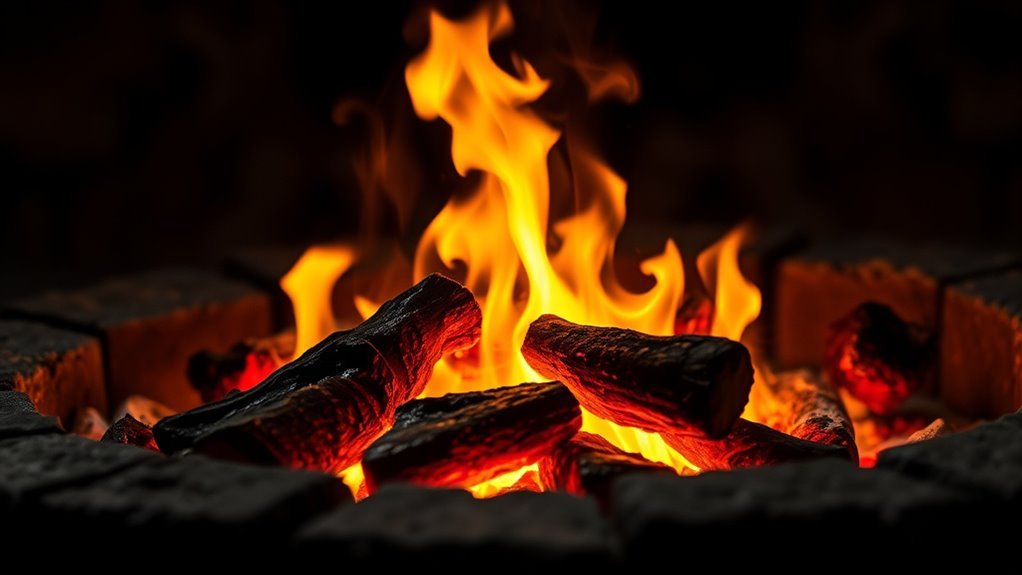
Although wood fires can vary widely, you’ll usually see temperatures between 500°F and 1,500°F depending on conditions like fuel type, moisture, and airflow.
When you light a wood fire, the temperature often peaks in hotspots, sometimes reaching up to 1,832°F in open fires. If you use an enclosed wood stove, the fire tends to maintain a steadier temperature, typically between 1,292°F and 1,472°F, thanks to controlled airflow.
The type of wood you burn also affects the temperature: properly seasoned hardwoods produce hotter, more consistent fires than wet or softwoods.
Understanding these typical temperature ranges helps you manage your fire better, ensuring it burns efficiently and safely.
Factors Affecting Wood Fire Temperatures
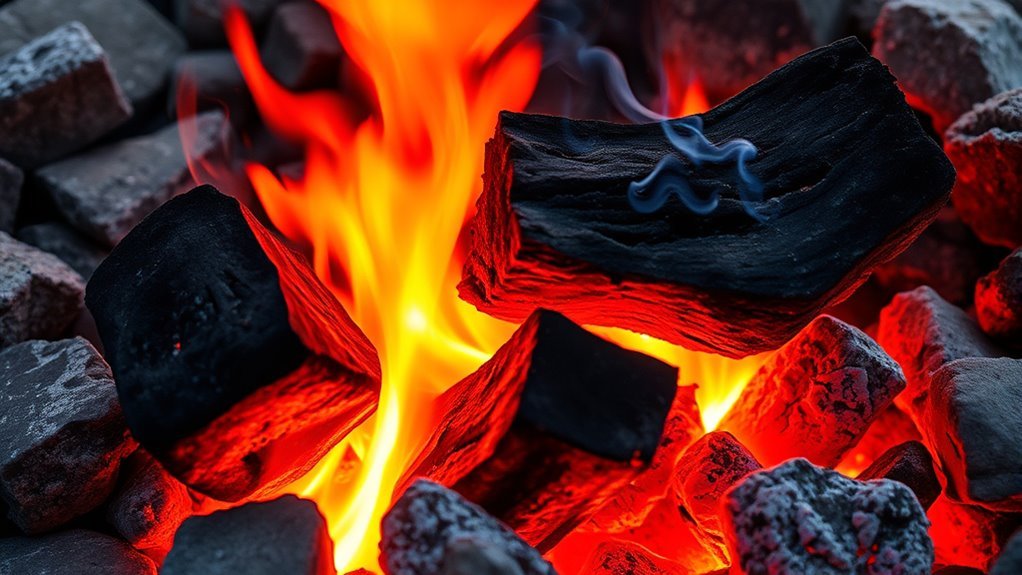
You’ll notice that the type of wood you use plays a big role in how hot your fire gets, with hardwoods burning hotter than softwoods.
Keeping your wood dry and well-seasoned also helps boost the temperature by allowing cleaner, more efficient combustion.
Plus, proper airflow and ventilation are key to feeding your fire the oxygen it needs to reach its peak heat.
Wood Type Impact
How much difference does the type of wood really make in your fire’s heat? Hardwoods like oak and maple burn hotter, reaching burn temperatures between 700°C and 900°C, while softwoods such as pine and spruce typically range from 500°C to 700°C.
You’ll notice that hardwoods, being denser, sustain hotter and longer-lasting fires compared to softer woods. Although moisture content plays an essential role, the wood type itself greatly affects how hot your fire will get.
Different species have varying chemical compositions, influencing their maximum combustion temperatures. So, if you want a hotter, more efficient fire, choosing seasoned hardwoods is your best bet.
This choice directly impacts your fire’s heat output and overall efficiency. It really makes a difference when you’re aiming for warmth and longevity in your fire.
Moisture Content Effects
When wood contains high moisture levels—especially above 20%—it drastically lowers your fire’s temperature by hindering efficient combustion. The moisture content forces the fire to use energy evaporating water instead of generating heat, so your fire won’t burn hotter.
Here’s what you need to know:
- Wet or green wood produces more smoke and creosote, reducing flame temperature.
- Moisture absorbs heat during evaporation, which limits energy for combustion.
- Using dried wood with low moisture content improves combustion efficiency.
- Dry, seasoned wood can reach internal firebox temperatures between 1,100°F and 1,500°F.
To maximize heat, always use properly dried firewood. Lower moisture content means a hotter, cleaner, and more efficient fire.
Airflow and Ventilation
Beyond using dry wood, managing airflow and ventilation plays a key role in how hot your fire burns. Proper ventilation ensures an ideal oxygen supply, allowing your fire temperature to reach between 700°C and 900°C in well-ventilated conditions.
If airflow is too low, flames smolder, lowering fire temperature and increasing smoke and creosote buildup. On the other hand, excessive airflow can cause the fire to burn too quickly, temporarily boosting flame height but reducing fuel efficiency.
You can control airflow by adjusting vents, dampers, or air intakes, directly affecting combustion quality. Striking a balance promotes complete combustion, resulting in hotter, cleaner fires with internal temperatures often exceeding 1,000°F.
Comparing Open Fires and Wood Stoves
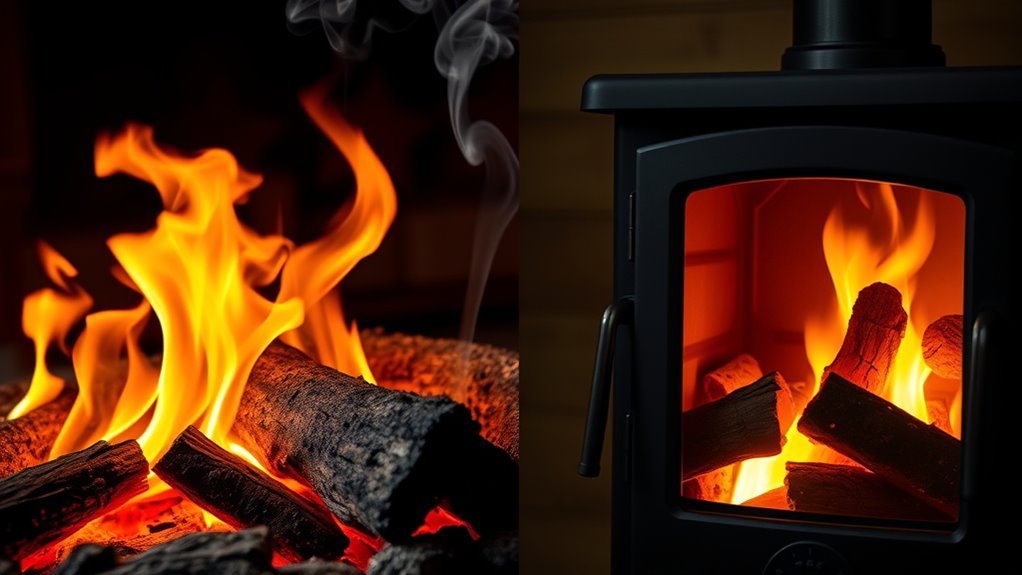
You’ll notice open fires can reach much higher temperatures, often between 1,000°F and 1,500°F, while wood stoves usually stay around 700°F to 800°F. This difference affects how each heats your space: open fires deliver intense, radiant heat but less control.
On the other hand, wood stoves provide steady, efficient warmth. Understanding these temperature and efficiency differences helps you choose the best option for your heating needs.
Temperature Differences Explained
Although both open fires and wood stoves burn wood, they produce very different temperature ranges due to how they control airflow and contain heat. You’ll notice that the temperature and heat distribution in each setup vary markedly, affecting their performance and safety.
Here’s what you need to know:
- Open fires reach 500°F to 1,500°F, with flame hotspots above 1,000°F.
- Wood stoves maintain internal temperatures around 700°F to 800°F.
- Open fires lose more heat through smoke and radiant energy because of inefficient combustion.
- Stoves keep exterior surfaces cooler (300°F to 600°F) by containing the fire and controlling airflow.
Understanding these differences helps you appreciate how temperature and fire behavior vary between open fires and wood stoves. It’s pretty interesting once you get into the details!
Efficiency and Heat Control
The way open fires and wood stoves manage heat makes a big difference in their efficiency and how easily you can control the temperature. Open fires reach a wide temperature range, from 500°F to 1,500°F, but they lose much heat to the surroundings, reducing overall heat output.
You’ll also notice uneven heat distribution and limited ability to control airflow, making temperature regulation tricky. In contrast, modern wood stoves sustain internal temperatures around 700°F to over 800°F with precise control airflow mechanisms.
This lets you maintain consistent heat output and longer burn times. By adjusting air intake, you can optimize combustion, keeping the stove in an efficient temperature range, usually near 1,100°F to 1,500°F.
That means cleaner burning and better heat control than open fires.
How Wood Type Influences Fire Heat
When you choose wood for your fire, the type you select greatly influences how hot it will burn. Hardwoods like oak and maple typically burn hotter, reaching temperatures between 700°C and 900°C. Their density offers more energy per volume, enhancing combustion efficiency and producing longer-lasting heat.
Softwoods ignite faster but burn cooler, usually between 500°C and 700°C. They also tend to create more creosote due to higher resin content. Keep in mind moisture content also plays a role, but we’ll cover that next.
Here’s what to contemplate about wood type:
- Hardwoods provide higher maximum temperatures.
- Dense wood yields longer-lasting fires.
- Softwoods burn quicker but cooler.
- Resin-rich softwoods increase creosote buildup.
Choosing seasoned hardwoods maximizes your fire’s heat output efficiently. It’s definitely worth considering if you want a strong, steady fire.
The Role of Moisture Content in Combustion
Choosing the right type of wood sets the stage, but moisture content plays a big part in how well your fire burns. Wood with high moisture content (above 20%) absorbs heat to evaporate water, lowering combustion temperatures considerably.
This leads to smoky fires that produce less heat and more creosote buildup. In contrast, seasoned wood with moisture below 20% burns hotter and cleaner, reaching combustion temperatures from 1,100°F to 1,500°F.
| Wood Type | Moisture Content | Typical Combustion Temperatures (°F) |
|---|---|---|
| Green/Wet Wood | > 20% | 600 – 900 |
| Seasoned Wood | < 20% | 1,100 – 1,500 |
| Dry Kiln Wood | < 10% | 1,200 – 1,600 |
Using properly seasoned wood boosts heat and efficiency. So, always try to go for wood that’s been dried well—it really makes a difference!
Firebox Temperatures in Wood-Burning Stoves
Although achieving the right firebox temperature in your wood-burning stove takes some attention, it’s key to efficient burning. Typically, firebox temperature ranges between 1,100°F and 1,500°F during ideal operation.
Maintaining firebox temperatures between 1,100°F and 1,500°F is essential for efficient wood stove burning.
To maintain these temperatures, consider the following:
- Use seasoned hardwoods—they produce higher firebox temperatures than softwoods or wet wood.
- Adjust airflow and damper settings properly to reach and sustain high internal heat.
- Aim for temperatures above 1,300°F to ensure complete combustion and minimize creosote buildup.
- Avoid exceeding 1,500°F, as excessive heat can damage stove components.
Surface Temperatures and Safety Considerations
When your wood stove is burning, its surface can reach temperatures between 300°F and 600°F, with glass doors getting just as hot. You’ll need to keep a safe distance and use heat-resistant materials around it to prevent burns and fire hazards.
It’s really important to understand how different materials react to this kind of heat. That way, you can create a safer space around your stove and avoid any accidents.
Typical Surface Temperature Range
Since the exterior surface of a wood stove can reach temperatures between 300°F and 600°F, you need to handle it with care. The surface temperature varies depending on the stove design and burn intensity, but the external heat is always significant.
Glass doors can get just as hot, often nearing 500°F. This heat radiates evenly, warming your room but posing burn risks on contact.
Here’s what you should know about typical surface temperatures:
- Expect wood stove surfaces between 300°F and 600°F during use.
- Glass doors often reach close to 500°F.
- External heat is intense but cooler than the internal firebox, which exceeds 1,000°F.
- Heat spreads evenly to surrounding areas, enhancing room warmth.
Heat Safety Precautions
Because wood stove surfaces can reach temperatures between 300°F and 600°F—and glass doors sometimes get as hot as 1,000°F—you need to take careful precautions to avoid burns and fire hazards. Always maintain proper clearance around the stove and use heat-resistant mats to shield nearby surfaces from intense stove heat.
Monitoring fire temperature with a thermometer helps ensure burn safety and safe operation. It’s a simple step that can make a big difference in keeping everyone safe.
| Safety Measure | Purpose |
|---|---|
| Maintain clearances | Prevent fire hazards |
| Use heat-resistant mats | Protect surrounding surfaces |
| Monitor surface temps | Avoid accidental burns |
| Stay aware of stove heat | Enhance burn safety |
Material Impact on Heat
Although wood fire surfaces can reach high temperatures, the materials surrounding or composing the fire considerably affect how heat transfers and how hot those surfaces actually get. Conductive materials like metal and brick transfer heat efficiently, raising surface temperature and burn risks.
In contrast, insulated or heat-resistant materials slow heat transfer, protecting nearby surfaces. To keep things safe, consider these tips:
- Use heat-resistant mats or stands under fire pits made of conductive materials.
- Choose materials that limit heat transfer to avoid surface damage.
- Place fires away from flammable objects and surfaces.
- Monitor surface temperature regularly to prevent accidental fires or injuries.
Flue Gas Temperatures and Their Importance
When you monitor flue gas temperatures, you guarantee your wood fire burns efficiently and safely. Flue gas temperatures usually range from 400°F to 900°F, depending on the fire and burn conditions.
Keeping these temperatures within the right range ensures a strong draft and effective venting of smoke and gases. If flue gas temperatures drop too low, creosote buildup occurs inside your chimney, raising the risk of dangerous chimney fires.
On the other hand, excessively high flue gas temperatures can damage chimney components, shortening their lifespan and increasing maintenance costs. By regularly checking flue gas temperatures, you optimize your stove’s performance while protecting your home and chimney system.
Proper monitoring balances safety with heat output, making it an essential part of wood fire management. It’s definitely worth keeping an eye on those temps!
Managing Airflow for Optimal Heat
Monitoring flue gas temperatures helps you maintain a strong draft, but controlling airflow directly influences how hot your wood fire burns. Proper airflow boosts combustion efficiency, helping you reach temperatures between 700°C and 900°C, especially with hardwoods.
Here’s how you manage airflow for effective temperature control:
- Start with dry, well-seasoned wood for consistent combustion.
- Gradually adjust air vents or dampers to increase oxygen supply.
- Avoid restricting airflow to prevent incomplete combustion and smoke.
- Monitor fire intensity to maintain steady, ideal heat without smoldering.
Tips for Achieving Hotter, Cleaner Wood Fires
To achieve hotter, cleaner wood fires, you’ll want to focus on using well-seasoned hardwoods with moisture content below 20% and maintaining proper airflow through adjustable vents. Seasoned wood burns hotter, reaching fire temperatures around 700°C–900°C, which produces less smoke and creosote.
Start your fire with dry kindling and small logs to quickly raise the fire temperature. Avoid wet or green wood, as it lowers heat and increases smoke. Use quality fire starters to maintain consistent flames.
Don’t forget to regularly clean your stove and chimney; clear airflow prevents blockages that reduce combustion efficiency. By controlling airflow carefully and choosing seasoned wood, you’ll enjoy a hotter, cleaner fire that heats effectively while minimizing pollutants.
Frequently Asked Questions
Can a Wood Fire Melt Aluminum?
Yes, a wood fire can melt aluminum if you get close to really hot spots reaching above 1,221°F (660°C).
But in most cases, normal wood fires won’t consistently reach those melting temperatures.
Is a Wood Fire Hotter Than a Gas Fire?
You know what they say, “Where there’s smoke, there’s fire.”
Yes, a wood fire often gets hotter than a gas fire, reaching over 1,500°F. Gas fires usually max out below that temperature range.
Can Wood Burn at 200 Degrees?
No, wood can’t burn at 200 degrees because that’s too low to ignite it.
You need temperatures around 500°F or higher for wood to catch fire and sustain a flame effectively.
Is 800 Degrees Too Hot for a Wood Stove?
800°F isn’t too hot for your wood stove; most operate safely between 1,100°F and 1,500°F.
Just make sure you use seasoned wood and maintain airflow to keep temperatures efficient and prevent damage.
Conclusion
You might think a wood fire’s heat depends only on the wood itself, but it’s really how you manage airflow, moisture, and wood type that makes all the difference.
Just as a fire’s temperature rises with care, your comfort grows with attention to detail. So, by controlling these factors, you’re not just heating your space—you’re mastering the art of warmth itself.
This shows that sometimes, the hottest fires come from the coolest strategies. Understanding how hot a wood fire gets means paying attention to the wood’s moisture content, the type of wood you use, and how you regulate airflow.
When you get these right, you create a fire that burns hotter and longer, making your wood fire not just a source of heat, but an efficient and cozy centerpiece for your home.