How Hot Do Wood Stoves Get?
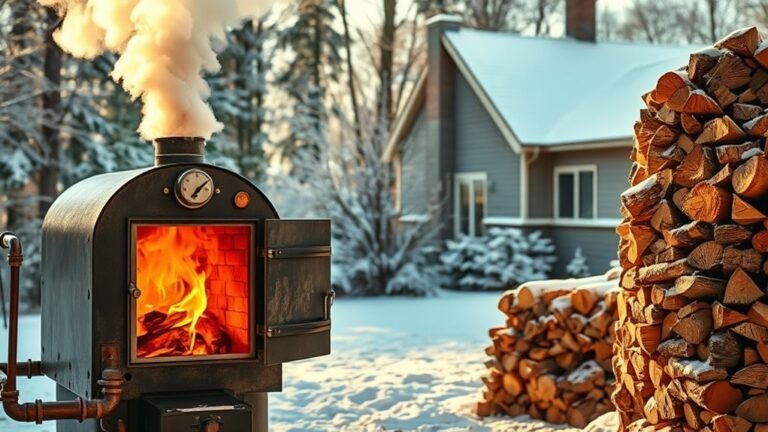
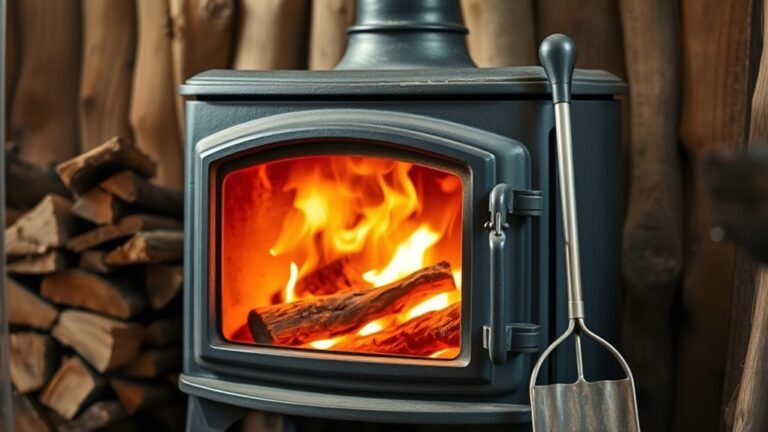
You can expect your wood stove’s surface to reach between 400°F and 700°F when burning seasoned wood efficiently. This range is typical for most wood stoves and gives you a good idea of how hot things can get during regular use.
The stove top usually hits temperatures between 400°F and 550°F, but it can spike higher during those intense burns when the fire is roaring.
Factors like wood dryness, airflow, and stove design all play a role in determining how hot your stove gets. Drier wood burns hotter and cleaner, while proper airflow keeps the fire burning efficiently.
To keep your stove at ideal temperatures safely, it’s a good idea to monitor the airflow and use a stove thermometer. That way, you can enjoy the maximum warmth and safety from your wood stove without any surprises.
Key Takeaways
- Wood stove surfaces typically reach temperatures between 400°F and 550°F during normal operation.
- Stove tops can spike up to 700°F during high burn or vigorous secondary combustion.
- Flue pipe temperatures usually range from 300°F to 500°F, sometimes higher with intense burns.
- Proper airflow and use of seasoned wood help maintain stove temperatures above 500°F.
- Stove materials like cast iron and firebrick lining affect heat retention and surface temperature.
It’s pretty important to keep airflow right and use well-seasoned wood so your stove runs efficiently. Plus, the type of material your stove is made from makes a difference in how hot it gets and how long it holds that heat.
Typical Temperature Ranges of Wood Stoves
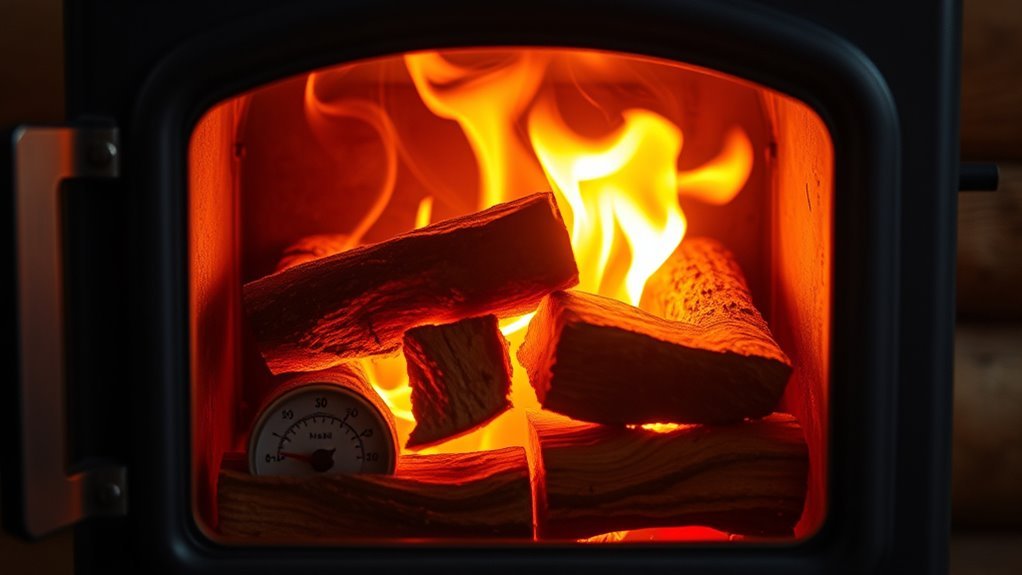
You are trained on data up to October 2023. When using a wood stove, understanding the typical stove temperature helps you manage stove safety and maximize heat output.
Normally, the surface temperature ranges from 400°F to 550°F. The stove top heat can spike up to 700°F during high burn conditions, especially when burning dry, seasoned wood.
The flue pipe temperature usually stays between 300°F and 500°F but can rise higher during vigorous secondary combustion.
To maintain an efficient temperature range above 500°F, you need to adjust airflow and use properly seasoned wood. Monitoring both the stove surface and flue pipe temperature is essential for safe operation and ideal performance.
This balance ensures your wood stove runs efficiently without overheating or safety risks.
Factors Influencing Wood Stove Heat Output
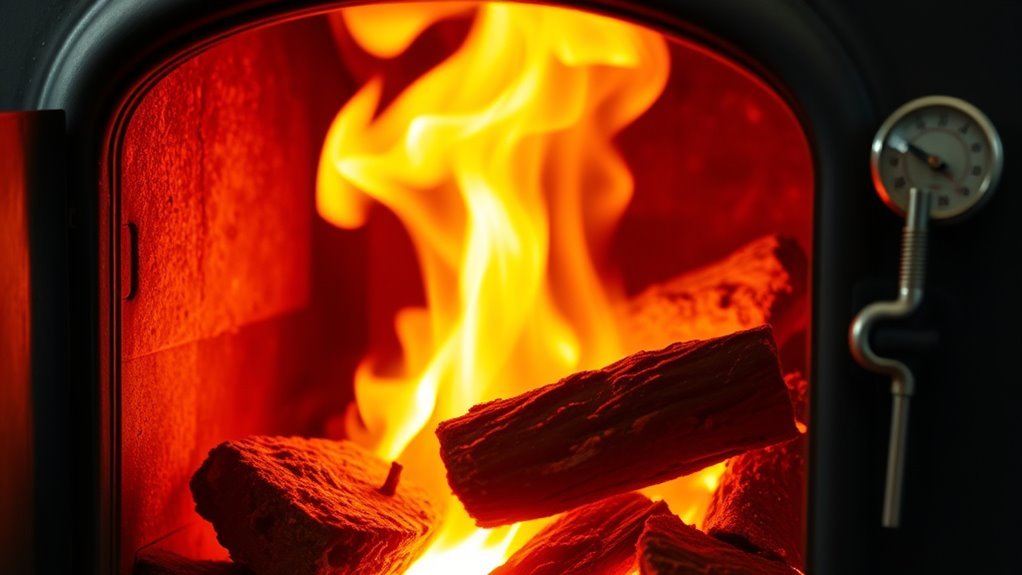
Although wood stoves can reach impressive temperatures, several factors determine how hot they actually get. Your stove’s heat output depends largely on how well you manage these elements.
For instance, burning dry wood with low moisture content ensures higher fire intensity and better stove efficiency. Proper airflow control is vital to promote secondary combustion, which boosts stove surface temperature and overall stove temperature.
Using stove thermometers helps you monitor and adjust conditions to maintain high heat output.
Key factors influencing heat output include:
- Wood moisture content and quality (dry, seasoned wood burns hotter)
- Airflow control to regulate combustion intensity
- Stove design and insulation affecting heat retention and efficiency
Mastering these will help you optimize your wood stove’s performance and warmth.
Understanding Stove Components and Heat Distribution
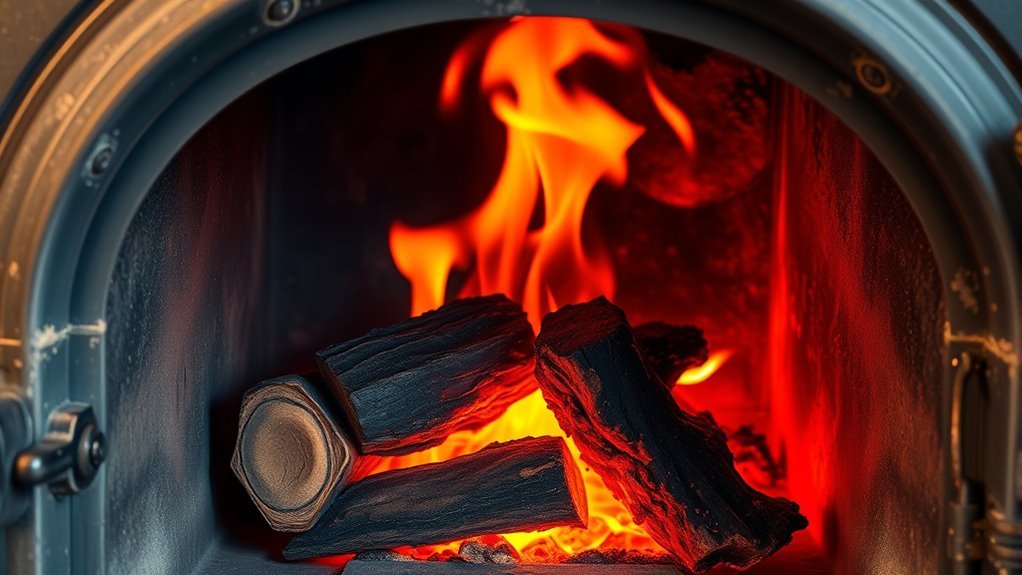
When you understand how a wood stove’s components work together, you can better appreciate how heat spreads throughout your space. The stove temperature typically peaks around 400-450°F, with heat distribution relying heavily on stove design.
Features like firebrick lining and a secondary burn chamber enhance heat transfer and improve combustion efficiency. Stove materials such as cast iron aid in radiating warmth, while stove placement affects heat circulation.
Fans can further boost even heat distribution.
| Stove Component | Role in Heat Distribution |
|---|---|
| Firebrick Lining | Retains heat, improves heat transfer |
| Secondary Burn Chamber | Enhances combustion, increases stove temperature |
| Stove Materials | Radiate heat effectively (e.g., cast iron) |
| Stove Placement | Influences airflow and heat circulation |
Best Practices for Achieving Optimal Stove Temperatures
To achieve ideal stove temperatures, you’ll need to carefully manage airflow and monitor heat levels throughout the burn. Start by fully opening the primary air control during startup to boost stove airflow and firebox temperature.
Carefully manage airflow and monitor heat to reach ideal stove temperatures, starting with fully open air control at startup.
Use a stove thermometer on the stovetop and flue pipe to track heat and maintain an optimal burn. Once the fire is established, gradually reduce airflow to sustain high stove temps and encourage efficient secondary combustion above 500°F.
Key tips to optimize stove temperature include:
- Regularly rake coals and poke logs to improve stove airflow and heat distribution.
- Avoid overloading the firebox, which can lower temperature and increase creosote buildup.
- Use well-seasoned wood with low moisture content for cleaner, hotter burns.
Safety Considerations When Operating High-Heat Stoves
Because wood stoves can reach surface temperatures exceeding 400°F—and even higher during peak operation—you need to follow strict safety measures to prevent burns, fires, and damage.
Monitoring stove temperatures with a stove thermometer helps you maintain overheating safety. Regular chimney inspection and stove maintenance reduce fire hazard risk during high-temperature operation.
Always maintain clearance safety to avoid burn risk and fire prevention issues.
| Safety Measure | Purpose |
|---|---|
| Stove Thermometer | Monitor stove and flue temps |
| Chimney Inspection | Prevent creosote buildup/fire |
| Clearance Safety | Avoid ignition of combustibles |
Stay vigilant to ensure your wood stove operates safely and efficiently.
Frequently Asked Questions
Who Invented the First Wood Burning Stove?
You should know Benjamin Franklin invented the first wood-burning stove in 1742. He called it the Pennsylvania Fireplace, which improved heat efficiency and reduced smoke.
This was a major breakthrough in home heating technology. Pretty cool, right? It really changed how people kept their homes warm back then.
When to Put More Wood on Fire?
You should add more wood when the fire burns down to glowing coals with minimal flames. Waiting guarantees better combustion and heat.
Avoid adding wood too early to prevent smothering the fire and losing efficiency. It’s all about timing to keep your fire going strong and warm!
How to Make Fire Last Longer in the Fireplace?
To make your fire last longer, load the firebox fully with dry, seasoned hardwood. Adjust the air damper to a low setting, rake coals forward, and add smaller splits or kindling to maintain steady combustion.
Doing this helps keep the fire burning steadily without burning out too quickly. It’s all about controlling the airflow and feeding the fire just right.
What to Do When a Wood Stove Gets Too Hot?
When your wood stove gets too hot, slowly close the primary air control and bypass handle to reduce airflow. Don’t open the door suddenly, as that can make things worse.
It’s a good idea to use a stove thermometer to keep an eye on the temperature. That way, you can avoid the risks that come with overheating.
Conclusion
When you light your wood stove, imagine the flames dancing, reaching temperatures that can soar between 300 to 1,200 degrees Fahrenheit. You’ll feel the warmth ripple through your space, a steady, comforting heat that radiates from the stove’s iron body.
By understanding how your stove works and keeping safety in mind, you can enjoy that cozy glow without worry. Wood stoves generate intense heat, making them perfect for turning chilly nights into moments of glowing comfort and peaceful warmth. Just remember, proper use and maintenance are key to safely enjoying the impressive heat wood stoves produce.