How Hot Does a Wood Stove Get Complete Guide
Your wood stove’s firebox can reach between 800°F and 1,200°F for full combustion, ideally around 1,100°F to 1,500°F.
Meanwhile, the stove’s exterior surface should stay between 300°F and 650°F to transfer heat efficiently and prevent damage.
Keeping these temperatures balanced stops creosote buildup and avoids safety risks.
Factors like wood type, moisture, and airflow play a big role in heat control.
Keeping your stove within the right ranges ensures safe, efficient heating.
Exploring these details can help you master your stove’s performance.
Key Takeaways
- Internal firebox temperatures typically range between 800°F and 1,200°F. The ideal combustion temperature is around 1,100°F to 1,500°F.
- Stove surfaces maintain safe and efficient temperatures between 300°F and 650°F. This helps avoid creosote buildup and prevents metal damage.
- Flue gas temperatures vary from 400°F to 900°F. These temperatures affect draft quality and chimney safety.
- Keeping wood moisture below 20% and ensuring proper airflow are key. They help maintain higher stove temperatures and cleaner combustion.
- Using a stove thermometer is a smart move. Plus, getting professional services can help you monitor temperatures, prevent hazards, and optimize stove performance.
Key Takeaways and Essential Temperature Ranges
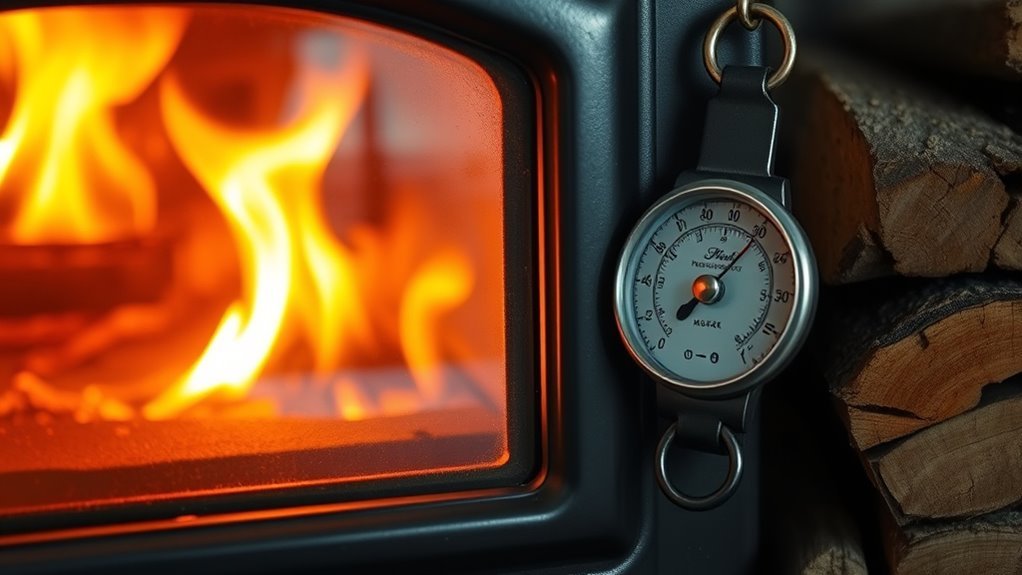
Although a wood stove’s internal firebox can reach temperatures between 800°F and 1200°F for complete combustion, you should keep the external surface between 300°F and 650°F to guarantee efficient burning and safety.
Maintaining proper wood stove temperatures within this range maximizes heat output while minimizing creosote buildup, which can cause chimney fires.
If surface temperatures drop below 300°F, combustion becomes inefficient, especially if you’re not using properly dried wood. This leads to dangerous creosote accumulation.
On the other hand, temperatures above 700°F risk damaging your stove by warping metal and creating safety hazards.
Using a stove thermometer helps you monitor surface temperatures accurately, ensuring you stay within the ideal zone for both performance and safety.
This balance is key to getting the most from your wood stove.
Understanding Wood Stove Temperature Zones
Where exactly do the different temperature zones exist in your wood stove, and why do they matter? Understanding these temperature zones helps you achieve ideal burn and efficient heat transfer.
Inside, the firebox reaches internal temperatures between 1,100°F and 1,500°F, which is essential for complete combustion. Meanwhile, the wood stove surface stays cooler, typically between 300°F and 600°F. This ensures safety and effective heat radiation.
Flue gases flow through a zone ranging from 400°F to 900°F, influencing draft and creosote buildup.
Key temperature zones include:
- Firebox: 1,100°F–1,500°F for ideal combustion
- Stove surface: 300°F–600°F for safe and efficient heat transfer
- Flue gases: 400°F–900°F affecting draft and creosote formation
Knowing these zones helps you maintain your stove’s performance and longevity. It’s a simple way to keep things running smoothly.
Factors Affecting Wood Stove Temperatures
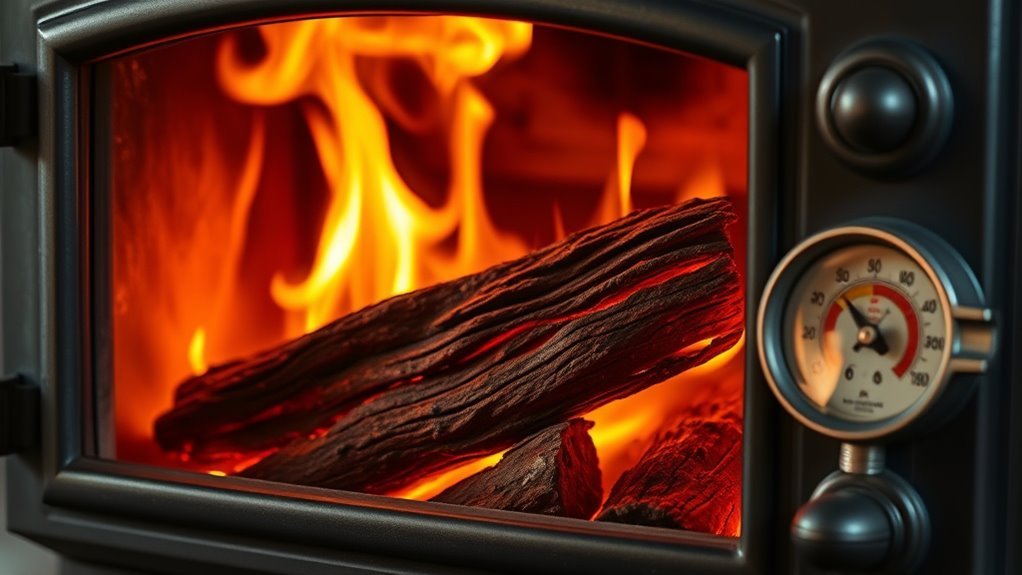
Understanding the temperature zones inside your wood stove lays the groundwork for recognizing what influences those temperatures. The type of wood you burn, especially seasoned hardwoods with low moisture content, plays a vital role—dense woods like oak generate more heat than softer varieties.
Wood moisture affects combustion efficiency; too much moisture lowers temperatures and creates smoke. Your stove’s design, such as insulation quality and whether it’s a fireplace insert, influences heat retention.
Draft conditions also matter; proper airflow ensures effective secondary combustion, boosting internal heat. Managing draft and maintaining good insulation help maintain consistent temperatures.
Surface, Firebox, and Flue Temperature Details
When you operate a wood stove, its surface, firebox, and flue each reach distinct temperature ranges that are essential for safe and efficient heating. The firebox temperature during combustion of seasoned wood should ideally stay between 1,100°F and 1,500°F to guarantee an ideal burn while preventing damage.
Meanwhile, the surface temperature varies from 300°F to 600°F depending on stove design and usage. Flue gas temperatures usually fall between 400°F and 900°F, influenced by burn rate and chimney draft.
Monitoring these temperatures helps maintain safety and efficiency. It’s a good habit to keep an eye on them regularly so your stove runs smoothly.
Regular temperature checks ensure your wood stove operates safely and efficiently for optimal heating performance.
- Firebox temperature ensures complete combustion of seasoned wood
- Surface temperature indicates safe exterior heat levels
- Flue gas temperature reflects combustion quality and draft efficiency
Managing Airflow and Fuel for Optimal Heat
Although it can be tempting to crank the airflow wide open, you’ll get the best heat by adjusting it gradually to keep your fire steady. Too much oxygen causes over-firing, while too little leads to smoldering and less heat.
Use the airflow controls to fine-tune oxygen supply, ensuring complete combustion. Always burn seasoned wood with moisture content below 20% for hotter, cleaner fires.
Manage your fuel by adding small, dry pieces frequently rather than large loads. This helps maintain an ideal temperature.
Avoid overloading the stove, as this restricts airflow and causes uneven burning. Keep the primary air damper open during startup and high heat periods to promote efficient combustion.
Proper airflow and fuel management maximize heat output and extend stove life. It’s all about finding that sweet spot for a warm, cozy fire.
Step-by-Step Guide to Maintaining Safe Stove Temperatures
To keep your wood stove running safely, start by using a magnetic thermometer to monitor the temperature closely.
You’ll want to adjust the airflow controls gradually to maintain heat between 300°F and 650°F for the best efficiency. Checking these tools regularly helps you avoid damaging over-firing or dangerous creosote buildup.
It’s pretty straightforward, but keeping an eye on those temps makes a big difference!
Temperature Monitoring Tools
Since maintaining safe stove temperatures is essential, using a reliable wood stove thermometer is crucial. It helps you monitor temperatures within the ideal range of 300°F to 650°F, ensuring safe operation and maximizing combustion efficiency.
Magnetic stove top thermometers are popular because you can easily place them on a clean, flat steel surface near the stove’s hottest spot. This makes checking the temperature quick and hassle-free.
To effectively track stove temperature, keep these tips in mind: Position your stove top thermometer on a dry, flat steel area for accurate readings. Regularly check the thermometer to prevent creosote buildup and avoid overheating.
Also, use temperature data to adjust your fuel load and maintain consistent, safe operation. It’s a simple way to keep your stove running efficiently and safely.
Adjusting Airflow Controls
When you adjust the airflow controls carefully, you can keep your wood stove operating safely and efficiently. Start by opening the primary air fully during startup to build a strong fire, then gradually close it to maintain ideal stove temperature.
Use the damper or secondary air controls to fine-tune airflow, aiming to keep temperatures between 400°F and 650°F for effective temperature regulation. Monitor stove temperature regularly, avoiding over-firing by not leaving controls fully open or over-tightened.
Make small airflow adjustments every 15 to 30 minutes, especially after startup or when changing the fire size. These steps help prevent damage and ensure consistent heat, keeping your wood stove efficient without risking unsafe high temperatures or inefficient low burns.
Recognizing and Preventing Creosote Buildup
Although creosote buildup can happen gradually, you need to recognize its signs early to keep your wood stove safe. Creosote forms when stove surface temperatures drop below 300°F, especially during smoldering burns.
This sticky residue increases the risk of dangerous chimney fires if not managed properly. To prevent creosote accumulation, maintain stove temperatures within the ideal temperature range of 300°F to 650°F to promote complete combustion.
Keep an eye on stove surface temperatures and airflow to avoid smoldering conditions that encourage creosote deposits.
Key tips to prevent creosote buildup include:
- Use well-seasoned wood to reduce smoke and creosote formation.
- Regularly monitor stove temperatures to stay within the safe range.
- Avoid burning at high temperatures above 700°F to prevent rapid creosote ignition and chimney fires.
Local Resources for Wood Stove Safety and Support
If you want reliable support for your wood stove, Miller Ace Hardware in Stephens City, VA, is a trusted local resource. They offer expert guidance on stove safety, helping you choose the right equipment and teaching proper temperature regulation techniques to prevent hazards.
Since 1996, their certified staff has provided professional maintenance, installation services, and EPA-compliant wood stove sales tailored to the Northern Shenandoah Valley’s climate and codes. Beyond sales, they offer chimney sweeping and stove repairs to keep your system running efficiently and safely.
With personalized recommendations and ongoing support, Miller Ace Hardware ensures your wood stove operates at its best, reducing fire risks and boosting performance. If you want peace of mind, their local expertise is invaluable.
Frequently Asked Questions
What Is the 3:2-10 Rule for Wood Stoves?
The 3:2-10 rule means you open the primary air fully for 3 minutes, then reduce it to 2/3 open while setting secondary air to 10%.
This balances airflow, boosting efficiency and reducing creosote buildup.
It’s a simple way to get the most out of your wood stove without much hassle.
What Temperature Is Considered Too Hot for a Wood Stove?
When your wood stove’s fire dances beyond 700°F, it’s like a sun scorching the earth—too hot.
You’ll risk damage and danger, so keep that flame tame with a thermometer to protect your hearth’s heart.
What’s the Worst Firewood to Burn?
The worst firewood to burn is green, unseasoned wood with high moisture, softwoods like pine, treated or painted wood, driftwood, and wood with lots of bark or sap.
They produce creosote, toxins, and damage your stove. You definitely want to avoid those if you can.
Can I Leave My Wood Burning Stove on All Night?
You can leave your wood stove on all night if you keep it between 300°F and 650°F. Just make sure you’re using dry wood and adjusting the air controls properly.
Also, follow safety guidelines to prevent overheating or creosote buildup. It’s all about keeping things in check so your stove runs safely and efficiently while you sleep.
Conclusion
Just like a well-tuned engine runs smoothly, your wood stove needs the right temperature to work safely and efficiently. By understanding its heat zones and managing airflow and fuel, you’ll keep your home warm without risking damage or creosote buildup.
Stay attentive and follow safety steps closely. Don’t hesitate to reach out to local experts if you have any questions or concerns about your stove’s operation.
With proper care, your wood stove will be a reliable, cozy companion all winter long. Knowing how hot a wood stove gets and maintaining the correct temperature prevents hazards and ensures efficient heating. So, keep an eye on the heat, manage your fuel wisely, and enjoy the comforting warmth a well-maintained wood stove provides.