How Does an Outdoor Wood Boiler Work Step by Step
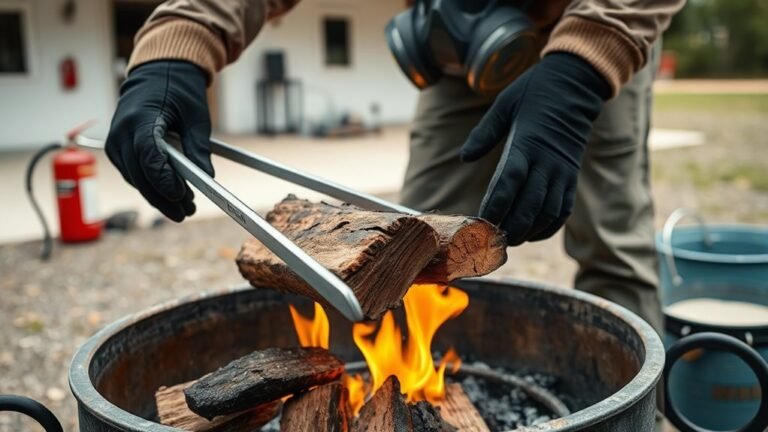
You start by loading dry, seasoned wood into the outdoor wood boiler’s firebox and fully opening the air intake damper for strong combustion. This step is crucial for getting a good, hot fire going.
The fire heats water in the surrounding jacket to around 170–185°F, creating a steady supply of hot water.
Next, a pump circulates this hot water through insulated underground pipes into your home’s heating system.
As the cooler water returns to the boiler, the cycle repeats itself, keeping your home warm and cozy.
It’s important to maintain steady fire growth and monitor temperatures for efficient operation.
Keep the fire burning well and check the system regularly to make sure everything runs smoothly.
Stay with us to discover how to integrate and maintain the outdoor wood boiler system effectively for the best heating results.
Key Takeaways
- Wood burns in the firebox, producing heat transferred to a surrounding water jacket.
- Hot gases flow through channels, heating the water inside the jacket to about 170–185°F.
- A pump circulates heated water through insulated underground pipes to the home’s heating system.
- Cooler water returns to the boiler to be reheated, maintaining a continuous heating cycle.
- Temperature controls like aquastats regulate combustion by opening and closing dampers to maintain set water temperatures.
What Is an Outdoor Wood Boiler?
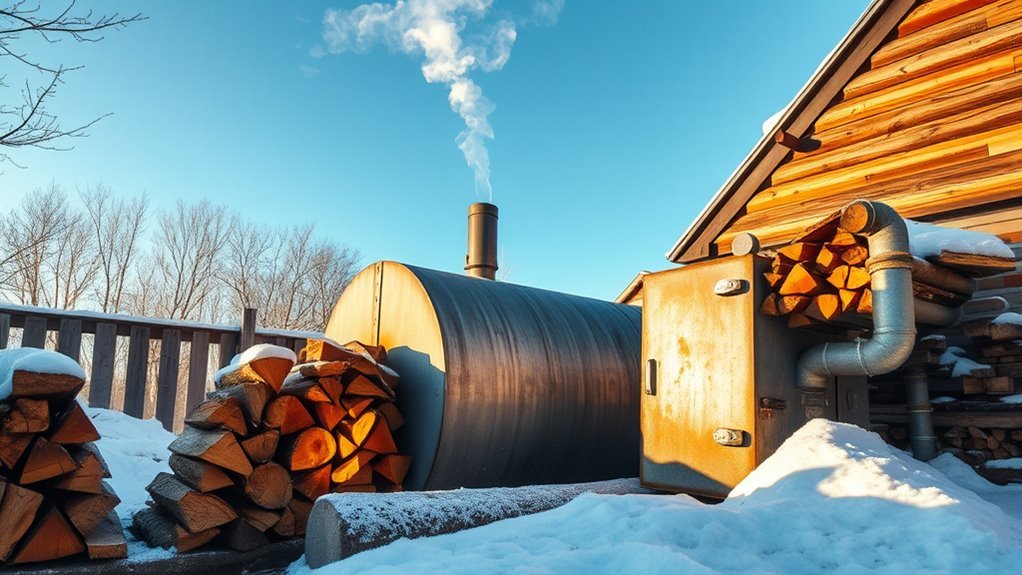
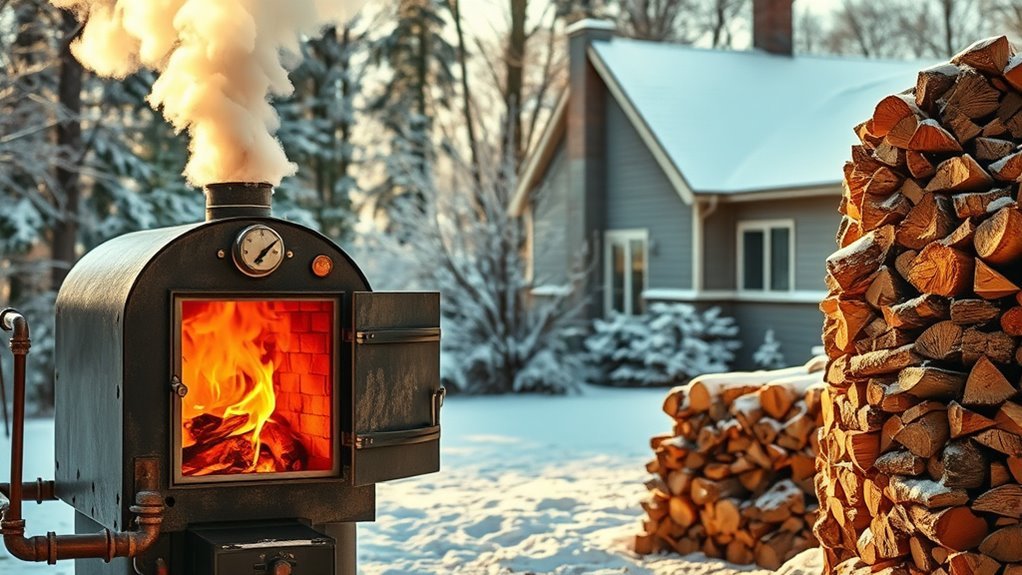
An outdoor wood boiler is a heating system that burns wood outside your building to generate heat. It uses a firebox where you place the wood, and as the wood burns, the heat produced is absorbed by a water jacket surrounding the firebox.
This heated water then circulates through insulated underground pipes, delivering warmth to your home’s interior. By keeping the boiler outdoors, you reduce indoor air pollution and eliminate fire hazards inside your building.
This setup can provide hot water for space heating, domestic use, or both, depending on your needs. Overall, an outdoor wood boiler offers an efficient and safer alternative to traditional indoor wood stoves by isolating the combustion process outside your living space.
Key Components of an Outdoor Wood Boiler
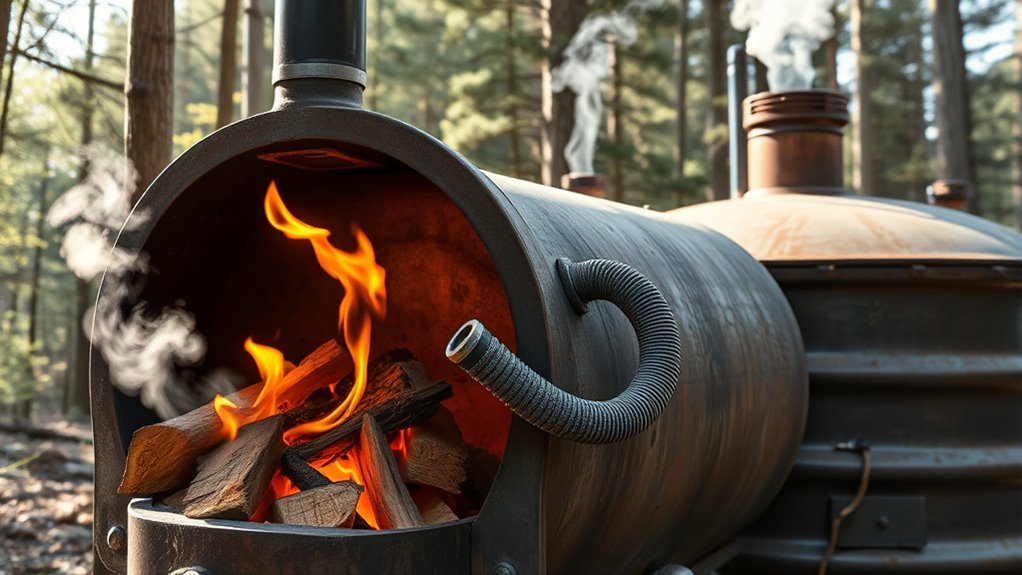
While setting up your outdoor wood boiler, you’ll find several key components work together to guarantee efficient heating. The firebox is where you burn the wood, generating intense heat.
Surrounding the firebox is the water jacket, which absorbs this heat and warms the water inside. This heated water then circulates through insulated underground pipes, transferring warmth to your home’s heating system.
A heat exchanger or coil within the boiler supplies domestic hot water when needed, adding versatility. Additional parts like a pump move the hot water through your system, while controls such as a thermostat help maintain the right temperature.
Safety features, including pressure relief valves and dampers, ensure your system runs safely and efficiently every time. It’s all designed to keep things running smoothly, so you stay warm without a hitch.
The Role of the Firebox and Water Jacket
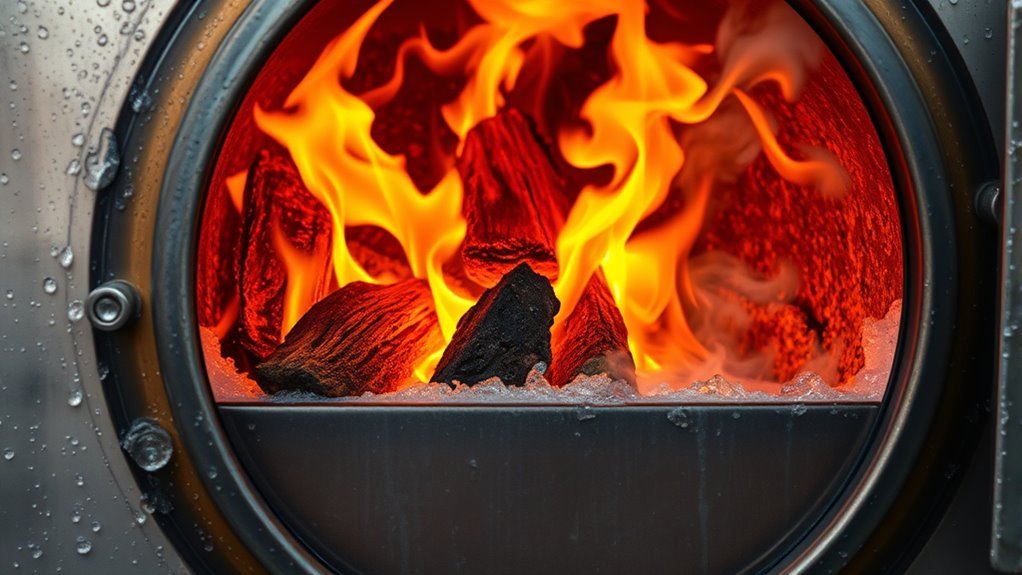
You burn wood inside the firebox, where combustion creates intense heat. Surrounding the firebox, the water jacket absorbs this heat, efficiently transferring it to the water.
This heated water then flows through pipes to warm your home or provide hot water. It’s a smart way to keep things cozy and efficient.
Firebox Combustion Process
Because the firebox is where the wood burns, it plays an essential role in generating the heat needed for your outdoor wood boiler. Inside this firebox, combustion occurs as the wood ignites, producing hot gases and flames.
This combustion process is fundamental because it creates the energy that drives the entire system. The intense heat generated in the firebox initiates heat transfer to the surrounding water jacket.
As the firebox burns, the heat rapidly moves through the firebox walls to the water jacket, warming the water efficiently. This direct contact and radiant heat from the combustion zone ensure the water heats quickly.
Understanding this firebox combustion process helps you appreciate how your outdoor wood boiler consistently produces the heat necessary for your home’s warmth. It’s pretty neat how it all works together, isn’t it?
Water Jacket Heat Transfer
Although the firebox generates the heat by burning wood, the water jacket plays a crucial role in capturing and transferring that heat efficiently. The firebox burns wood, creating hot gases that flow through channels within the water jacket.
This setup allows the water jacket to absorb and transfer heat effectively, acting as a heat exchanger. Insulated walls on the water jacket minimize heat loss, ensuring maximum heat transfer to the water.
The heated water then circulates through pipes to warm your building.
| Component | Function |
|---|---|
| Firebox | Burns wood to produce heat |
| Water Jacket | Encases firebox, absorbs and transfers heat |
| Hot Gas Channels | Allow hot gases to heat water inside the jacket |
| Insulated Walls | Reduce heat loss, improve heat transfer efficiency |
How the Water Heating Process Works
When the outdoor wood boiler burns wood in its firebox, it heats the surrounding water jacket, raising the water temperature to between 170 and 185°F. This hot water then flows through a heat exchanger, transferring thermal energy to your home’s heating system.
Here’s how the water heating process works:
- Water absorbs heat from the firebox, increasing its temperature efficiently.
- Heated water travels through insulated underground pipes to minimize heat loss.
- The heat exchanger passes this thermal energy to your forced air, radiant, or hydronic systems.
- Cooler water returns to the boiler to be reheated, ensuring a continuous cycle.
Pretty straightforward, right? The system keeps cycling water through to keep your home warm and cozy.
Circulating Heated Water Through the Home
As the outdoor wood boiler heats water, a pump moves it through insulated underground pipes directly to your home’s heating system. This circulating hot water travels into your home’s heat exchanger, where it transfers warmth to radiators, baseboards, or radiant floor systems.
The heat exchanger guarantees efficient heat transfer without mixing water from the boiler with your home’s water supply. Once the water releases its heat indoors, it cools down and flows back through the same pipes to the boiler for reheating.
This continuous circulation maintains a steady flow of hot water, providing reliable, consistent warmth throughout your home. Because the combustion happens outside, you enjoy a clean, safe heating process without indoor smoke or fumes.
All this is thanks to the efficient circulation of heated water via the system’s heat exchanger. It really makes the whole setup neat and hassle-free.
Temperature Control and the Aquastat Function
To keep your outdoor wood boiler running smoothly, you rely on the aquastat to monitor and regulate the water temperature. This device acts like a thermostat, controlling the boiler’s fire intensity to maintain consistent heat.
When the water temperature drops below a set point, the aquastat signals the damper to open, boosting airflow and combustion. Once the desired temperature is reached, it closes the damper to reduce the fire. This precise control ensures efficient operation and prevents overheating.
With the aquastat, you can expect automated firing cycles without constant manual adjustments. It helps keep the water temperature stable for reliable heating.
Plus, it enhances fuel efficiency by optimizing combustion. And, importantly, it keeps your system safe by avoiding excessive heat buildup.
The aquastat is essential for effective temperature control in your outdoor wood boiler system. It really makes managing your heating simpler and more efficient.
Starting Up the Outdoor Wood Boiler Properly
Before you start your outdoor wood boiler, make sure the firebox is clean and ready with dry, seasoned wood. Use proper ignition methods like matches or a starter log to get a strong fire going.
Keep an eye on the water temperature as it gradually heats up to guarantee everything runs safely and efficiently. Taking these steps helps ensure your boiler works well and lasts longer.
Preparing the Firebox
When you prepare the firebox for your outdoor wood boiler, make sure the water inside is already heated to around 160-180°F. This helps the system reach ideal combustion quickly and safely.
Next, load dry, seasoned wood into the firebox, but don’t overfill it—that can restrict airflow and reduce efficiency. Open the air intake damper fully to allow maximum oxygen flow, which supports a strong, clean burn.
Here’s what to focus on when preparing the firebox:
- Use only dry, seasoned wood for better combustion and less creosote buildup.
- Avoid overfilling the firebox to maintain proper airflow.
- Fully open the air intake damper to maximize oxygen supply.
- Monitor water temperature and adjust airflow as needed to enhance burning.
Ignition Techniques
Once the firebox is prepared and the water temperature is near the ideal range of 170-185°F, you can focus on igniting the fire properly. Start by placing seasoned, dry wood in the firebox, stacking it to allow good airflow.
Use crumpled paper or firelighters to ignite the fire, then add small kindling gradually to build a strong flame. Keep the draft damper open to ensure proper airflow during ignition.
As the fire grows and water temperature rises, add larger wood pieces steadily to maintain consistent heat without smoldering.
| Step | Action | Tip |
|---|---|---|
| 1 | Load dry wood | Stack for airflow |
| 2 | Ignite with starter | Use paper or firelighters |
| 3 | Add kindling & monitor | Keep damper open |
Initial Water Heating
Although it might be tempting to start your indoor heating right away, you should guarantee the water in the boiler reaches a safe operating temperature—typically between 160°F and 180°F—before doing so.
Start by lighting a fire in the firebox with dry, seasoned wood, allowing a strong burn to develop. Keep the water pump running during this phase to maintain circulation, which helps evenly distribute heat and prevent cold spots.
Avoid opening the damper or firebox door too often to maintain proper airflow and reduce creosote buildup.
To ensure proper initial water heating:
- Use dry, seasoned wood in the firebox
- Keep the water pump on for constant circulation
- Monitor water temperature until it reaches 160°F–180°F
- Limit opening the damper and firebox door during startup
Integration With Existing Home Heating Systems
Because outdoor wood boilers use insulated underground pipes to circulate heated water or glycol, you can easily connect them to your existing home heating system. The outdoor boiler works seamlessly with various setups, including water-to-water heat exchangers, radiant floors, and forced-air systems.
Heated water flows into your current radiators or baseboards, keeping your home warm without major modifications. Plus, the boiler’s control system syncs with traditional thermostats, ensuring consistent temperatures.
| Component | Connection Method | Compatible Systems |
|---|---|---|
| Outdoor Boiler | Insulated underground pipes | Radiators, baseboards |
| Water-to-Water Heat Exchanger | Direct water circulation | Radiant floor heating |
| Existing Heating Systems | Integration via pumps/control | Forced-air, water-to-air |
| Control System | Thermostat synchronization | Consistent indoor warmth |
| Heat Distribution | Pumped heated water | Seamless operation |
Maintenance and Operational Considerations
Connecting your outdoor wood boiler to your home heating system keeps your house cozy. But it also means you need to stay on top of maintenance for smooth operation.
Regularly inspect and clean the firebox and heat exchanger to prevent creosote buildup and maintain efficient combustion. It’s all about keeping things running safely and efficiently.
Proper water chemistry is vital—test and treat the water annually to avoid corrosion and mineral deposits. Don’t overlook electrical components either; make sure wiring and connections to fans and sensors are intact and free from damage.
Here are some key maintenance tips to keep in mind:
- Clean the firebox and heat exchanger regularly
- Test and adjust water chemistry yearly
- Inspect and secure electrical wiring and connections
- Keep spare parts like fans and sensors ready for quick repairs
Being proactive really helps your boiler run efficiently and reliably. Trust me, a little regular upkeep goes a long way!
Safety Features and Environmental Benefits
You’ll appreciate how safety mechanisms like automatic shutoff systems and insulated fireboxes keep risks low while monitoring alerts help you stay in control.
Placing the boiler outside reduces indoor pollution and fire hazards, making your home safer.
Plus, burning renewable wood fuel cuts emissions and shrinks your carbon footprint compared to fossil fuels.
Safety Mechanisms Overview
While operating an outdoor wood boiler, you benefit from built-in safety features like automatic shutoff systems and temperature controls that prevent overheating and fire risks. These safety mechanisms work together to keep the unit running smoothly and securely.
You’ll find features such as automatic shutoff that kicks in if temperatures get too high. Plus, temperature controls help regulate heat to keep everything at safe levels. Dampers also adjust fire intensity automatically, so you don’t have to worry about it.
And since the boiler is placed outside, it reduces indoor fire hazards and cuts down on air pollution inside your home. Pretty handy, right?
Environmental Impact Reduction
An outdoor wood boiler substantially lowers your environmental footprint by burning renewable wood fuels instead of fossil fuels, which helps cut greenhouse gas emissions.
By using seasoned or locally sourced wood, you further enhance emissions reduction, as it produces less smoke and particulate matter than untreated wood.
The boiler’s sealed combustion chamber ensures efficient burning, minimizing creosote buildup and reducing air pollution.
Its outdoor placement keeps harmful smoke and fire risks away from your home, improving safety and air quality.
Modern systems also feature remote monitoring to catch issues early, preventing inefficient fuel use and environmental hazards.
Frequently Asked Questions
Are Outdoor Boilers Worth It?
Yes, outdoor boilers are worth it if you want to save on heating costs and have access to wood.
You’ll enjoy cleaner air indoors and long-term savings. But make sure to maintain and install them properly for best results.
How Often Do You Fill a Wood Boiler?
You’ll typically fill your wood boiler every 1 to 3 days.
But in colder weather or with heavy use, you might need to add wood twice daily.
Larger boilers or hardwood burns can stretch refilling to a week.
How Deep Should Outdoor Wood Boiler Lines Be Buried?
You should bury outdoor wood boiler lines 18 to 24 inches deep to prevent freezing. In colder areas, go up to 36 inches.
Don’t forget to insulate the lines and always follow local codes for the best results. It really helps keep everything running smoothly!
How Far Does an Outdoor Wood Boiler Need to Be From the House?
You should place your outdoor wood boiler 30 to 200 feet from your house for safety and efficiency.
With proper insulated piping, distances up to 500 feet are possible. But, make sure to check local codes before installation.
Conclusion
Using an outdoor wood boiler is like tending a steady, warming fire that flows through your home. You’ll ignite the firebox, watch the water jacket heat up, and feel the comforting warmth circulate effortlessly.
With proper maintenance and safety in mind, this system becomes your reliable winter companion. By understanding each step, you’re not just heating your home—you’re harnessing nature’s gentle power to cozy up your space efficiently and sustainably.
Outdoor wood boilers work by burning wood in a firebox surrounded by a water jacket. The water absorbs the heat and is then circulated through insulated pipes to your home’s heating system. This process provides a continuous, eco-friendly source of heat.
By choosing an outdoor wood boiler, you’re investing in a sustainable way to heat your home. With regular care, this efficient heating solution can keep your living space warm and comfortable all winter long.