Can You Burn Coal in a Wood Burner?
You shouldn’t burn coal in a wood burner because it’s not designed for it. Wood burners lack the grates, airflow, and reinforced materials needed to handle coal’s intense heat and ash.
Using coal can cause damage like warping metal, clogged chimneys, and safety risks such as toxic gases or fires.
Instead, coal needs a multi-fuel stove built specifically for it. These stoves are designed to manage coal’s unique burning properties safely and efficiently.
So, if you want to burn coal, make sure you have the right stove for the job.
Keep exploring to discover how to burn coal safely and efficiently if you have the right stove. It’s all about using the proper equipment to protect your home and stay safe.
Key Takeaways
- Wood burners aren’t designed for coal. They lack the necessary grates and airflow systems to burn coal safely.
- Burning coal in a wood burner can cause problems like overheating, metal warping, and more smoke and tar production.
- Coal needs bottom airflow and higher temperatures to burn properly. Wood burners just can’t provide that, which leads to poor combustion and safety risks.
- Using coal in wood burners might clog your chimney and can even void your warranty. Plus, it increases the chances of chimney fires and toxic gas leaks.
- If you want to burn coal, it’s best to use a multi-fuel stove. These stoves have special grates, firebricks, and air controls designed for safe and efficient coal burning.
Can You Burn Coal in a Wood Burner?
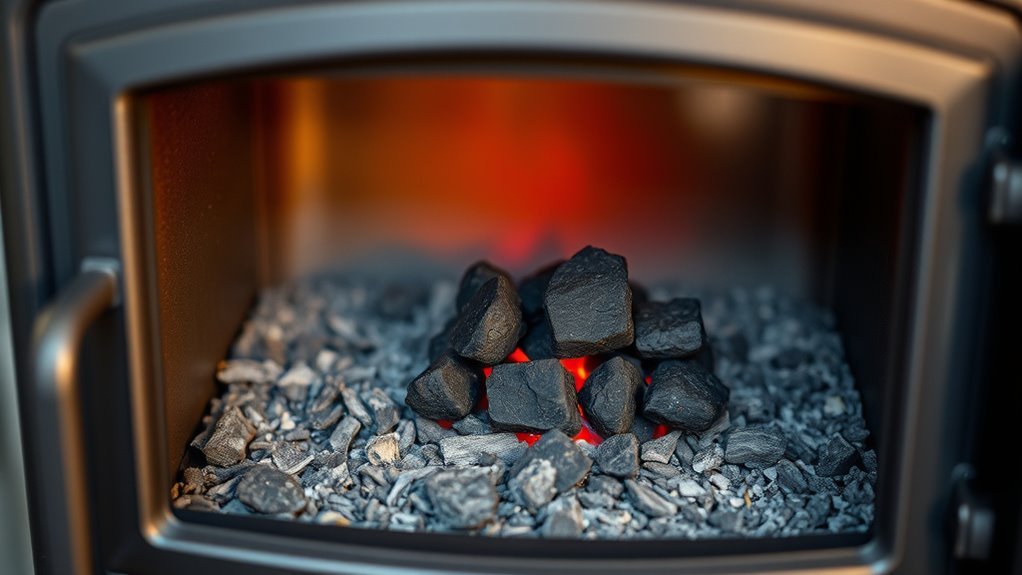
Can you burn coal in a wood burner? While it might seem convenient, wood stoves aren’t designed for burning coal. Coal needs a specific grate and airflow system, which wood burners lack.
If you try burning coal in a wood stove, you risk overheating and warping the metal. This could lead to potential damage or even structural failure.
Burning coal also creates more ash, tar, and smoke compared to smokeless fuels. This can clog your stove and chimney, which is a big hassle.
Before you consider burning coal, always check your stove’s manual. Most wood burners aren’t suitable for this type of fuel, and using coal improperly could cause safety hazards.
Why Wood Burners Aren’t Made for Coal
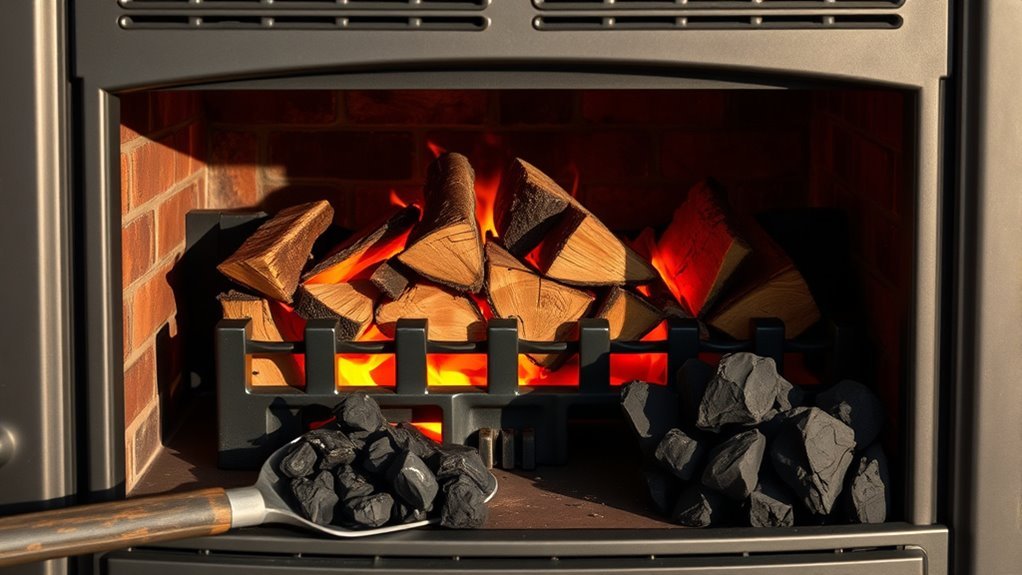
You might think a wood burner can handle coal, but it’s not built for the higher heat and heavy ash coal produces. The airflow controls in wood burners don’t meet coal’s specific needs, which can cause poor burning and damage.
Using coal in a wood burner risks excessive soot buildup and warping, so it’s best to stick to what the stove was designed for. Trust me, it’s better to keep things simple and use the right fuel for your stove.
Design Limitations Of Woodburners
Although wood burners might seem suitable for burning various fuels, they aren’t designed to handle coal’s unique demands. Their design limitations prevent safe and efficient coal combustion.
Wood burners have flat combustion chambers without raised grates or shaker systems, which are essential for burning coal properly. They allow air only from above, unlike coal, which needs airflow from below to burn well.
Wood stoves operate at lower temperatures; coal’s higher heat can cause damage. Plus, they lack reinforced materials and air controls required to manage coal’s intense heat and ash.
| Design Aspect | Wood Burner Feature |
|---|---|
| Firebox | Flat, no raised grate |
| Airflow | From above only |
| Temperature Tolerance | Lower, wood-specific |
| Air Control | Limited, no coal adjustment |
| Construction | Not reinforced for coal use |
Airflow Requirements For Coal
Understanding why wood burners aren’t suitable for coal starts with how airflow works during combustion. Coal needs a steady draft to pull air upward through the coal bed, ensuring complete combustion and efficient heat.
Wood burners, however, rely on downward or top-only airflow, which doesn’t meet coal’s demands. Their flat fireboxes lack grates and adjustable draft controls essential for proper coal burning.
Without the correct airflow, coal combustion becomes poor, producing excessive smoke and dangerous gases. Since wood stoves aren’t designed to handle coal’s higher temperatures or different combustion dynamics, their airflow systems can’t be adjusted to meet these needs.
If you try burning coal in a wood burner, you’ll face inefficient combustion and safety risks due to inadequate airflow and draft control. It just won’t work safely or effectively.
Risks Of Using Coal
Because wood burners are built specifically for low-temperature, dry wood, they lack the design features needed to safely burn coal. Using smokeless coal in your wood burner can cause excessive heat output, warping metal parts and increasing the potential cause of dangerous cracks.
Wood burners don’t have shaker grates or airflow controls essential for burning coal, leading to ash buildup and flue blockages. This misuse can void warranties and raise risks of chimney fires or toxic gas leaks. It’s really not worth the risk!
| Risk | Cause | Effect |
|---|---|---|
| Excessive heat output | Burning coal in wood stove | Warping, cracking metal parts |
| Ash and tar buildup | Lack of shaker grate | Flue blockages, glass damage |
| Warranty voided | Improper fuel use | No manufacturer support |
How Multi-Fuel Stoves Are Designed for Coal

When you choose a multi-fuel stove, you’re getting a design built to handle coal’s unique demands. Multi-fuel stoves are designed for coal with raised grates that support the fuel, unlike wood-only stoves with flat fireboxes.
They use firebricks made from durable materials to withstand coal’s higher temperatures, ensuring safety and longevity. These stoves also have adjustable air vents and intake controls, giving you the airflow needed for efficient coal burning.
Ash collection is streamlined through built-in trays and shaker grates, making cleanup easier and maintaining airflow. Plus, enhanced ventilation systems promote thorough combustion by directing air both below and above the fuel.
That helps you burn coal more cleanly and effectively in your stove.
Safe Coal Types for Multi-Fuel Stoves
Choosing the right coal is just as important as having a stove designed for it. When using multi-fuel stoves, you should opt for safe coal types like processed smokeless coals, such as anthracite or specific prepared bituminous grades.
These coals, especially those certified ‘Ready to Burn,’ are designed to produce fewer emissions and burn efficiently. This helps protect both your stove and the environment.
Avoid household or raw house coal, as it contains high sulfur and creates excessive smoke. Also, pay attention to the size and shape of the coal—nugget-sized or lump coal work best for maximum combustion.
Always check that the coal matches your stove manufacturer’s specifications. This guarantees safe and effective operation with smokeless coals in your multi-fuel stove.
Benefits of Smokeless Coal for Your Stove
Although some fuels may seem convenient, using smokeless coal in your stove offers clear advantages. When you burn smokeless coal in a wood burner, you benefit from a cleaner burn that produces markedly less smoke and soot. This means less chimney buildup and easier maintenance.
Smokeless coal also emits lower levels of harmful gases like carbon monoxide and sulfur dioxide. So, it’s a safer and more environmentally friendly choice.
Thanks to its high calorific value, smokeless coal provides more heat output per unit and burns longer than traditional house coal. That keeps your home warmer for longer periods.
Tips for Burning Coal Safely in Compatible Stoves
Before you start burning coal in your wood burner, make sure it’s designed to handle coal safely. Check with the manufacturer if your stove is rated for coal and install a proper coal grate for higher temperatures.
Using smokeless fuels or anthracite meant for multi-fuel stoves guarantees cleaner burning and less residue. It’s a simple way to keep your stove running efficiently and your home safer.
Maintain proper ventilation and control airflow with adjustable draft dampers to prevent overheating. Regularly clean ash and soot to keep airflow efficient and avoid chimney hazards.
| Tip | Reason | Frequency |
|---|---|---|
| Verify stove compatibility | Prevent damage and hazards | Once before use |
| Use smokeless fuels | Cleaner burning, less residue | Every burn |
| Install coal grate | Handle higher temperatures | Once |
| Control airflow | Avoid overheating | Every burn |
| Clean ash and soot | Maintain ventilation | Weekly or as needed |
Frequently Asked Questions
How Do I Clean My Chimney After Burning Coal?
You should wait until the chimney cools, then use a stiff chimney brush to scrub away soot and creosote. Wear protective gear and consider hiring a professional if buildup is heavy or you’re unsure about the process.
Cleaning a chimney after burning coal can be tricky. It’s important to take your time and be careful. If you’re not confident, calling in an expert is always a good idea.
Can Coal Ashes Be Used in the Garden?
You’d think coal ashes could power the whole garden! But actually, you shouldn’t use coal ashes—they contain harmful chemicals that can poison your plants and soil.
Stick to wood ash for a safer, nutrient-rich boost instead. It’s a much better choice for keeping your garden healthy and thriving.
What Are the Environmental Impacts of Burning Coal?
You release harmful pollutants like sulfur dioxide and mercury when burning coal, causing acid rain and air quality issues. It also emits high carbon dioxide levels, contributing profoundly to climate change.
This harms ecosystems and human health in a big way. So, burning coal isn’t just about energy—it has serious environmental consequences.
How Does Burning Coal Affect Indoor Air Quality?
Imagine thick, choking smoke swirling inside your home—that’s what burning coal can do to your indoor air quality. It releases harmful particles and gases, making the air unsafe to breathe.
This can cause irritation or even health issues. So, it’s not just about the smell; it’s about your health too.
Are There Alternatives to Coal for Long-Lasting Heat?
You can use hardwood logs, compressed wood briquettes, or pellets as alternatives to coal for long-lasting heat. These options burn cleaner and produce less smoke.
They offer steady warmth without compromising your indoor air quality. So, if you’re looking for something more eco-friendly, these could be a great choice!
Conclusion
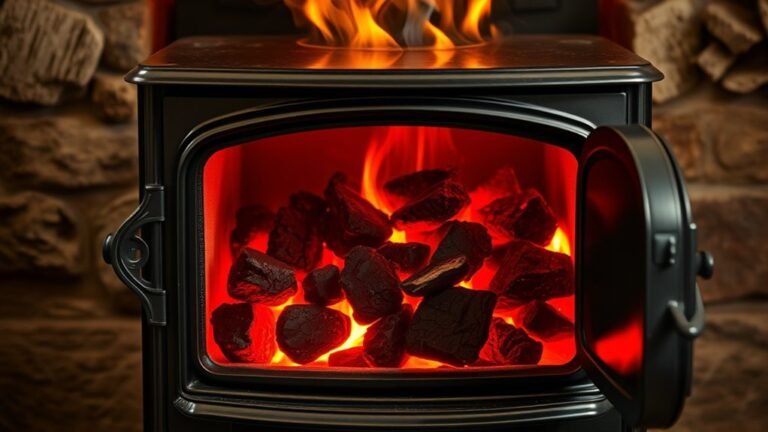
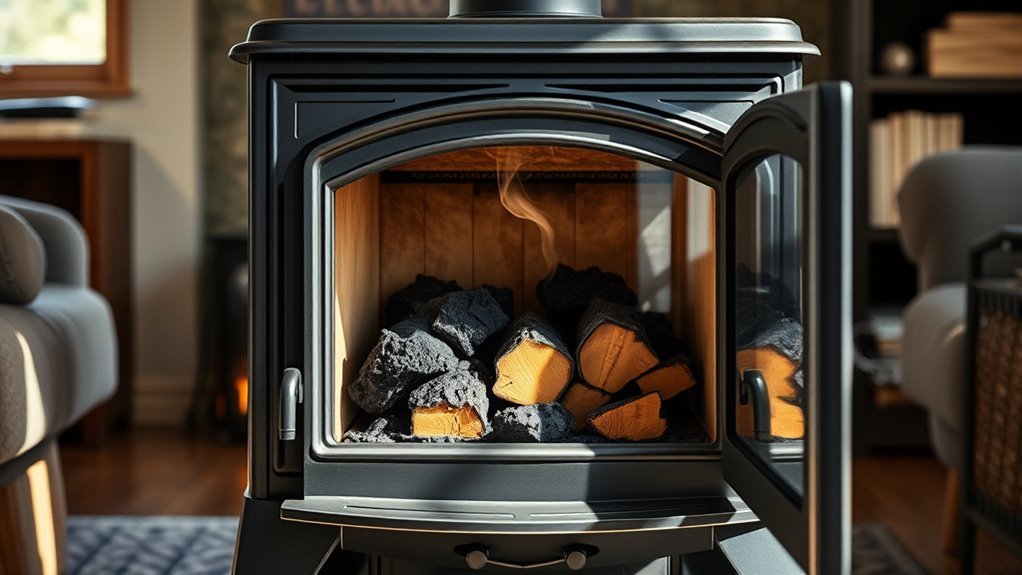
You might picture a warm, crackling fire dancing behind your stove’s glass, but remember—wood burners aren’t built for coal’s fierce heat and sparks.
If you want that coal glow, choose a multi-fuel stove designed to handle it safely. Opt for smokeless coal to keep your home cozy and air clear.
With the right stove and care, you’ll enjoy a safe, steady warmth that fills your space with comforting light and gentle heat. Burning coal in a wood burner isn’t recommended, as it can damage the stove and create safety risks. Instead, investing in a proper multi-fuel stove allows you to burn coal efficiently and safely. So, if you’re wondering, “Can you burn coal in a wood burner?” the best answer is to use the right equipment designed for coal. This way, your home stays warm, safe, and cozy all winter long.