Can You Burn Wood in a Gas Fireplace?
You shouldn’t burn wood in your gas fireplace because it’s designed specifically for gas use only. Burning wood can cause excessive heat that may crack ceramics and damage the firebox.
Plus, harmful smoke and creosote can build up, creating serious safety hazards like carbon monoxide leaks or chimney fires.
Also, doing so will void your warranty and risk costly damage.
If you want to know how to spot different fireplaces and safer options, keep exploring these important details.
Key Takeaways
- Burning wood in a gas fireplace can cause excessive heat. This can lead to cracks and damage in the firebox and ceramic components.
- Gas fireplaces are sealed systems. They’re not designed to vent smoke, soot, or creosote produced by wood fires.
- Using wood in gas units risks indoor air pollution and carbon monoxide leaks. These pose serious health hazards you definitely want to avoid.
- Also, using wood in a gas fireplace voids manufacturer warranties. Plus, it compromises important safety standards.
- Safer alternatives include using realistic gas logs or electric inserts. Or better yet, fireplaces made specifically for burning wood.
How to Identify Gas vs. Wood Fireplaces for Burning Wood
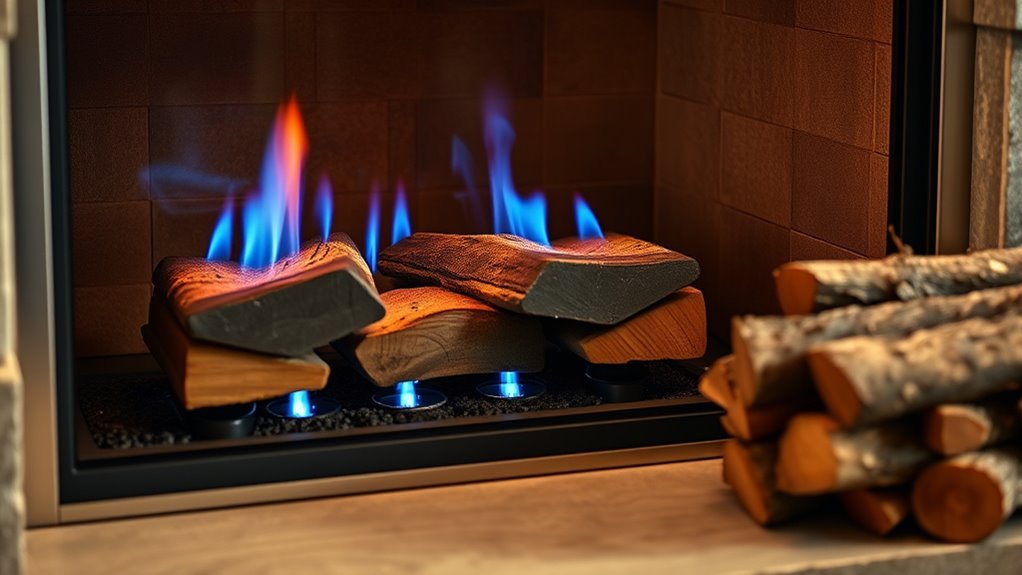
Although gas and wood fireplaces may look similar at first glance, you can quickly identify which type you have by checking a few key features. A gas fireplace typically has a gas line, control valve, pilot light, and fixed ceramic logs.
Gas fireplaces feature a gas line, control valve, pilot light, and fixed ceramic logs for easy identification.
It often comes sealed with a glass front that doesn’t open, and it may lack a traditional chimney, instead using a specialized venting system.
In contrast, a wood-burning fireplace includes a metal fire grate where you place the wood, and a damper handle to control airflow. You’ll notice soot or ash around the chimney, which vents smoke from burning wood.
Wood fireplaces usually have open fronts or screens, allowing you to add logs easily. Spotting these differences helps you know if your fireplace is ready for wood burning.
Why Burning Wood in a Gas Fireplace Is a Bad Idea
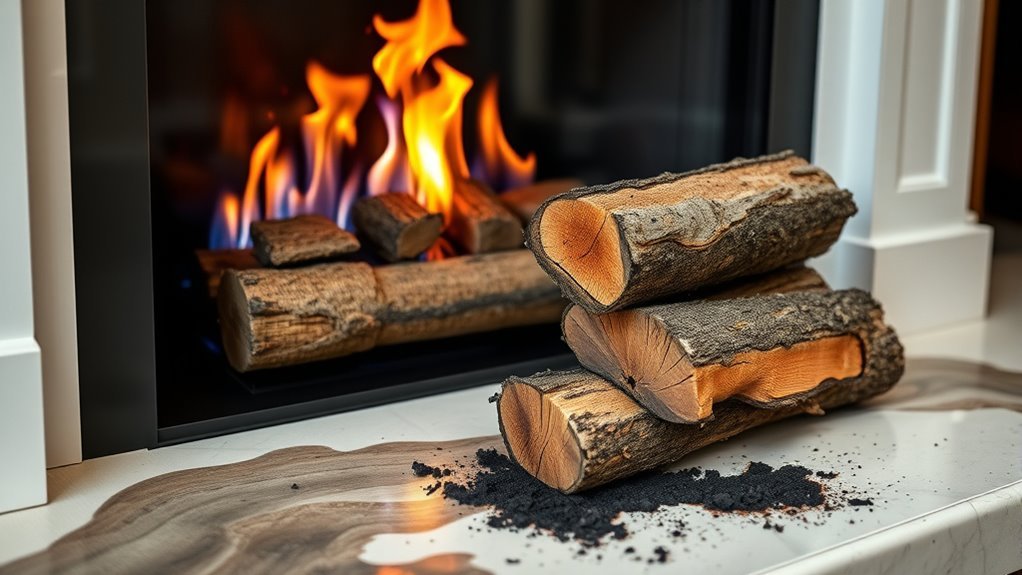
Why should you avoid burning wood in a gas fireplace? Burning wood produces much higher heat than gas, which can cause cracks in the firebox and ceramic components. These parts are made for lower temperatures, so the intense heat from wood isn’t a good match.
Gas fireplaces have sealed systems that aren’t built to vent smoke, soot, or creosote from wood fires properly. This can lead to dangerous indoor air pollution, which is definitely something you want to avoid.
Your fireplace simply isn’t designed to handle the intense heat or emissions that wood creates. This can damage the unit and even void your warranty, which is a big deal.
| Issue | Why It Matters |
|---|---|
| Cracks | Firebox and ceramics can fail |
| Venting | Inadequate for wood smoke |
| Safety Risks | Possible fire hazards |
| Warranty | Manufacturer coverage voided |
What Happens If You Burn Wood in a Gas Fireplace?
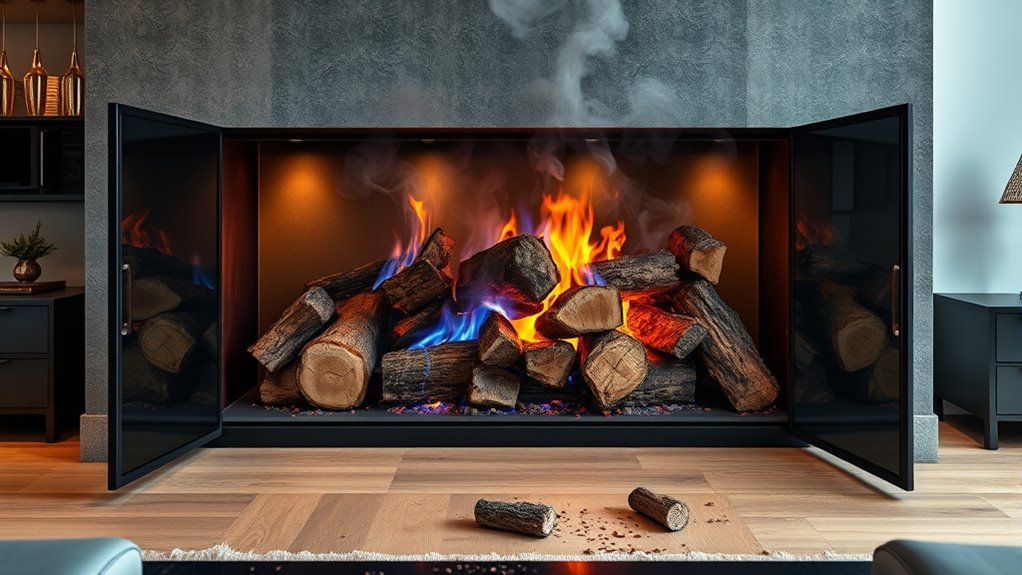
If you burn wood in a gas fireplace, you risk damaging the firebox and ceramic components because they can’t withstand the higher temperatures wood produces. Wood burning in a gas fireplace isn’t just unsafe—it can cause serious damage and hazards.
Burning wood in a gas fireplace risks serious damage and safety hazards due to high temperatures.
Here’s what happens:
- The intense heat from wood can crack or warp the firebox and ceramic logs designed only for gas flames.
- Burning wood creates creosote buildup inside the chimney, increasing fire risk.
- Wood combustion produces carbon monoxide and toxic gases that may leak into your living space, as the sealed design of a gas fireplace isn’t made to handle these byproducts.
In short, burning wood in a gas fireplace compromises safety, damages the unit, and voids warranties.
Can You Use Converted Fireplaces or Gas Inserts for Wood Fires?
When you consider using a converted fireplace or gas insert for wood fires, you need to understand that these units are engineered specifically for gas combustion. They aren’t built to handle the heat, smoke, or residue that burning wood produces.
Gas inserts and gas fireplaces have sealed systems and venting designed solely for gas. So, burning wood can cause dangerous safety hazards like carbon monoxide buildup and fire risks.
Attempting to burn wood in a gas insert can damage the unit and void warranties. If you’re thinking about using a converted fireplace or gas insert for wood, you must get a professional inspection and approval first.
Safer Ways to Enjoy Fireplace Ambiance Without Burning Wood
Since burning wood in a gas fireplace or insert poses safety risks and can damage your unit, you might want to explore safer alternatives that still offer a cozy fire atmosphere.
You can enjoy the ambiance without compromising safety by choosing options designed for gas use. Here are three safer ways to create that warm glow:
- Use a realistic gas log set made specifically for gas fireplaces to replicate wood’s look without hazards.
- Install an electric fireplace insert; it mimics flickering flames without emissions or venting.
- Upgrade to a sealed gas fireplace or insert designed for gas to maintain safety while delivering ambiance.
Regular maintenance and professional inspections ensure your unit stays safe and effective. So, it’s best to avoid burning wood in a gas fireplace.
Frequently Asked Questions
Is It Safe to Burn Real Wood in a Gas Fireplace?
No, you shouldn’t burn real wood in a gas fireplace. It’s unsafe because the fireplace isn’t designed for wood’s heat and smoke.
This can damage components and cause dangerous indoor air quality or carbon monoxide buildup. So, it’s really best to stick with the fuel your fireplace was made for.
How Do I Know if My Gas Fireplace Can Burn Wood?
You can check if your gas fireplace can burn wood by inspecting for a metal grate, damper, and a suitable chimney.
Always consult your manufacturer’s guide or a qualified technician before burning wood to guarantee safety.
It’s better to be safe than sorry, right? Making sure everything is set up properly will keep your home safe and cozy.
Can You Turn a Gas Fireplace Into Wood-Burning?
You can’t casually convert a gas fireplace into a wood-burning wonder without costly changes.
You’ll need a certified contractor to carefully consider safety, structure, and standards before switching to a wood fire’s wild warmth.
What Are the Downsides of a Gas Fireplace?
You’ll face higher operating costs, limited heat output, and dependency on gas supply with a gas fireplace. Maintenance can be tricky, and you might miss the authentic crackle and aroma of a real wood fire.
Honestly, it’s not the same vibe as a traditional wood fire. Plus, if the gas goes out, so does your heat. It’s something to keep in mind when choosing what’s best for your home.
Conclusion
You might see a gas fireplace as a sleek lantern, glowing softly with convenience. But trying to burn wood in it is like forcing a wild flame into a glass jar—trapped and dangerous.
Instead, let your wood fires dance freely in their own rightful hearth, where sparks can leap and breathe. Trust the design; honor the fire’s nature.
This way, you’ll keep warmth alive safely, letting comfort glow without risking the spark’s true spirit. Burning wood in a gas fireplace is not recommended because it can damage the unit and create safety hazards.
So, for the best experience and to maintain safety, use your gas fireplace as intended and save your wood fires for a traditional wood-burning fireplace. That’s how you enjoy warmth and ambiance without compromising your home’s safety.