Did Washington Have Wooden Teeth?
You might have heard that George Washington had wooden teeth, but that’s actually a myth. The idea of Washington’s wooden teeth is pretty popular, but it’s not true.
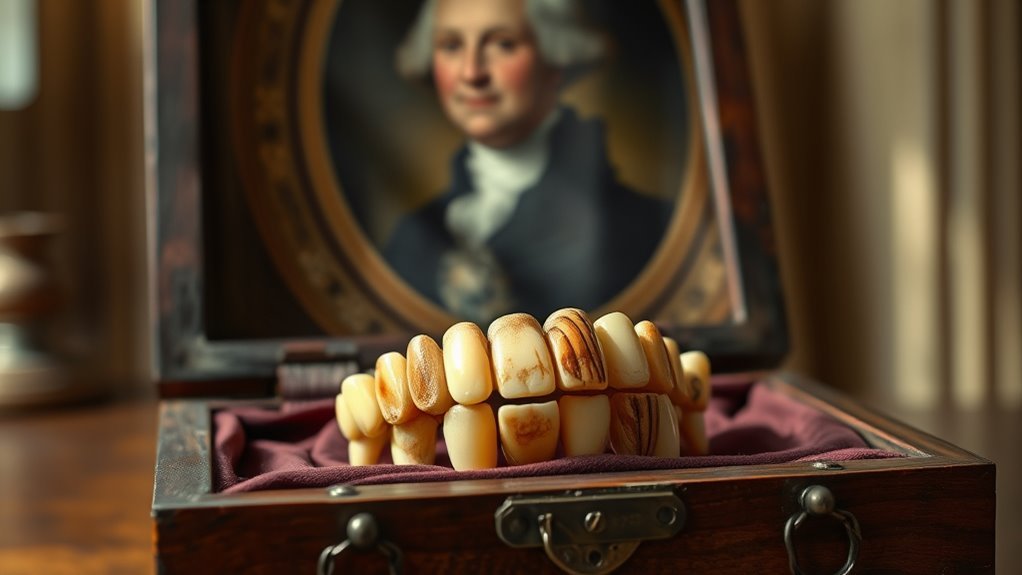
His dentures were made from ivory, human teeth, and metal parts like gold and springs—no wood at all.
The wood story likely came from stained ivory that looked like wood over time. These dentures reflected the dental technology of his era and had to be carefully crafted and maintained.
If you want to uncover more about his dental history and the truth behind the myth, keep exploring. It’s pretty fascinating to see how dental care has evolved since Washington’s time!
Key Takeaways
- George Washington never had wooden teeth; this is a persistent myth based on stained ivory dentures. His dentures were made from ivory, human teeth, and metal, with no wood involved in their construction.
- The discoloration of ivory dentures caused early observers to mistakenly believe they were wooden. Washington’s dentures included teeth sourced from humans and animals, secured with gold, lead, and springs.
- Museums preserve and display his actual dentures to correct the wooden teeth misconception and educate the public. So, even though the story about wooden teeth is popular, it’s just not true!
Where Did the Myth of Washington’s Wooden Teeth Come From?
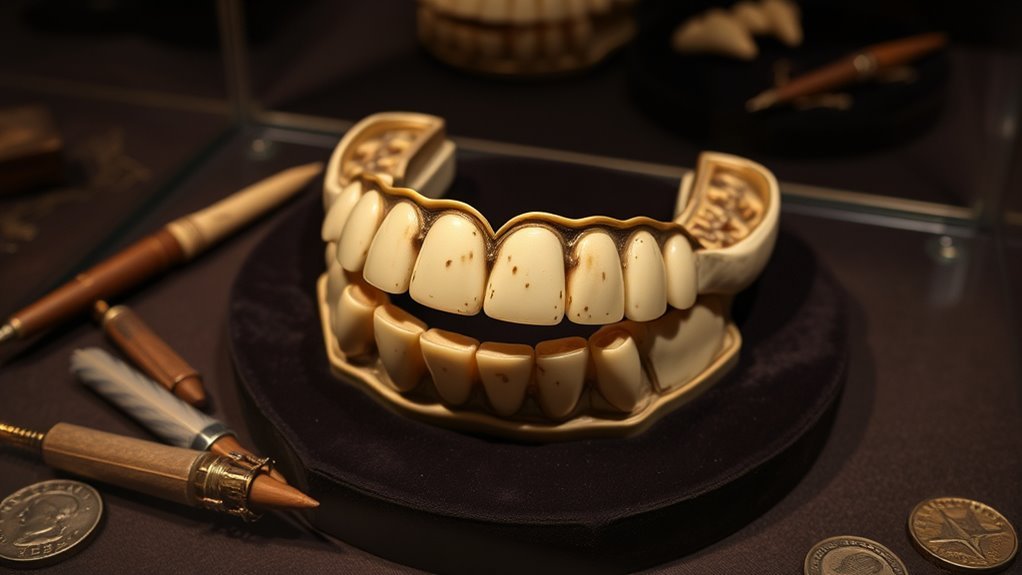
Although many people believe George Washington had wooden teeth, the truth is quite different. The myth origin likely stems from the appearance of Washington’s dentures, which were made of ivory.
Over time, the ivory dentures stained and discolored, resembling the texture of wood. Early visitors and reports misinterpreted this stained ivory as wooden teeth, fueling the false teeth story.
This historical misconception stuck around partly because people back then weren’t familiar with the dental materials and early dental practices used in the 18th century.
You might be surprised to learn that Washington’s dentures actually combined ivory with human teeth and other materials. So, when you hear about his wooden teeth, remember it’s really about stained teeth and a misunderstanding of what his false teeth were made of.
What Materials Were Actually Used in Washington’s Dentures?
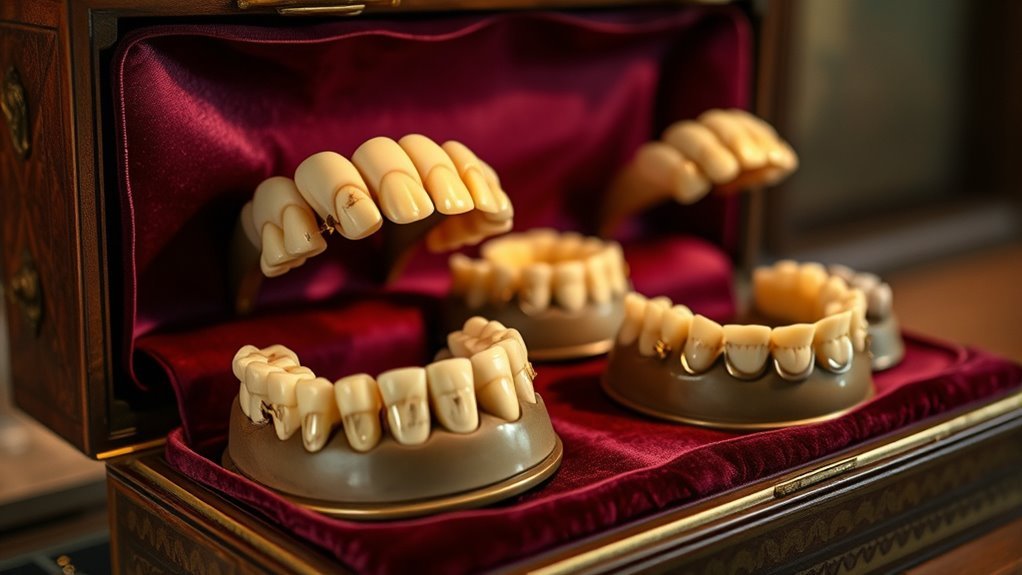
You might have heard that George Washington’s dentures were made of wood, but the truth lies in the materials actually used to craft them. Washington’s dentures were primarily made from ivory sourced from elephants, rhinoceroses, and even hippopotamuses.
Along with ivory, human teeth were often included, obtained through purchase or dental exchanges. These materials were chosen for their durability and availability in dental practices of the time.
To secure the teeth in place, metal components such as gold, lead, and springs were incorporated into the dentures. Despite the popular myth, no wood was ever used in Washington’s teeth.
Understanding these materials helps you appreciate the complexity and craftsmanship behind Washington’s dentures, reflecting the dental technology available in his era.
What Role Did the Tooth Trade Play in Washington’s Dentures?
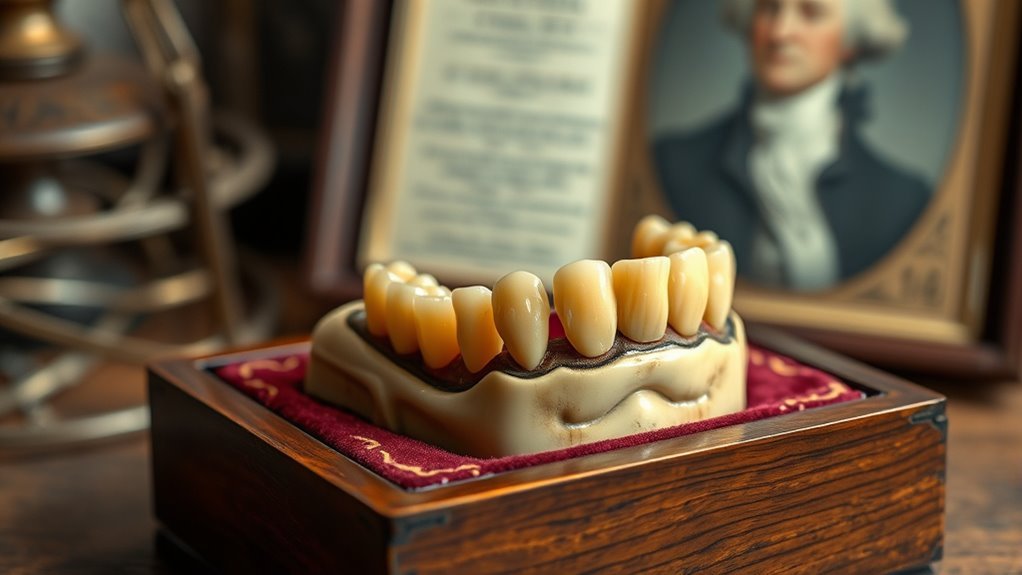
Since dentures required natural teeth to look and function realistically, the tooth trade played a crucial role in supplying materials for George Washington’s dental appliances. This trade involved sourcing human teeth from community members, including poor individuals who sold their teeth for money or goods.
Washington’s dentures incorporated these false teeth, reflecting the widespread dental trade in 18th-century dentistry. The tooth trade was essential for early American dentures, relying on community participation to gather the necessary dentures materials.
| Aspect | Details | Impact on Washington’s Dentures |
|---|---|---|
| Tooth Sourcing | Human teeth from deceased and living sellers | Realistic appearance and functionality |
| Community Participation | Poor people and slaves contributed teeth | Diverse supply for dentures materials |
| Dental Trade | Common practice in 18th-century dentistry | Supported false teeth availability |
| Early American Dentures | Use of natural teeth over wood or ivory | Enhanced durability and fit |
| Washington’s Dentures | Combined various sourced teeth | Showed reliance on tooth trade |
How 18th-Century Dental Practices Shaped Washington’s Dentures
When you look beyond the common myth of wooden teeth, 18th-century dental practices reveal a complex craft behind George Washington’s dentures. Dentures then weren’t made from wood but from materials like ivory, human teeth, and animal teeth, often sourced through a black market trade.
Washington’s dentures combined these materials with metal parts to enhance fit and function. The dental practices of the 18th century required frequent dental adjustments and replacements, reflecting the challenges of working with such varied materials.
These dentures stained over time, which likely fueled the wooden teeth myth. Understanding these dental practices shows how Washington’s dentures were custom-made and carefully maintained, highlighting the skill and resourcefulness involved in 18th-century denture craftsmanship.
Meet the Dentists Who Crafted Washington’s Dentures
Although many know George Washington struggled with dental issues, few realize the skilled dentists behind his dentures played an essential role in his comfort and appearance.
John Greenwood, Washington’s primary dentist, crafted multiple sets of dentures using ivory, human teeth, and gold. He even performed Washington’s final tooth extraction in 1796.
Greenwood kept detailed dental records, ensuring precision in his dental work and maintaining Washington’s oral health.
Later, French dentist Jean Le Mayeur provided additional dental care, reflecting the trust placed in expert hands.
| Dentist | Contribution |
|---|---|
| John Greenwood | Crafted dentures, tooth extraction |
| Jean Le Mayeur | Provided advanced dental work |
| George Washington | Maintained trust, valued dental care |
Their skill shaped history, one tooth at a time.
How Did Washington’s Denture Problems Affect His Life?
Dental pain and discomfort from George Washington’s dentures shaped much of his daily life, affecting how he spoke and presented himself. You’d notice that his ill-fitting dentures caused ongoing dental problems, leading to significant oral health challenges.
This discomfort limited his ability to smile freely and impacted his speech, making public appearances more difficult. Washington’s struggles with dental pain didn’t just affect his personal comfort—they may have had a leadership impact, influencing his confidence and decision-making.
Despite these issues, he invested considerable effort in dental care, trying to improve his dentures. Understanding these challenges helps you see how dental problems shaped both Washington’s private moments and his public image, revealing the human side behind the historical figure.
Where Can You See Washington’s Dentures Today?
If you want to see Washington’s dentures up close, you can visit the Mount Vernon Museum in Virginia, where his actual sets are displayed.
You’ll also find some of his dental artifacts at the National Museum of Dentistry in Baltimore.
These museums give you a rare chance to explore the materials and craftsmanship behind his famous teeth.
It’s pretty cool to see how they made dentures back then, don’t you think?
Museum Locations Displaying
When you want to see George Washington’s dentures, two main museums stand out: the National Museum of Dentistry in Baltimore and Mount Vernon, his historic estate.
The Mount Vernon museum features a complete set of Washington’s dentures, offering a firsthand look at his dental artifacts amid the historic estate’s rich context. Meanwhile, the National Museum of Dentistry, part of the Smithsonian Institution, provides a detailed dentures display that explores the dental materials and care history behind Washington’s teeth.
Both locations help debunk the wooden teeth myth by showcasing the actual craftsmanship and materials used. Visiting these museums lets you connect with Washington’s dental care history through authentic exhibits.
It’s a great way to get an accurate glimpse into the challenges he faced with his dental health.
Public Viewing Opportunities
Curious about where you can see George Washington’s dentures today? You can visit the Mount Vernon Museum in Virginia. There, Washington’s dentures are part of the permanent museum collections.
The National Museum of Dentistry in Baltimore also offers dental artifacts and sometimes displays original dentures. Both locations provide public viewing opportunities featuring detailed replicas and authentic pieces within educational displays and dental exhibits.
Occasionally, other historical sites host special events showcasing Washington’s dental history. These events give you a rare chance to see these artifacts firsthand.
If you can’t visit in person, many museums offer digital reconstructions and photographs online. Whether through replicas or originals, these exhibits give you a fascinating glimpse into Washington’s dentures and his dental care during his lifetime.
Why It’s Important to Debunk Myths About Washington’s Dental Health
Although many people believe George Washington had wooden teeth, debunking this myth is essential for understanding 18th-century dentistry accurately. When you learn that Washington’s dentures were made from ivory teeth, human teeth, and metal, you confront common misconceptions head-on.
This clarification promotes historical accuracy and gives you insight into the dental materials and care available during his time. By debunking the wooden teeth myth, you help preserve the integrity of Washington’s personal health story and highlight the challenges he faced.
Furthermore, knowing the truth emphasizes how far dental technology has advanced since then. Ultimately, correcting these falsehoods supports public education, allowing you and others to appreciate early American dental history with a clearer, more informed perspective.
Frequently Asked Questions
What Illness Did George Washington Have?
You’d find that George Washington had smallpox, malaria, and likely tuberculosis. These illnesses, along with his recurring dental problems, challenged his health throughout life.
But he kept pushing forward despite these tough conditions. It’s pretty impressive how he managed to stay strong through all that.
How Did George Washington Treat His Slaves?
You’d find that Washington rarely treated his slaves personally. He mostly allowed local doctors or enslaved caregivers to handle illnesses and injuries.
This was pretty typical for his time, with limited direct involvement in their healthcare. It wasn’t unusual back then for owners to leave the day-to-day care to others.
Was Washington Faithful to His Wife?
You won’t find evidence that Washington strayed; he stayed faithful to Martha throughout their marriage. Their letters and actions show deep trust and love.
They prove he valued her loyalty and kept their bond strong and true. It’s clear they had something real going on.
What Were George Washington’s Last Words Before He Died?
George Washington’s last words were reportedly “’Tis well” or “It is well.”
You can see he accepted death calmly, reassuring his secretary Tobias Lear with simple, peaceful words during his final moments at Mount Vernon.
It’s like he was ready to go, and wanted to leave everyone feeling okay. Just a quiet, gentle goodbye.
Conclusion
You might picture George Washington with wooden teeth, but that’s just a myth—his dentures were made from ivory, gold, and even human teeth.
Think of his dental struggles like a ship charting rough seas; despite discomfort, he kept steering the course of history.
Understanding the real materials behind his smile helps you see Washington not as a legend carved in wood, but as a man who faced very human challenges.
So, next time you imagine Washington’s teeth, remember they weren’t wooden at all. His dentures made from ivory, gold, and human teeth tell a story of resilience. It’s a reminder that even great leaders dealt with everyday problems, making his legacy even more relatable. Knowing the truth about Washington’s teeth helps us appreciate the man behind the myth and see history in a more human light.