How Does Super Glue Work on Wood Step by Step
To use super glue on wood, start by cleaning and drying your surface thoroughly. Make sure to remove any dust, oils, and loose fibers because they can stop the glue from sticking properly. Lightly sanding the area helps the glue grip the wood better.
Next, apply a thin, even layer of glue right on the break. Press the pieces firmly together for a few seconds so they bond well. If you want to speed up the process, you can spray an activator on the glue after applying it.
For bigger gaps or cracks, try mixing the super glue with sawdust to create a filler that matches the wood. Following these simple steps will give you a strong, seamless bond.
Plus, you’ll find easy ways to enhance and finish your wood repairs perfectly every time.
Key Takeaways
- Clean and dry the wood surface thoroughly. Make sure to remove any dust, grease, and oils for the best possible adhesion.
- Lightly sand the area and get rid of any loose fibers. This creates a smooth, porous surface that helps the glue soak in better.
- Apply a small, even layer of super glue right onto the break or crack. Be careful not to use too much glue; a little goes a long way.
- Press the glued pieces firmly together. Hold or clamp them for several seconds so the bond gets nice and strong.
- If you’re dealing with larger gaps, try mixing sawdust with the glue. Apply it in layers, letting each one dry completely for extra strength and a better finish.
What Makes Super Glue Work on Wood
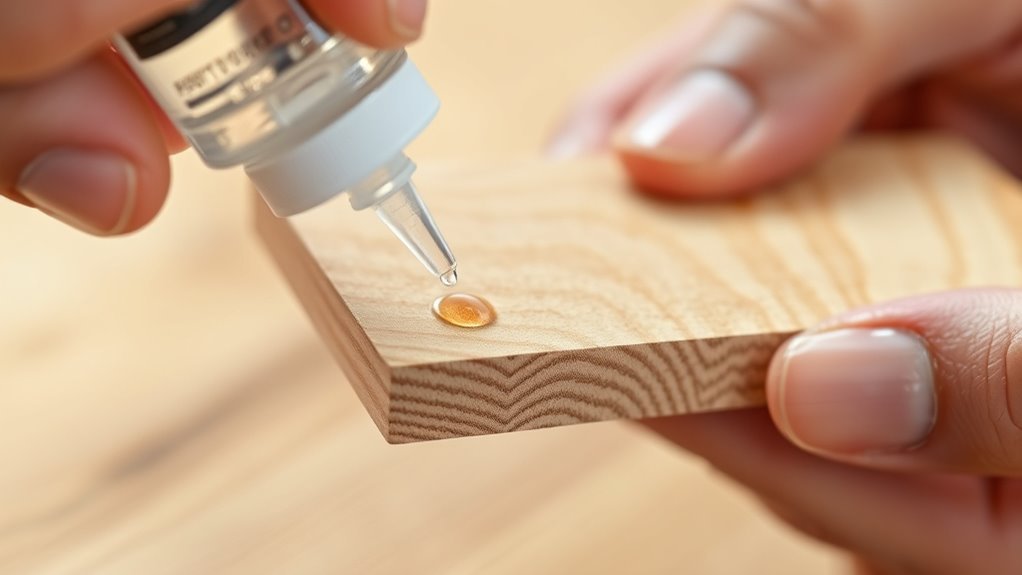
Although wood may seem difficult to bond, super glue works effectively because it reacts instantly with the moisture on the wood’s surface. When you apply cyanoacrylate, the moisture triggers rapid polymerization, causing the glue to harden quickly.
This fast curing process allows the glue to penetrate the tiny pores and cracks in the wood’s porous structure. As the cyanoacrylate molecules link together through chemical crosslinking, they form a strong, durable bond that fills gaps and resists water.
Thanks to its thin viscosity, super glue seeps deeply into the wood, creating a clear and waterproof connection. So, by relying on moisture to activate polymerization, super glue guarantees your wood pieces hold firmly and last longer under stress.
Preparing Wood Surfaces for Super Glue
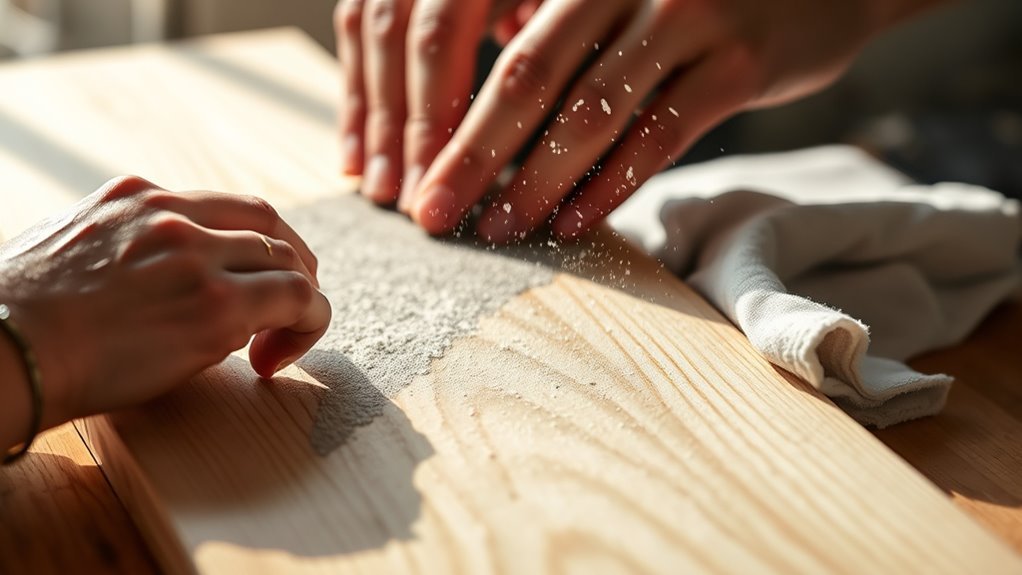
Before you apply super glue, make sure the wood surface is clean and completely dry. Use a brush or cloth to remove dust, grease, and old glue. Then, wipe it down with isopropyl alcohol to eliminate oils.
Also, check that the wood’s moisture level is low. Damp surfaces can prevent a strong bond, so it’s important to get this right.
Surface Cleaning Methods
When preparing wood surfaces for super glue, you’ll want to clean thoroughly to remove dust, grease, and debris using a tack cloth or a damp cloth with mild soap. This guarantees a clean surface free from particles that can weaken the bond.
After dust removal, lightly sand the wood with fine-grit sandpaper to create a smooth matte finish that enhances glue adhesion. Next, focus on residue elimination by wiping the surface with isopropyl alcohol or acetone to remove oils and leftover finishes like paint or varnish.
Make sure the wood is completely dry before applying super glue, as moisture can compromise the bond. Following these surface cleaning methods helps you achieve a stronger, longer-lasting repair.
Wood Moisture Considerations
How much moisture is present in your wood can make a big difference in how well super glue works. Wood moisture affects curing speed and overall bond strength.
Proper surface preparation is essential to guarantee the glue adheres effectively. So, keep these points in mind:
- Use clean, dry wood for the strongest bond—excess moisture interferes with adhesion.
- Slightly moist or green wood can speed curing, but avoid too much moisture since it weakens the bond.
- Porous woods may absorb glue unevenly. You might want to seal or pre-treat the surface first.
- Never apply super glue to wet or damp wood. Doing so can cause foaming, whitening, or incomplete curing.
How to Apply Super Glue on Wood
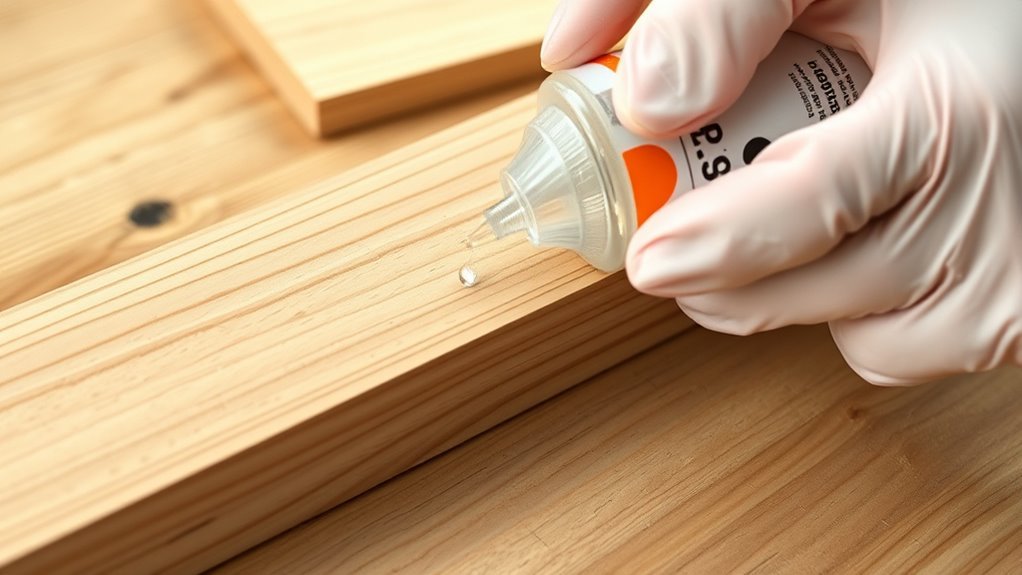
Before you apply super glue, make sure the wood surface is clean and dry for the best hold. Use just a small amount of glue and spread it evenly to avoid any mess.
If you want to speed up the drying, spraying an activator can really help strengthen the bond quickly. It’s a handy trick to keep in mind!
Surface Preparation Steps
Although applying super glue might seem straightforward, preparing the wood surface properly is essential for a strong bond. You need to focus on surface cleaning, roughening, and residue removal to guarantee the glue adheres perfectly.
Follow these surface preparation steps:
- Clean the wood thoroughly to remove dust, grease, or old glue. This step is really important because any dirt can weaken the hold.
- Lightly sand the area to create a rough texture for better adhesion. It doesn’t take much—just enough to give the glue something to grip onto.
- Remove any loose fibers or debris that could weaken the bond. You want the surface as smooth and clean as possible.
- Wipe the surface with a damp cloth or alcohol to eliminate oils and residues, then let it dry completely. This final clean ensures nothing comes between the glue and wood.
Taking these steps ensures the super glue grips the wood firmly, making your repair durable and long-lasting. It’s worth the little extra effort!
Glue Application Techniques
Once you’ve prepared the wood surface properly, applying the super glue correctly is key to achieving a strong bond. Start by applying a small amount of super glue to one surface, making sure the coverage is even but without any excess.
Use a fine applicator or the glue’s tip to control the amount precisely—this is one of the essential applying techniques in woodworking tips. Spread the glue evenly to avoid any gaps or weak spots in the bond.
Don’t spread the glue with your fingers; instead, immediately place the two wood pieces together. Press them firmly for a few seconds to let the glue bond securely.
Following these steps guarantees a clean, strong, and lasting repair with super glue on wood. It’s pretty straightforward, but doing it right makes all the difference!
Using Activator Spray
How exactly does using an activator spray change the way super glue bonds with wood? When you apply CA Glue or Cyanoacrylate Glue, the activator spray speeds up the curing process, making the bond almost instant.
Here’s how to use it effectively:
- Apply a thin, even layer of super glue to the wood, avoiding excess that can cause mess.
- Immediately spray the activator evenly over the glued area to accelerate curing.
- Hold or clamp the pieces together briefly to ensure a strong, rapid bond.
- Wait a few seconds for the activator spray to fully set the adhesive, then clean any excess glue to keep a smooth finish.
Using an activator spray transforms your wood repair with quick, strong results. It’s a handy trick that really makes a difference!
How Activator Spray Speeds Bonding
When you apply an activator spray to super glue on wood, it speeds up the curing process by triggering rapid polymerization. The spray causes CA glue molecules to crosslink quickly, reducing bonding time from minutes to seconds. This lets you hold parts together almost immediately.
Activator guarantees the glue cures evenly, creating a strong, reliable bond on wood surfaces. It’s pretty handy when you need things to stick fast and stay stuck.
Here’s how activator spray affects CA glues:
| Effect | Result |
|---|---|
| Rapid polymerization | Instant hardening |
| Even curing | Stronger bond |
| Quick handling | Faster assembly of parts |
Using activator right after applying super glue makes joining wood pieces fast and efficient. It’s a simple step that really speeds up your project.
Essential Tips for a Strong, Clean Wood Glue Bond
To achieve a strong, clean bond on wood, you need to start with a surface that’s completely clean and dry. Dust, debris, or moisture can weaken the glue’s hold.
Once the surface is ready, apply a thin, even layer of super glue—too much glue causes mess and weak spots. Next, use a rapid-acting activator spray right away to speed curing and boost adhesion.
Apply a thin layer of super glue, then immediately use activator spray for faster curing and stronger adhesion.
Finally, clamp or hold the wood firmly for several seconds to set the bond properly. Avoid disturbing the joint while it cures to keep the bond flawless.
Follow these essential tips:
- Clean and dry surfaces ensure maximum glue strength.
- Use a thin glue layer to prevent excess and mess.
- Apply activator spray immediately for faster curing.
- Clamp tightly and avoid movement during setting.
Using Super Glue for Wood Repairs
Although wood repairs can seem intimidating, using super glue makes the process quick and effective. You start by ensuring the damaged area is clean and dry.
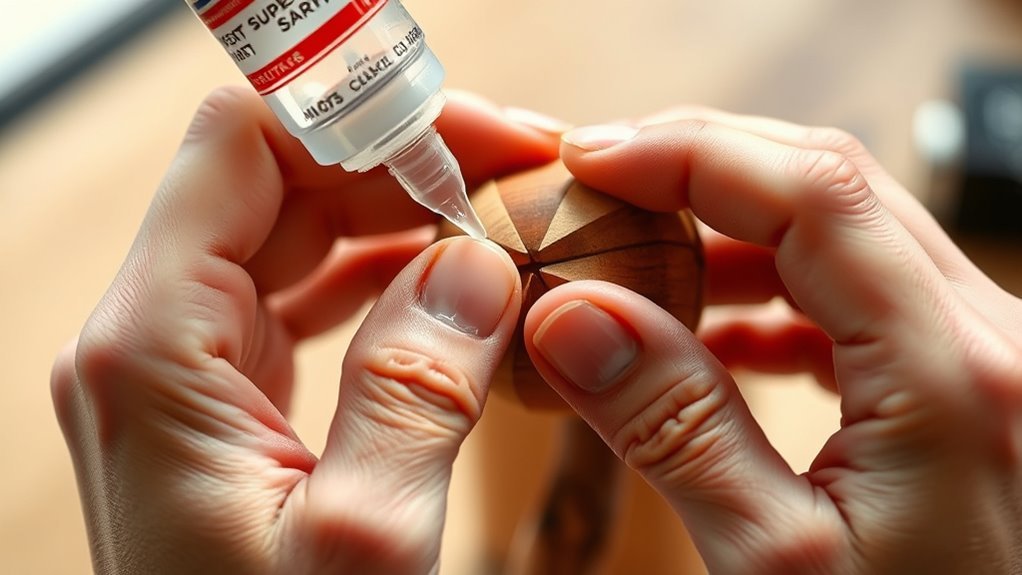
Apply a small drop of super glue to the break, then press the pieces firmly together for an instant bond. If you want faster curing, spray an activator to set the glue within seconds.
For bigger cracks or gouges, mix sawdust with super glue to fill gaps smoothly and securely. To strengthen the repair and achieve a polished look, apply multiple thin layers of glue, allowing each to dry before adding the next.
This method not only fixes the wood but also leaves a durable, high-gloss finish that blends seamlessly with the surface. It’s a simple trick that really makes a difference!
Fixing Common Super Glue Problems
Why does your super glue sometimes fail or leave unsightly white marks on wood? It’s often due to moisture, excess glue, or improper curing. To fix these issues, follow these tips:
First, prepare the surface properly by cleaning and drying the wood. This helps ensure the glue bonds well.
Next, apply a thin, even layer**** of glue. Using too much can cause weak joints and messy squeeze-out.
Also, control moisture levels carefully. Too much or too little moisture can disrupt polymerization and cause whitening.
Finally, use accelerators sparingly. While they speed up curing, too much can make the glue brittle or leave white marks.
Frequently Asked Questions
Can You Super Glue Wood to Wood?
Yes, you can super glue wood to wood. Just make sure the surfaces are clean and dry.
Apply a small amount, press them firmly together, and hold briefly. For stronger bonds, roughen the wood slightly before gluing. It really helps the glue stick better!
Is Super Glue Food Safe When Dry?
Super glue isn’t certified food-safe, even when dry. While small, accidental contact rarely harms you, it’s best to avoid prolonged exposure or ingestion.
If you’re dealing with anything that touches your food directly, it’s smarter to use food-grade adhesives instead. Better safe than sorry, right?
How to Apply CA Glue?
You apply CA glue by placing a small amount on clean wood, spreading it evenly, then pressing surfaces together firmly.
Use an accelerator spray to speed curing, and hold briefly until the bond sets for a strong finish.
It’s pretty straightforward, but make sure the surfaces are clean first. That way, the glue sticks better and lasts longer.
How Does Crazy Glue Work?
Crazy glue works by reacting with moisture on wood surfaces, causing its molecules to bond tightly and quickly. You’ll get a strong, waterproof seal as it cures fast, often within seconds.
This creates a durable hold. It’s pretty amazing how quickly it sets, right? Just a little moisture and boom—it’s stuck!
Conclusion
When you press the wood pieces together, imagine the super glue seeping into every tiny crack, like liquid glass weaving a strong, invisible thread.
With clean surfaces and a little patience, you’ll create a bond that’s as solid as the forest itself.
Each repair you make brings your wood back to life, smooth and seamless, ready to shine again.
Just follow the steps, and watch your woodwork transform before your eyes.
Using super glue on wood works because it penetrates the surface, filling gaps and creating a chemical bond that’s incredibly strong.
This makes it perfect for quick, durable fixes that hold up over time.
So, when you want to restore your wooden items or tackle small wood projects, remember that super glue is your go-to for a fast, reliable bond that makes your wood look and feel like new.