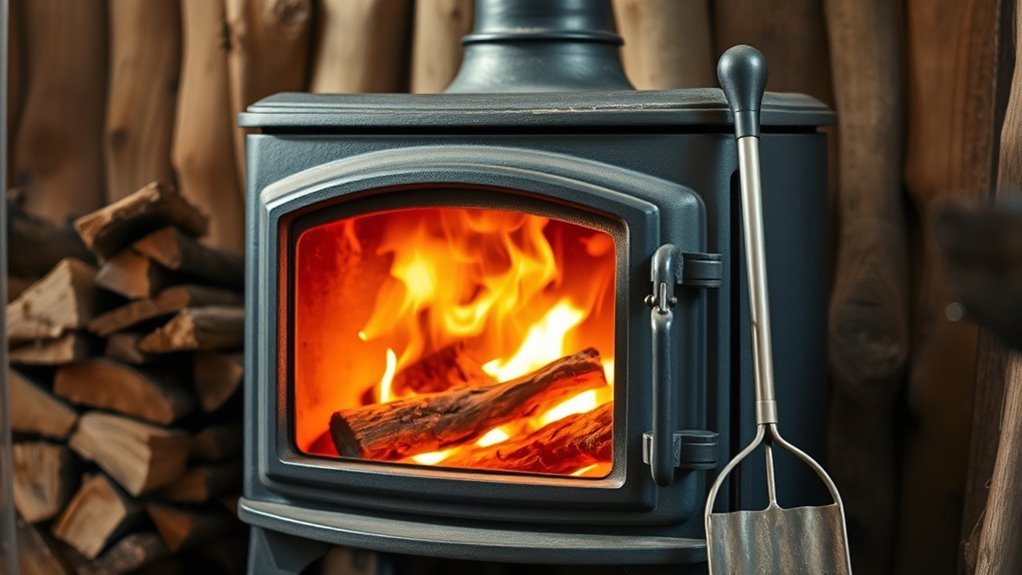
How Does a Wood Burning Stove Work Step by Step
You start by loading seasoned wood into the clean firebox, arranging logs for good airflow. Using properly dried wood is key to getting the best burn and less smoke.
Next, light kindling on top using the top-down method. This lets the flames spread downward slowly, which helps the fire catch evenly and burn efficiently.
Control the air vents to regulate oxygen flow. This promotes efficient combustion and secondary burning of gases, making your fire cleaner and hotter.
Heat radiates from the stove, warming your room evenly. It’s a cozy, steady heat that’s perfect for those chilly days.
Mastering these steps guarantees safety and warmth. Keep going to uncover how to maintain your stove and enjoy clear, inviting glass that makes your fire even more enjoyable.
Key Takeaways
- Prepare the firebox by clearing out any ash so it’s nice and clean. Then, arrange seasoned wood inside. You can stack it in a crisscross pattern or try the top-down method to help air flow better.
- Next, light the fire by placing kindling and firelighters on top of the wood. Let the flames burn down through the wood, which helps the fire catch more efficiently.
- Control the air vents—both primary and secondary—to manage how much oxygen gets in. This helps you control how fast the fire burns and keeps things efficient.
- Make use of secondary combustion. This means burning the leftover gases at high temperatures, which boosts efficiency and cuts down on smoke and emissions.
- Finally, the stove radiates heat through its metal body and glass door. This spreads warmth evenly throughout the room, keeping you cozy.
Preparing and Loading the Firebox
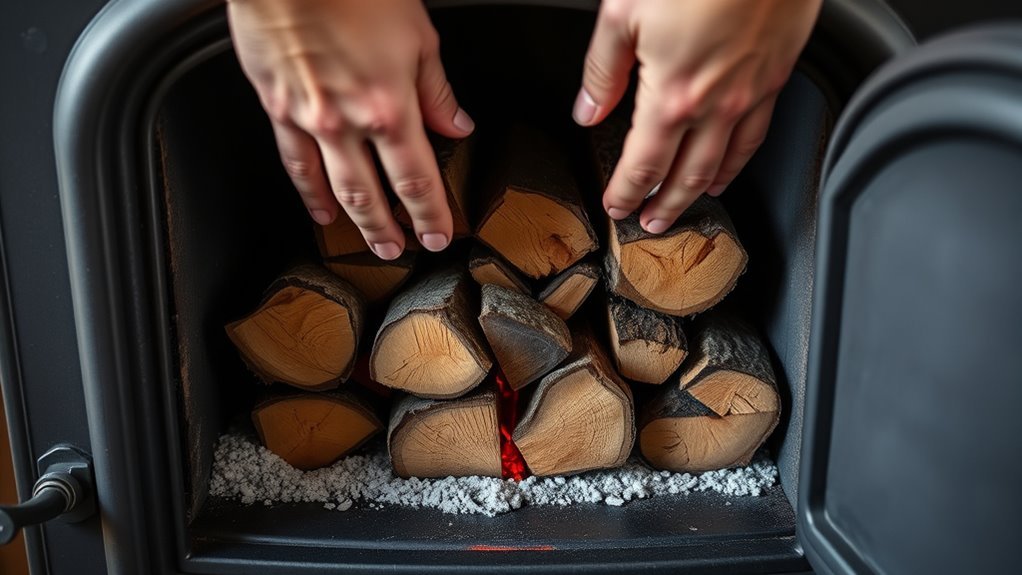
Before you load fresh wood, make sure the firebox is clean and free of old ash. Proper ash removal improves airflow, which is vital for a successful burning process.
Use seasoned wood with moisture content below 20% to guarantee efficient combustion and reduce smoke. When loading firewood, arrange logs in a crisscross or top-down pattern to promote good airflow and support ignition.
Place small kindling and reliable fire starters, like newspaper or waxed firelighters, on top of the logs to help the fire catch quickly. Avoid overloading the firebox; leave enough space for air to circulate freely.
Paying attention to these steps ensures your fire will burn efficiently, creating a warm, clean, and steady heat source every time you prepare and load the firebox.
Igniting the Fire Using the Top-Down Method
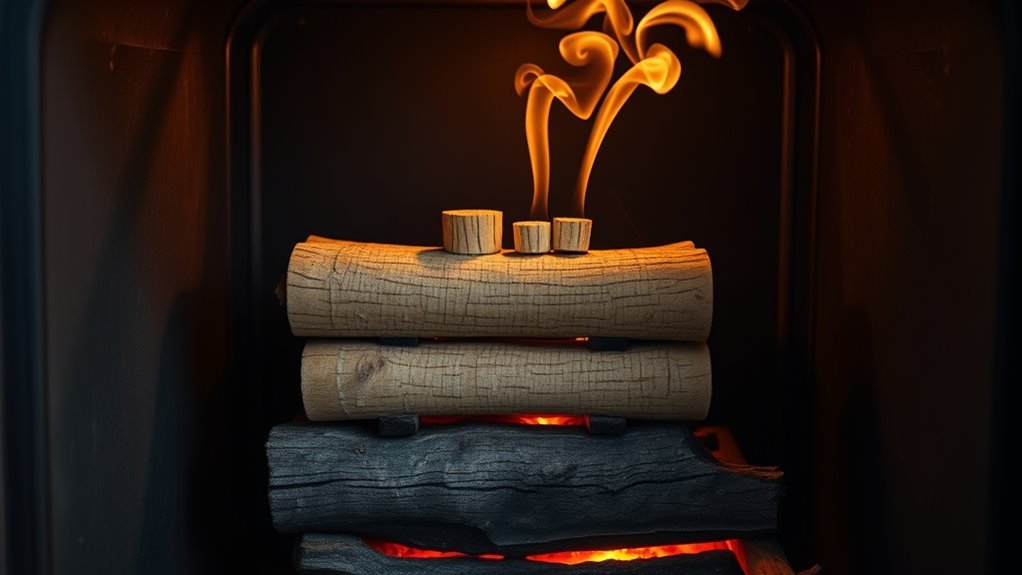
When you ignite a fire using the top-down method, you start by placing larger logs at the bottom and stacking smaller kindling and firelighters on top. Light the firelighters first, letting the flames burn downward. This ensures reliable fire ignition.
This top-down stacking promotes excellent airflow, which means less smoke and a cleaner burn inside your wood stove. The ignition process is efficient, reaching steady heat output quickly while minimizing creosote buildup.
| Aspect | Benefit |
|---|---|
| Top-down stacking | Improved airflow and heat |
| Kindling & firelighters | Reliable fire starting |
| Fire ignition | Smoke reduction and efficiency |
Plus, this method keeps the stove door closed, which preserves heat and helps the fire last longer during the starting phase. It’s a simple trick that really makes a difference!
Controlling Airflow for Efficient Combustion
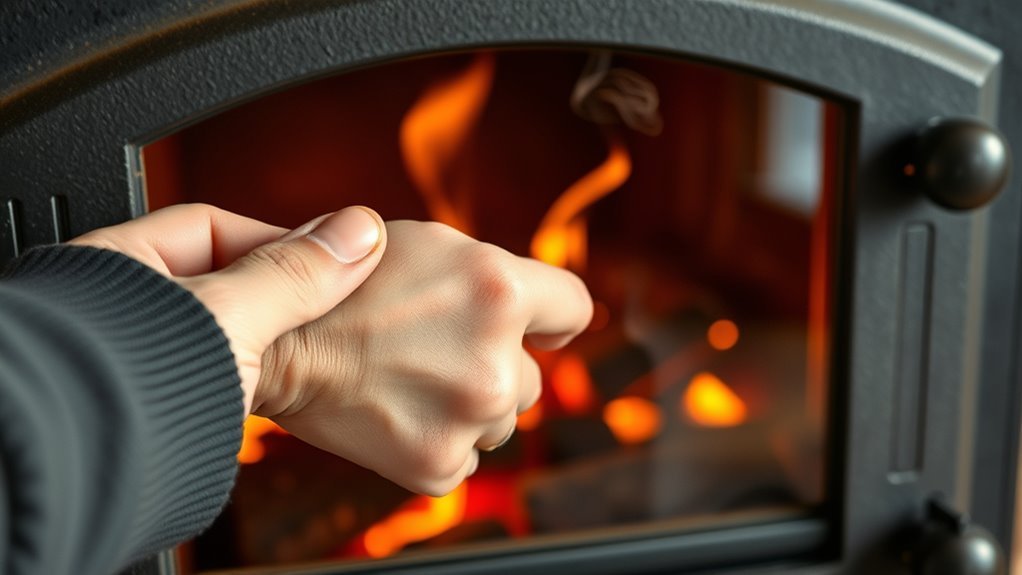
Although lighting the fire is essential, controlling airflow is what keeps your wood stove burning efficiently. You use the primary air vent to regulate oxygen entering the firebox, controlling combustion speed and heat output.
Secondary air vents supply oxygen above the fire, helping burn off gases for efficient combustion. Adjust the airflow lever to open or close vents gradually, optimizing flame size and temperature.
Think of it like this: opening vents fully during startup sparks a hot, fast burn. Then, partially closing vents maintains steady heat for longer burn times.
Open vents wide to ignite, then ease them back for lasting warmth and efficient fuel use.
Proper airflow also prevents smoldering and creosote buildup. Mastering airflow ensures your stove burns cleanly and delivers steady heat while maximizing fuel efficiency.
Understanding Secondary Combustion and Emissions Reduction
Controlling airflow sets the stage for what happens next inside your wood stove—secondary combustion. This process ignites unburned gases and smoke at higher temperatures, often supported by secondary air vents and baffle plates. By burning these leftover gases, your stove achieves higher efficiency, often reaching 78.9% or more.
Secondary combustion dramatically reduces smoke and pollutants, resulting in a cleaner burn that’s better for the environment. Since fewer unburned gases escape, emissions are lowered, which helps reduce particulate matter and curbs creosote buildup in your chimney. That means your stove runs safer and cleaner.
Modern stoves use secondary or tertiary air supplies above the fire to ensure complete combustion. Understanding and optimizing secondary combustion means you get more heat from your wood while minimizing harmful emissions and maintenance issues. It’s really a win-win all around!
Heat Radiation and Distributing Warmth in the Room
Since the metal body of your wood stove absorbs heat from the fire, it radiates warmth directly into the room, efficiently warming people and objects nearby. Heat radiation happens as heat transfers through the stove’s surfaces, including the glass door and metal panels.
These parts keep radiating heat even after the fire dims. Inside, the insulating material boosts heat emission, which helps spread warmth better and keeps the whole room cozy. This efficient heat transfer makes sure you stay comfortable all the time.
You’ll notice warmth spreading as the metal body glows, sending radiant heat to nearby furniture. The glass door also radiates heat while showing off the fire’s lovely glow.
Plus, the stove’s surfaces keep a steady heat output, warming the entire space evenly. This design really maximizes heat radiation and dispersal, making your room feel just right and super cozy.
Maintaining the Stove and Keeping the Glass Clear
To keep your stove glass clear, use the air wash system to blow air down the inside of the glass and reduce soot buildup. Light your fire with the door slightly open to create a hot burn that limits creosote deposits.
When the stove is cool, clean the glass gently with a damp cloth dipped in ash or a soft pad to remove any blackened residue. This helps keep the glass clear and your stove looking great.
Air Wash System
How does the air wash system keep your stove’s glass clear while maintaining efficient combustion? The air wash system directs a steady airflow down the inside of the glass panel, creating a barrier that prevents soot buildup and stubborn deposits.
By adjusting the secondary air vents, you ensure enough oxygen fuels secondary combustion, boosting stove efficiency and reducing glass cleaning frequency. This continuous curtain of air keeps the glass clear, improving fire visibility and overall performance.
Picture this:
- A clean glass panel showcasing vibrant flames
- Cool air rushing down, sweeping away smoke particles
- Smooth airflow balanced by well-set secondary air vents
With a properly maintained air wash system, you’ll enjoy a clearer view of your fire and a more efficient, cleaner-burning stove. It really makes a difference!
Creosote Buildup Prevention
When you keep your stove clean and burn dry, seasoned wood, you reduce creosote buildup and keep the glass clear. Regular ash removal from the firebox guarantees proper airflow, which helps maintain a hot fire and prevents smoky glass.
Always use dry wood with moisture content below 20% to minimize creosote deposits and promote efficient burning. Take advantage of the stove’s air wash system to direct air across the glass, aiding soot prevention.
Proper airflow control avoids smoldering fires that increase creosote and blacken the glass. Don’t skip annual chimney inspection and flue cleaning—this prevents dangerous creosote buildup that could ignite.
Following these steps keeps your stove safe, efficient, and your viewing panel clear. It’s really worth the effort!
Glass Cleaning Tips
Keeping your stove glass clear goes hand in hand with preventing creosote buildup. To maintain your stove glass, clean it regularly using a damp cloth dipped in ash or a specialized glass cleaner to remove soot and creosote deposits.
If you find stubborn build-up, carefully use a glass scraper or wire wool pad to avoid scratches. Also, ensuring consistent airflow and burning dry, seasoned wood helps reduce soot and creosote, keeping the glass clearer longer.
Focus on these cleaning tips for effective maintenance:
- Wipe the stove glass after each fire to prevent heavy soot accumulation.
- Use ash as a mild abrasive cleaner for gentle soot removal.
- Schedule deep cleaning once a month during heavy use to tackle creosote build-up.
Doing this routine will keep your stove glass clean and your stove operating efficiently.
Frequently Asked Questions
Should Vents Be Open or Closed on a Wood Burner?
You should keep the vents fully open when lighting the fire for strong airflow, then partially close them once the fire’s going to control burn speed.
Don’t close them too much, or the fire might smother. It’s all about finding the right balance to keep your fire burning nicely without wasting fuel.
Can You Run a Wood Stove Without the Blower?
Yes, you can run a wood stove without the blower. It still heats your room through natural convection and radiation, but heat spreads slower and less evenly.
Just place it well and enjoy quieter, electricity-free warmth. It’s a simple way to keep cozy without any extra noise or power use.
Can I Heat My Whole House With a Wood-Burning Stove?
You can’t fully heat your whole house with just a wood stove, but you can warm your main space effectively.
Adding fans or ducting helps spread warmth, though large homes usually need extra heating sources for comfort.
How Do You Work a Wood-Burning Stove?
You load dry wood, light kindling, and keep vents open for airflow. Adjust vents to control heat, add wood as needed, and regularly clear ashes.
This keeps your stove burning efficiently and safely. Just remember, a little attention goes a long way with a wood-burning stove!
Conclusion
Now that you know how a wood burning stove works step by step, you’re ready to turn cold nights into cozy memories. Like tending a small, controlled fire within your hands, managing airflow and keeping your stove clean lets you access warmth and comfort efficiently.
Remember, a well-kept stove isn’t just a heat source—it’s the heart of your home. It glows steadily, inviting you to relax in its gentle embrace. With proper use and maintenance, your wood burning stove can provide reliable heat and a cozy atmosphere all winter long. So, enjoy the warmth and charm that a wood burning stove brings to your living space!