How Do You Get Sticky Stuff off Wood in 7 Easy Steps?
To get sticky stuff off wood, first identify the type of residue you’re dealing with. Then, gather some handy tools like a soft cloth, warm soapy water, and a plastic scraper to make the job easier.
Start by gently cleaning the area with soapy water. This helps remove any loose dirt and prepares the surface.
Next, soften the adhesive by applying heat with a hair dryer. The warmth loosens the sticky residue, making it easier to remove.
If some spots are stubborn, try rubbing in olive oil or using rubbing alcohol. These break down the adhesive without damaging the wood.
For really tough residue, mix up a baking soda paste and scrub gently—it works wonders without harming your wood.
Finally, finish by cleaning the area again and polishing to restore the wood’s natural shine. Want to become a pro at this? Keep exploring these smart and simple techniques!
Key Takeaways
– Start by gently cleaning the wood with a soft cloth dampened in warm, soapy water to prepare the surface.
This helps loosen any dirt or grime and makes the sticky stuff easier to tackle.
– Apply heat using a hair dryer to soften the sticky residue before carefully scraping it off with a plastic tool.
Be gentle so you don’t damage the wood.
– Use a baking soda and water paste to gently scrub stubborn adhesive without damaging the wood finish.
This natural method works wonders without harsh chemicals.
– Wipe the area thoroughly with a damp cloth after residue removal to clean off any remaining adhesive and paste.
Make sure no sticky bits are left behind.
– Dry the wood completely and consider polishing or waxing to restore shine and protect the surface.
This final step keeps your wood looking great and safe from future messes.
Identify the Source of Sticky Residue
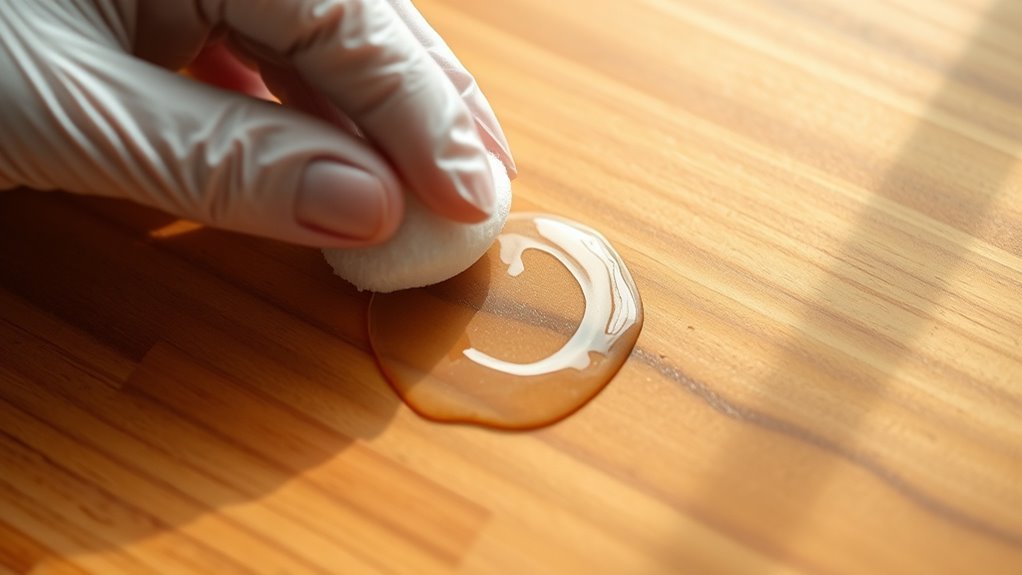
Before you tackle sticky residue on wood, you need to identify its source. Most often, this sticky residue comes from adhesives left behind by stickers, labels, or tape you removed.
Think about price tags, shipping labels, or decorative stickers that might have left behind glue. Sometimes, adhesive tapes like masking or painter’s tape can leave a tacky film, especially if they’ve aged or been exposed to moisture.
Price tags, shipping labels, and aged tapes often leave behind sticky glue or a tacky film on wood surfaces.
Food spills such as syrup or honey can also dry and leave a sticky patch on your wood surface. Additionally, improper cleaning products or wood finish breakdown caused by heat and humidity may create sticky spots.
Knowing the exact type of adhesive or residue will help you choose the best cleaning method without damaging your wood. So, take a moment to figure out what you’re dealing with before jumping in.
Gather Essential Tools and Materials
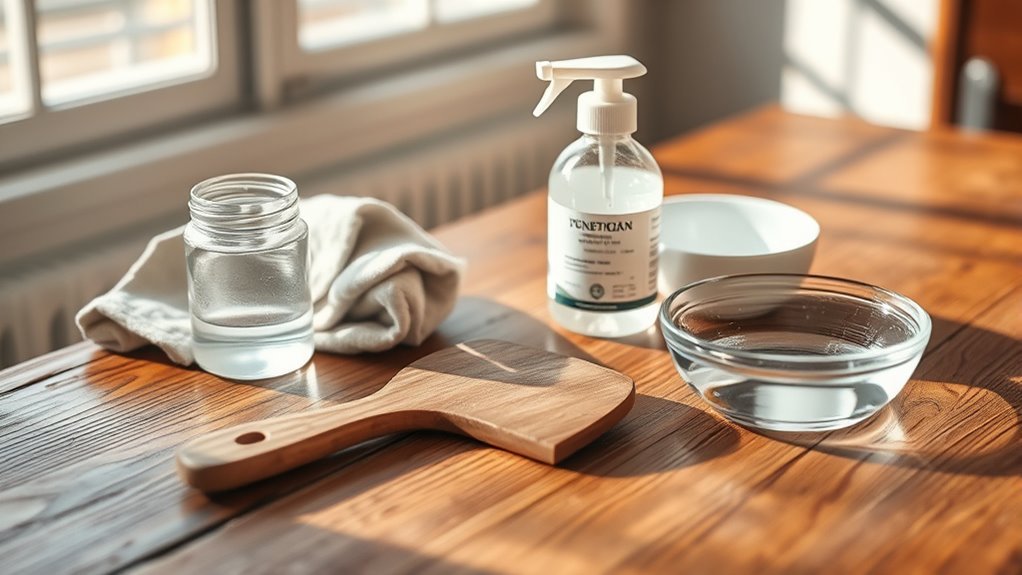
Since effective removal depends on having the right supplies, you’ll want to gather essential tools and materials suited for wood surfaces. Start by collecting a soft cloth and a plastic scraper to gently lift sticky residues without scratching.
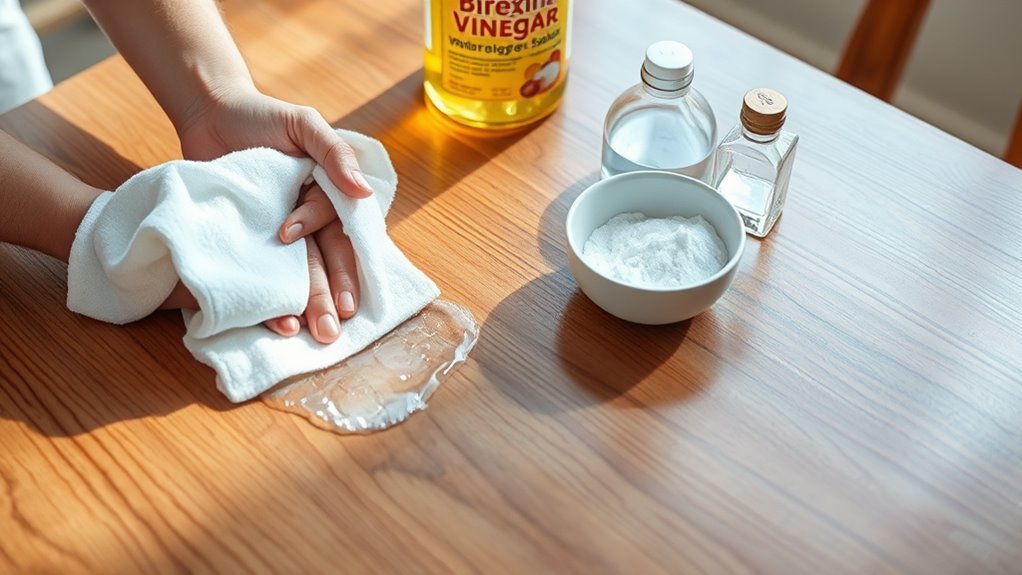
Fill a bowl with warm water, adding a few drops of dish soap, which you’ll use later for cleaning. Keep household solvents like white vinegar, olive oil, or rubbing alcohol nearby to dissolve tougher sticky spots safely.
A hair dryer or heat gun set to low or medium heat can soften adhesives, making removal easier. Also, have paper towels or clean rags ready to wipe away residue and dry the surface.
Ensuring all tools and materials are wood-friendly helps protect your furniture during the cleaning process. That way, you avoid any accidental damage while getting rid of those sticky spots.
Use Warm Soapy Water for Initial Cleaning
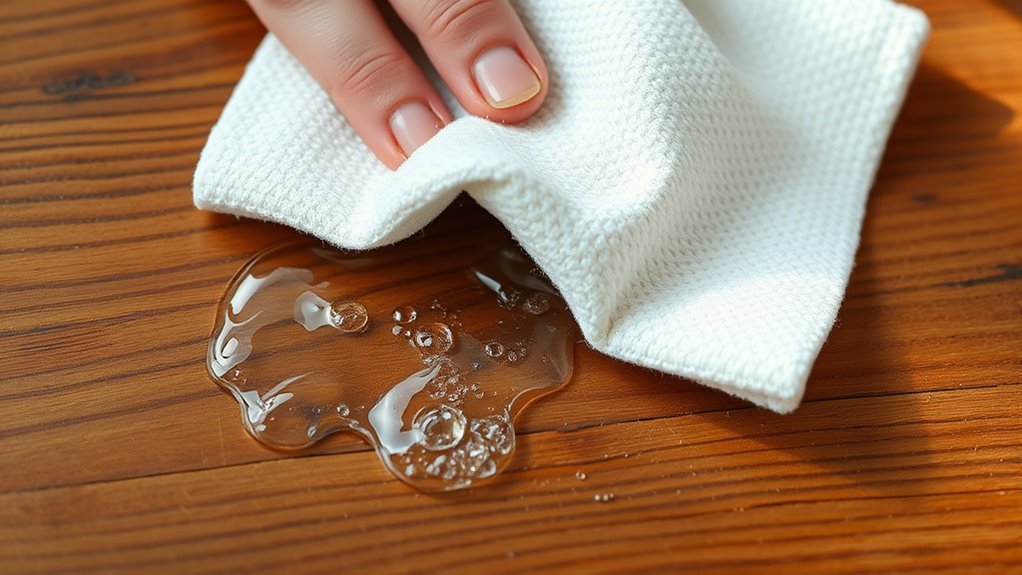
When sticky residue first appears on your wood surface, start by dampening a soft cloth with warm water mixed with a few drops of mild dish soap. This warm soapy water solution is ideal to clean and remove light sticky substances without harming the wood.
Keep the cloth just damp—avoid soaking the wood—to protect the finish and underlying material. Gently rub the affected area in circular or grain-following motions to lift the sticky stuff without scratching the surface.
Afterward, use a dry cloth to wipe the area thoroughly, preventing moisture from seeping into the wood. This initial cleaning step with warm soapy water effectively prepares the wood for any further treatment if needed.
Apply Heat to Soften Adhesive
You can use a hair dryer set to low or medium heat to soften sticky residue on wood, making it easier to remove. Hold the dryer about 2-3 inches away and warm the area in short intervals to avoid damaging the finish.
Always test on a small spot first to confirm the heat won’t harm your wood surface. That way, you can be sure it’s safe before you go ahead and treat the whole area.
Using Heat Tools
Although sticky residue can cling stubbornly to wood, applying gentle heat can soften the adhesive, making it easier for you to remove. Using heat tools like a hair dryer or a heat gun set on low to medium heat, hold it about 2-3 inches from the sticky area.
Warm the adhesive residue evenly for 30 seconds to 1 minute to soften it without damaging the wood. Try testing the adhesive’s softness by gently pressing with a plastic scraper or credit card.
If it’s still stubborn, just reapply heat as needed until the residue becomes pliable enough to lift off. And don’t forget to finish by wiping the area with a damp cloth to remove loosened residue and protect the wood surface from overheating or damage.
Softening Sticky Residue
If sticky residue refuses to budge, applying gentle heat softens the adhesive, making removal much easier. Use a hairdryer set to low or medium heat, holding it about 2-3 inches from the sticky spot.
Warm the area evenly for 30 seconds to 1 minute, allowing the heat to loosen the adhesive beneath. Keep the heat moving to avoid damaging the wood or finish.
Once softened, quickly lift the residue with a plastic scraper or credit card—these tools won’t scratch your wood surface. If the sticky stuff remains stubborn, just reapply heat gradually, increasing warmth carefully.
Don’t let the adhesive cool and harden again; remove it immediately after softening to ensure a smooth, damage-free finish. This method makes sticky residue removal much simpler and safer.
Safe Heat Application
When softening adhesive on wood, applying heat carefully is key to avoiding damage. Use a hair dryer set to low or medium heat, holding it 2-3 inches from the sticky area.
Heat the adhesive in 30-second intervals, checking often to prevent overheating or warping the wood surface. As the adhesive warms, it becomes pliable, making it easier to lift with a plastic scraper or credit card.
Avoid high heat settings or prolonged exposure, especially on delicate finishes like lacquer or varnish, to protect the wood. Once softened and scraped, wipe the area with a damp cloth to remove any leftover residue and prevent stickiness.
This controlled use of heat ensures the adhesive softens effectively without harming your wood’s finish. It’s a simple trick but really helps keep your wood looking great!
Try Oil-Based Solutions to Break Down Residue
Since sticky residue can cling stubbornly to wood surfaces, using oil-based solutions like vegetable, olive, or coconut oil can help break down the adhesive bonds effectively.
Apply a small amount of oil directly onto the residue and let it sit for 5 to 10 minutes to soften the sticky buildup. Then, use a soft cloth or sponge to gently work the oil into the residue using small circular motions. This loosens the adhesive without damaging the wood.
Once the residue starts to lift, carefully scrape or wipe it away. Finally, clean the area with warm, soapy water to remove any leftover oil and residue.
Just remember, don’t use too much oil or the surface might get greasy. And it’s a good idea to test a hidden spot first to make sure the oil won’t mess with your wood’s finish.
Utilize Rubbing Alcohol or Baking Soda Paste for Stubborn Spots
If you’re dealing with stubborn sticky spots, rubbing alcohol can quickly soften the residue for easy removal. You can also make a baking soda paste to gently scrub away tough adhesive without damaging the wood.
Both methods work well to lift sticky stuff when other solutions fall short. They’re simple and effective tricks to keep in your cleaning toolkit. Give them a try next time you’re stuck!
Rubbing Alcohol Application
Although sticky residue can be stubborn, you can effectively loosen it by dabbing a soft cloth or cotton ball soaked in rubbing alcohol onto the area and letting it sit for a minute or two. This method helps break down the adhesive without harming the wood finish.
To remove sticky residue with rubbing alcohol, follow these steps:
- Gently rub the area in circular motions with the alcohol-soaked cloth. For tougher spots, apply rubbing alcohol directly and use a plastic scraper to lift residue.
- Avoid harsh scrubbing to prevent damaging the wood surface. After removal, wipe clean with a damp cloth and dry thoroughly to protect the wood.
Using rubbing alcohol is a reliable way to tackle sticky residue while preserving your wood’s appearance. Give it a try and see how well it works!
Baking Soda Paste Benefits
When stubborn sticky spots resist rubbing alcohol, you can turn to a baking soda paste for a gentle yet effective solution. Mixing baking soda with water creates a thick paste that acts as a mild abrasive, lifting sticky residue without harming the wood surface.
Apply the baking soda paste directly onto the stubborn adhesive and let it sit for 10–15 minutes. This softens the residue, making it easier to scrub away using circular motions.
The paste effectively removes dried glue or tape adhesive while preserving the wood’s finish. After scrubbing, wipe the area with a damp cloth and dry thoroughly to prevent water spots.
Using baking soda paste is a safe, simple way to restore your wood surface without scratching or dulling its appearance. Give it a try next time you’re dealing with sticky messes!
Clean and Restore the Wood Surface After Removal
Once you’ve removed the sticky residue, wipe the wood surface with a damp cloth and mild soap to clear away any leftover adhesive or cleaning solution. This step guarantees the wood is clean and ready for restoration.
Next, dry the wood thoroughly with a soft cloth to prevent moisture damage and bring back its natural shine. To further restore and protect the wood, consider applying a suitable furniture polish or wax.
Dry wood thoroughly with a soft cloth to prevent damage and restore its natural shine before polishing.
Always test products on a small, hidden area first to avoid discoloration.
Keep these tips in mind:
- Use a damp cloth and mild soap to clean residue completely
- Dry wood immediately with a soft, clean cloth
- Apply polish or wax for enhanced protection and shine
- Regularly inspect wood to maintain a clean, fresh surface
Frequently Asked Questions
What Removes Sticky Stuff From Wood?
You can remove sticky stuff from wood using diluted white vinegar, vegetable oil, or a hair dryer to soften it.
For tougher residue, try commercial removers like Goo Gone, but always test first to protect your wood finish.
Does Dawn Dish Soap Remove Adhesive?
Yes, Dawn dish soap removes adhesive effectively. You’ll see sticky residue soften as you gently rub a warm, soapy cloth over wood.
Just wait a few minutes for stubborn spots, then wipe it all away easily. It’s a simple trick that really works!
Will Goo Gone Damage Wood Finish?
Goo Gone can damage wood finish if left too long or used excessively, especially on delicate or unsealed surfaces.
You should always test it on a hidden spot first. And make sure to rinse thoroughly to protect your wood’s finish.
What Is the Most Powerful Adhesive Remover?
The most mighty, merciless remover is acetone. You’ll want to wield it wisely, though, as it works wonders dissolving adhesives but can damage delicate finishes.
Always apply cautiously, testing a tiny, tucked-away spot first. Better safe than sorry, right?
Conclusion
Removing sticky stuff from wood is like peeling a stubborn sticker off your favorite book—it takes patience and the right tools. Just like I once spent an afternoon rescuing a wooden table from sticky residue, following these steps will help you restore your wood’s natural beauty without damage.
Stick with the process, and soon your wood will be as smooth and clean as before, ready for whatever comes next. Getting sticky stuff off wood doesn’t have to be frustrating. With a little care and the right approach, you can easily remove any sticky residue without harming your wood’s surface. Just remember to be gentle and take your time, and your wood will look great again in no time.