How Is Rustoleum Used on Wood Step-By-Step?
To use Rustoleum on wood, start by cleaning the surface thoroughly.
Sand the wood to create a smooth base, and repair any imperfections you find. If the wood is bare or porous, applying a primer can help the paint adhere better and last longer.
Next, choose the right Rustoleum paint for your project, whether it’s for indoor or outdoor use. Shake the can well to mix the paint evenly.
When applying, spray thin, even coats from about 10-12 inches away. This helps avoid drips and ensures a smooth finish.
Let each layer dry completely before lightly sanding between coats. This step is key for achieving a flawless, professional look.
Finally, finish your project with a clear protective topcoat to guarantee durability and protect your work.
Keep following along for tips on selecting the best tools and detailed application techniques. These extra pointers will help you get the best results with Rustoleum on wood every time!
Key Takeaways
- Clean and sand the wood surface, then wipe dry. If you want better paint adhesion, go ahead and apply a primer.
- Choose the Rustoleum paint type that suits your project best. Using a fine mist spray nozzle helps you get even coverage.
- Shake the spray can well before you start. Hold it about 10-12 inches away and spray multiple thin coats using overlapping strokes.
- Between coats, lightly sand the surface with fine-grit sandpaper. Don’t forget to wipe away the dust to keep the finish smooth.
- Once the final coat is dry, apply a clear protective topcoat. Let it fully cure so your work stays durable for a long time.
How to Prepare Wood for Rustoleum Paint
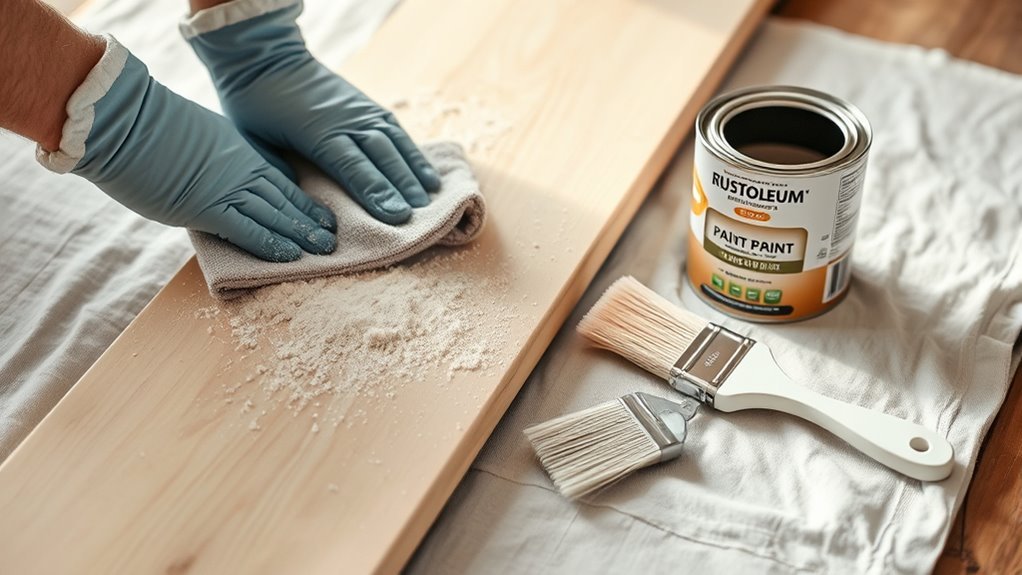
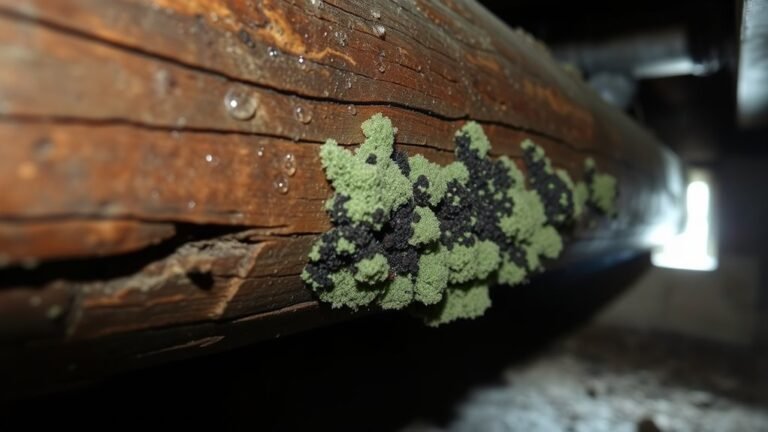
Before you start painting with Rustoleum, make sure you prepare the wood properly by cleaning off any dust, dirt, or grease. Whether you’re working on a new account project or refurbishing an old piece, thorough cleaning is essential.
Properly clean wood by removing dust, dirt, and grease before painting with Rustoleum for the best results.
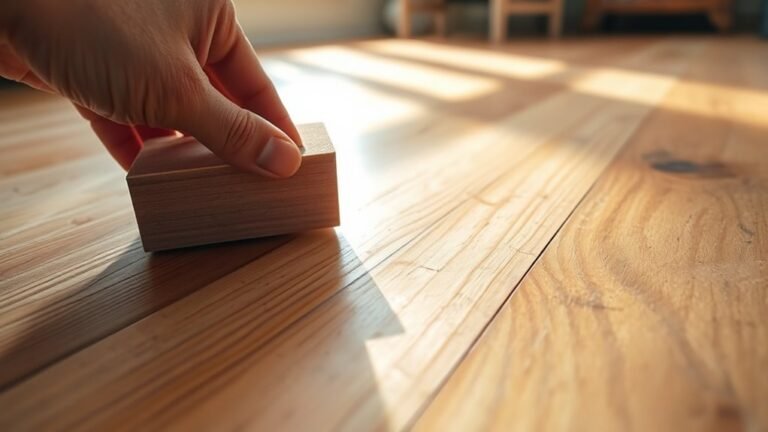
Next, sand the wood with medium or fine-grit sandpaper to smooth rough areas and help the Rustoleum paint adhere better. Once sanded, wipe the surface with a damp cloth to remove dust, and let it dry completely.
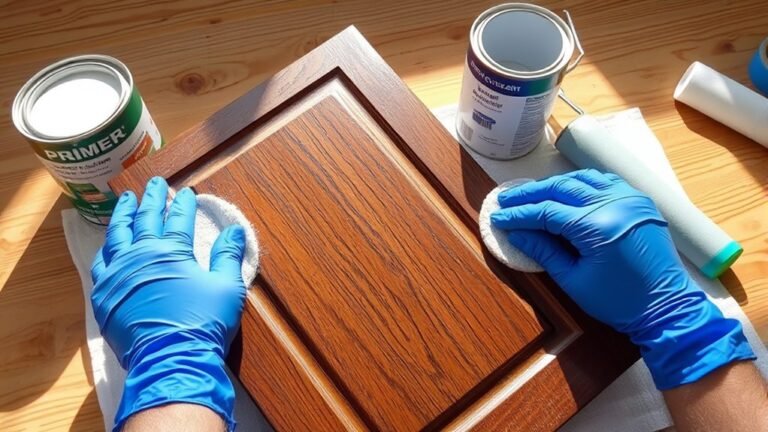
If necessary, apply a primer designed for wood to boost paint adhesion and durability. Don’t forget to repair any cracks or imperfections with wood filler, sanding again afterward.
These steps guarantee the Rustoleum used on wood will last longer and look great. It’s all about taking the time to prep right so your paint job really shines!
Choose the Best Rustoleum Paint and Tools
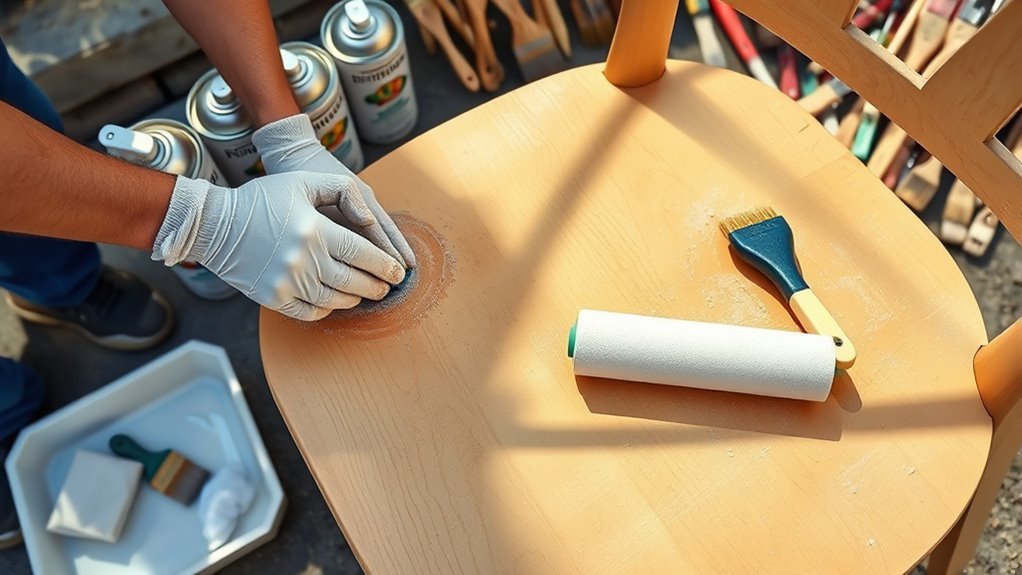
Choosing the right Rust-Oleum paint and tools can make all the difference in your wood project’s final look and durability. Rust-Oleum offers various spray paints for wood, like Chalked Ultra Matte for a soft finish or Protective Enamel for tough, long-lasting protection.
Pick a product based on your desired finish and whether the wood is indoors or outdoors. Using a high-quality spray primer and a fine mist spray nozzle will help you get even coverage and better adhesion.
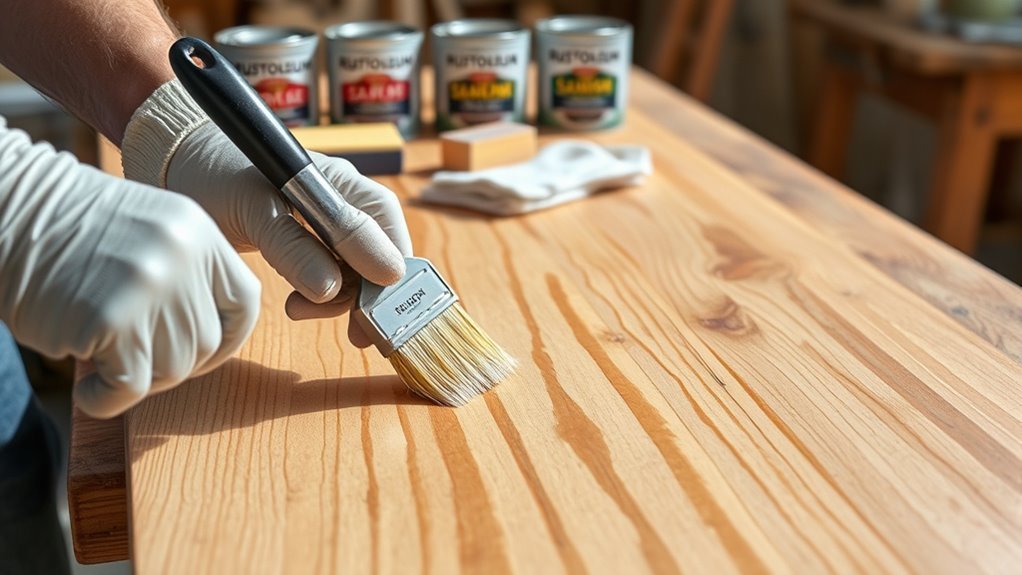
For intricate details, combine spray paint with a brush or mini roller to achieve a smooth, professional look. Remember, proper surface prep—cleaning, sanding, and priming—is crucial before painting to ensure the Rust-Oleum paint adheres well and resists chipping.
Apply Rustoleum Paint With Thin, Even Coats
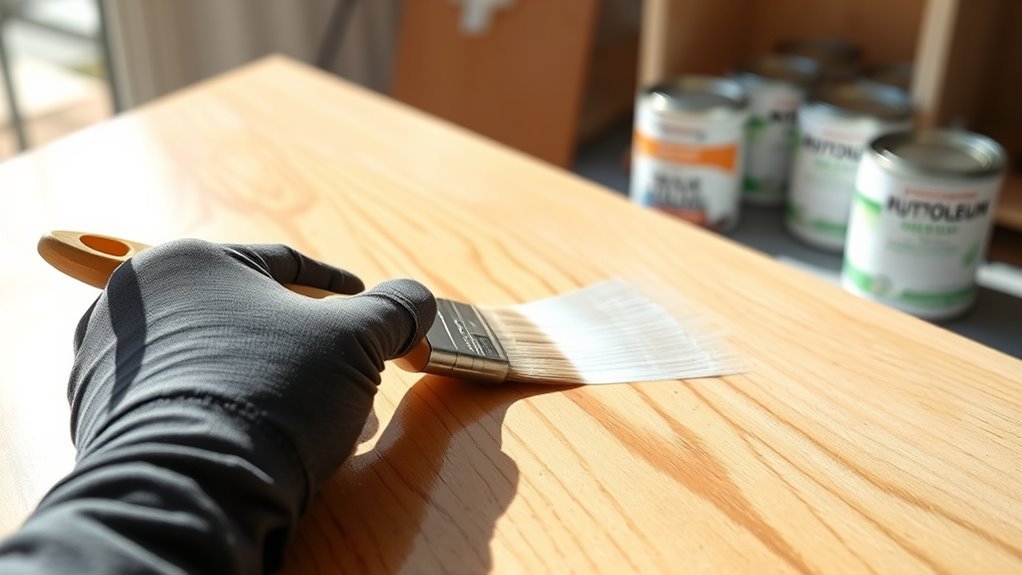
Getting the right Rust-Oleum paint and tools sets you up for success, but how you apply the paint makes all the difference in the final result. Start by shaking the spray can thoroughly for 1-2 minutes to mix the pigment evenly.
Choosing quality Rust-Oleum and proper application techniques ensures a flawless, professional finish every time.
Hold the can about 10-12 inches from the wood surface, spraying in smooth, sweeping motions. Apply thin, uniform coats with overlapping passes to avoid missed spots and assure consistent coverage.
Don’t rush—multiple light coats dry better and prevent drips or uneven texture. Allow at least 4 hours of drying time between each coat.
Finish with a final light coat and give it enough time to dry fully. This careful approach guarantees a durable, smooth, and professional-looking finish on your wood project.
Sand Between Rustoleum Coats for a Smooth Finish
While waiting for each Rustoleum coat to dry completely, you’ll want to sand the surface lightly with fine-grit sandpaper to smooth out any brush marks or imperfections. Use 220-320 grit sandpaper for the best results.
After sanding, wipe the surface with a damp or tack cloth to remove dust before applying the next coat. This step ensures better adhesion and a uniform finish.
Finish and Protect Your Rustoleum Wood Paint Job
Once you’ve sanded between coats and allowed your Rustoleum paint to fully dry, it’s time to safeguard your work with a clear topcoat. Wait 24 to 48 hours for the paint to cure to guarantee the best adhesion and durability.
Use a brush or spray to apply a water-based or oil-based polyurethane or sealer evenly over the surface. For outdoor wood projects, select a weather-resistant topcoat made for exterior use to shield against moisture and harsh elements.
This clear layer enhances durability and keeps your paint job looking fresh longer. Remember to inspect your wood regularly and reapply the protective finish as needed to maintain its appearance and longevity.
This final step ensures your Rustoleum-painted wood stays beautiful and well-protected. It’s worth taking the time to do it right!
Frequently Asked Questions
How Long Does It Take for Rustoleum to Dry?
Rust-Oleum usually takes about 20 to 30 minutes to dry to the touch on wood.
But you’ll want to wait 24 hours for it to fully cure and achieve maximum durability before handling or recoating.
What’s the Best Spray Paint for Wood?
The best spray paint for wood is Rust-Oleum Painter’s Touch, as it offers excellent adhesion and durability.
You’ll want to pick one with your preferred finish—matte, satin, or gloss—for the perfect look on wood surfaces.
It really depends on the style you’re going for, but this brand covers all the bases.
Plus, it’s super easy to use, which makes your project that much smoother!
Can I Use Enamel Paint on Wood?
Imagine your wood glowing with a glossy, tough finish—you can definitely use enamel paint on wood. Just sand, prime, then apply thin, even coats.
You’ll get durable, chip-resistant beauty that stands the test of time. It’s a great way to make your wood look amazing and stay protected.
Can Tremclad Rust Paint Be Used on Wood?
Yes, you can use Tremclad rust paint on wood if you properly clean, sand, and prime the surface first.
You’ll need multiple coats and enough drying time for a durable, rust-resistant finish on your wooden project.
Just take your time with the prep and layering, and you’ll get great results!
Conclusion
Who knew transforming your wood with Rustoleum could be this straightforward? You’ve prepped, painted, sanded, and sealed like a pro—no rocket science involved.
If your wood doesn’t look flawless, just blame the wood, not Rustoleum. With a little patience and these simple steps, you’ve turned ordinary wood into a masterpiece that even you might admire.
So go ahead, enjoy your handiwork—because who said DIY couldn’t feel this easy? Using Rustoleum on wood is a simple way to breathe new life into your projects. Whether you’re updating furniture or crafting something new, following the right steps ensures a smooth, durable finish every time. Trust Rustoleum to make your wood projects look fantastic without the hassle.