Can Engineered Wood Floors Be Refinished?
You can refinish engineered wood floors as long as the wear layer is thick enough—usually at least 2mm. This wear layer is what makes refinishing possible without damaging the core.
Floors with thicker wear layers, around 4mm or more, allow multiple refinishing cycles, giving you more flexibility to refresh the look over time.
On the other hand, thin layers under 1.5mm only let you do surface recoating. Refinishing involves careful sanding without damaging the surface and applying stain and finish properly.
It’s a bit of a delicate process, but it can really bring your floors back to life.
If you want to protect your engineered wood floors and keep them looking great for years, there’s definitely more to explore about care and maintenance. Taking good care of them can make all the difference in preserving their beauty.
Key Takeaways
- Engineered wood floors with a wear layer of 2mm or more can generally be sanded and refinished.
- Floors with wear layers under 1.5mm are not suitable for sanding and only allow surface recoating.
- Thicker wear layers (≥4mm) enable 2 to 3 refinishing cycles before replacement is needed.
- Surface scratches and dullness indicate that refinishing may restore the floor’s appearance.
- Always consult manufacturer guidelines and professionals before refinishing engineered wood floors.
Can Your Engineered Wood Floor Be Refinished?
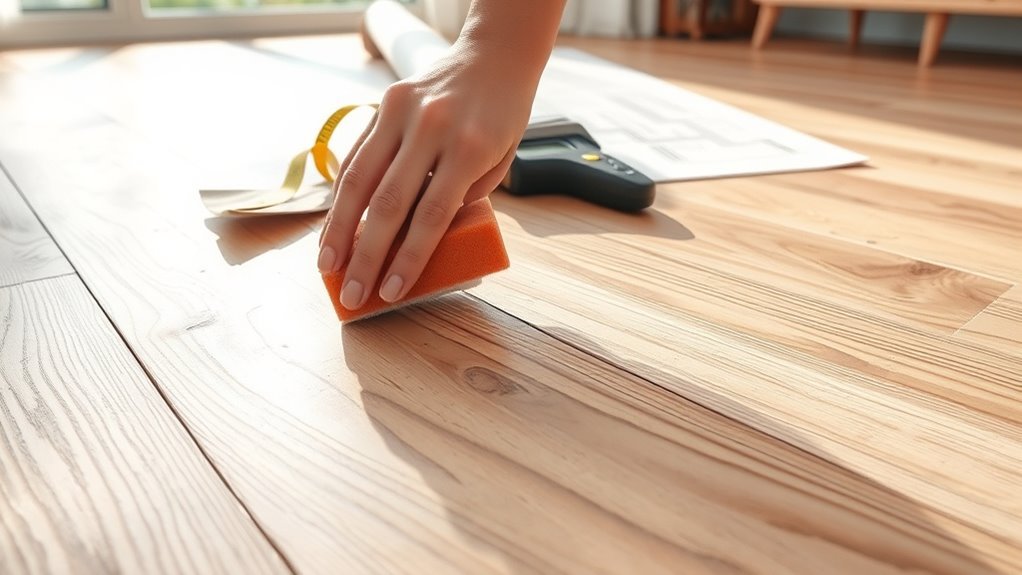
Although engineered wood floors offer durability, whether yours can be refinished largely depends on the thickness of the wear layer. Generally, a minimum thickness of about 2mm is needed to sand and refinish properly.
If your floor has a wear layer of 4mm or more, you can typically refinish it two to three times. Thinner layers, especially those under 1.5mm, limit your options to surface recoating. Sanding in those cases risks exposing the substrate and causing permanent damage.
You’ll want to watch for surface scratches, dullness, or minor dents as signs that refinishing might help—provided the wear layer is thick enough. Always check manufacturer guidelines and consult a flooring professional to determine if your engineered wood floor’s wear layer thickness supports refinishing.
How Often Can You Refinish Engineered Floors?

Knowing whether your engineered wood floor can be refinished is just the first step. Understanding how often you can refinish it helps you plan for its long-term care.
The number of refinishing cycles mainly depends on the wear layer’s thickness. Thicker wear layers let you sand more before exposing the substrate. On the other hand, thinner layers limit your refinishing options.
| Wear Layer Thickness | Refinishing Cycles |
|---|---|
| Under 1.5mm | Not suitable for sanding, recoating only |
| 1.5mm to 2mm | Typically 1 refinishing cycle |
| Over 2mm | 1 to 3 refinishing cycles |
Just be careful not to oversand. Each sanding cycle reduces the wear layer thickness and cuts down on future refinishing chances.
Sanding Tips for Engineered Hardwood Floors
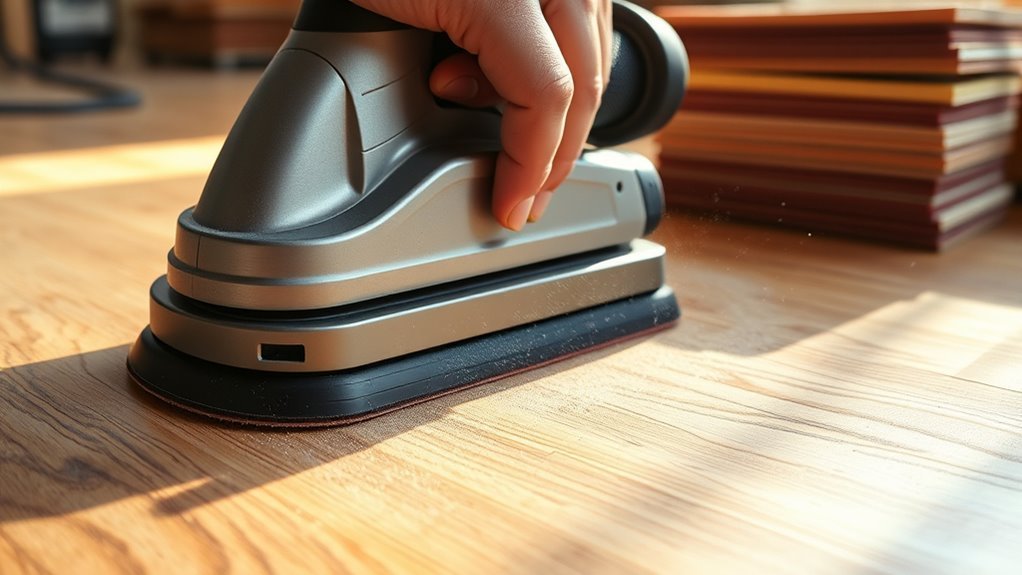
When refinishing engineered hardwood floors, you’ll want to use a lightweight orbital sander with fine-grit sandpaper. This helps gently remove the old finish without damaging the wear layer.
Start sanding in the direction of the wood grain to avoid uneven surfaces. This way, you’ll guarantee a smooth finish.
Begin with 100-120 grit sandpaper to remove surface scratches. Then, gradually move to finer grits like 150-180 to polish the floor without over-sanding.
Avoid heavy drum sanders—they can strip too much material and harm the wear layer.
Between sanding passes, vacuum thoroughly and wipe the floor with a damp cloth to remove dust. This careful sanding process protects your engineered hardwood and prepares it perfectly for refinishing.
Staining and Finishing Engineered Floors
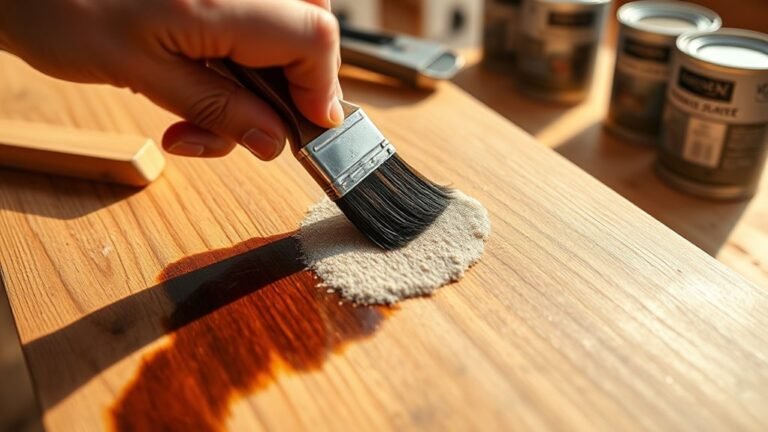
How do you achieve a rich, lasting color on your engineered wood floors? Start by staining the surface evenly using a brush, roller, or cloth, always following the wood grain to guarantee consistent results.
Achieve rich, lasting color by evenly staining your engineered wood floors, always following the wood grain for consistency.
Before staining the entire floor, test the stain on a small, hidden spot or a spare piece to confirm the color matches your expectations. After staining, allow proper drying time to avoid smudging or uneven coloration.
Next, focus on finishing by applying multiple thin coats of high-quality polyurethane. Both water-based and oil-based finishes work well to protect the wear layer.
Lightly sand or buff between coats to enhance adhesion and durability. This process ensures your engineered floors not only look beautiful but also maintain their strength over time.
Maintaining Your Engineered Floor After Refinishing
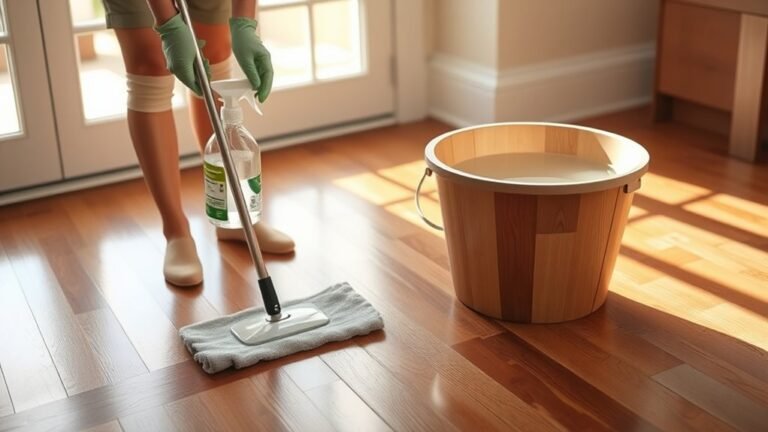
Once you’ve carefully stained and sealed your engineered wood floors, keeping them in top shape becomes your next priority. Proper maintenance after refinishing protects the floor’s protective finish and extends its lifespan.
Regularly clean with a damp mop, but avoid harsh chemicals that could damage the surface. It’s a simple step, but it makes a big difference.
Use felt pads under furniture and rugs to prevent scratches. This little trick helps keep your floor looking fresh and new.
Recoat with compatible polyurethane every few years to maintain shine. Doing this keeps your floor protected and looking great.
Avoid standing water, especially right after refinishing, to prevent swelling. Water can be a real enemy to wood floors!
And don’t forget to schedule professional inspections to catch issues early. It’s better to spot problems before they get serious.
| Task | Frequency | Purpose |
|---|---|---|
| Damp mop cleaning | Weekly | Preserve protective finish |
| Felt pads usage | Always | Prevent scratches and wear |
| Polyurethane recoating | Every 2-3 years | Maintain shine and protection |
| Professional inspection | Annually | Assess condition and maintenance |
Frequently Asked Questions
How Much Does It Cost to Refinish an Engineered Hardwood Floor?
You’ll pay between $2 and $8 per square foot to refinish engineered hardwood, depending on your floor’s condition and size. Light surface work costs less, while deep sanding and repairs push the price higher, adding texture to your budget.
It really depends on what your floor needs. If it’s just a light touch-up, you’re looking at the lower end of that range. But if there’s a lot of damage, it can get pricier pretty fast.
What Are the Downsides of Refinishing Engineered Wood Floors?
You risk damaging the thin veneer and creating uneven surfaces when refinishing engineered floors. Over-sanding reduces wear layer thickness, which limits future refinishing.
Plus, dust, fumes, and uneven color changes can make the floor look worse. It’s a tricky process that needs careful handling to avoid these issues.
What Is the Average Lifespan of Engineered Hardwood Floors?
Engineered hardwood floors typically last two to three decades, depending on thickness, traffic, and treatment.
You’ll want to watch wear layers and weathering wisely to work toward a wonderful, well-maintained wood floor that withstands wear and time.
Taking care of your floors with regular maintenance really makes a difference in how long they last. Just a little attention goes a long way!
How Do You Make Engineered Hardwood Floors Look New Again?
You make engineered hardwood floors look new again by cleaning thoroughly and sanding lightly with fine-grit paper. Then, you apply a fresh finish and, if you want, add a stain for extra color.
Regular maintenance is key to keeping them looking fresh longer. Using protective coatings also helps protect the floor from wear and tear over time.
Conclusion
You might think engineered wood floors are delicate and can’t handle refinishing, but you’d be shocked at how much life you can squeeze out of them! With just a little sanding, staining, and finishing, your floors can look brand new—like you’ve waved a magic wand over them.
Just keep up with maintenance, and you’ll have stunning floors that make your friends jealous for years. Refinishing engineered wood isn’t just possible—it’s practically a miracle!
In fact, engineered wood floors can be refinished several times depending on the thickness of the top veneer layer. This means you can restore their beauty without replacing the whole floor. So, if you’re wondering, “Can engineered wood floors be refinished?” the answer is a confident yes.
With proper care and refinishing, engineered wood flooring can maintain its charm and durability, making it a smart and stylish choice for any home.