How to Understand Does Beaver Eat Wood
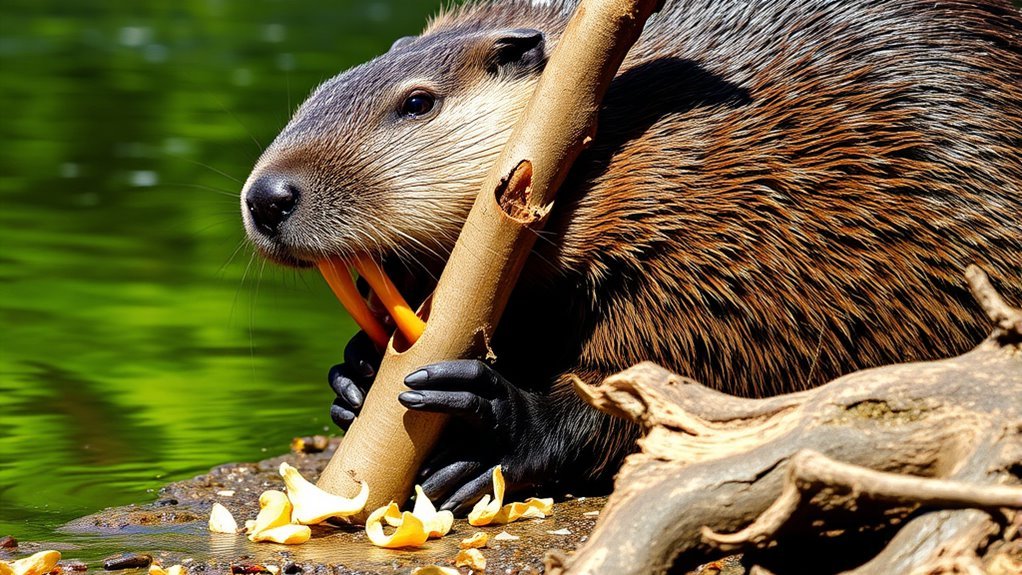
You might think beavers eat wood, but they actually don’t. Beavers chew through trees to reach the soft, nutritious inner bark and to gather building materials for dams and lodges.
Their teeth are perfectly made for cutting, not digesting hard wood.
They rely on bark, leaves, and aquatic plants for food. The wood they cut down is mainly stored for shelter and winter use.
It’s pretty fascinating how their chewing habits shape their environment, isn’t it?
Keep exploring to discover more about beavers and their unique behaviors!
Key Takeaways
- Beavers eat the nutrient-rich cambium layer beneath tree bark, not the hard wood itself.
- Their diet includes bark, leaves, and aquatic plants, and it changes with the seasons as they eat fresh vegetation.
- When beavers cut down trees, it’s mostly to build dams and lodges, not because they want to eat the wood.
- Their teeth grow continuously and are perfect for gnawing through wood, but that’s more for construction than for eating.
- Beavers’ digestive systems break down plant cellulose, which shows they don’t actually consume or digest solid wood fibers.
What Parts of Trees Do Beavers Chew If Not Wood?
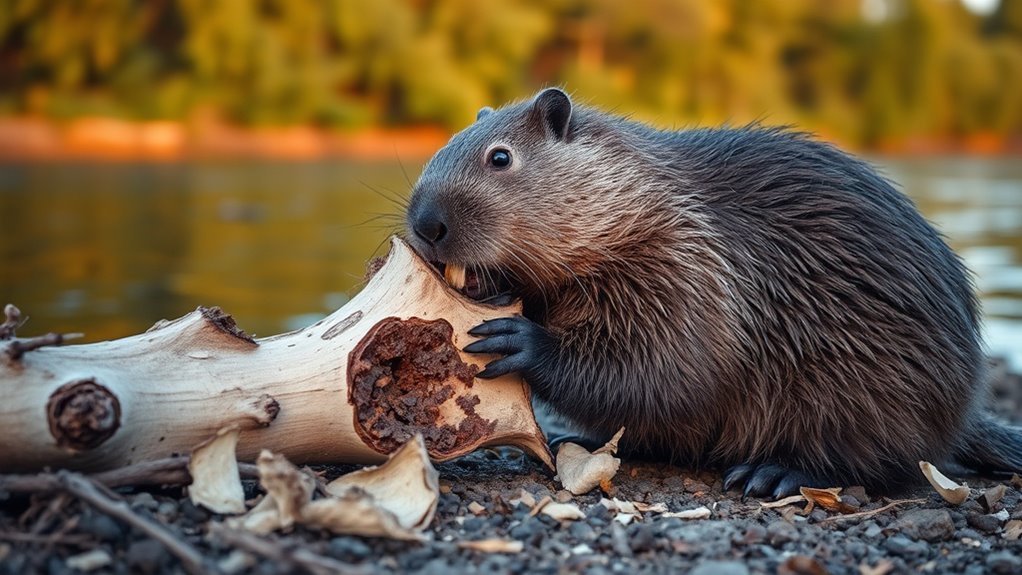
Although beavers are famous for gnawing on trees, they primarily chew the cambium layer—the soft inner bark—rather than the hard wood itself.
Beavers mainly target the soft inner bark, the cambium layer, instead of the tough wood.
When you watch a beaver at work, you’ll notice it uses its sharp incisors to strip away this nutrient-rich cambium, which forms an essential part of their diet. You won’t see them consuming the tough outer wood or trunk; instead, they carefully remove just the inner bark.
Sometimes, they might nibble on softer wood beneath the bark, but that’s not their main food source.
Understanding this helps you realize that beavers aren’t after the wood fibers themselves but the crucial nutrients found in the cambium layer.
Their chewing is all about gaining energy, not destroying trees indiscriminately.
Why Do Beavers Cut Down Trees If They Don’t Eat the Wood?
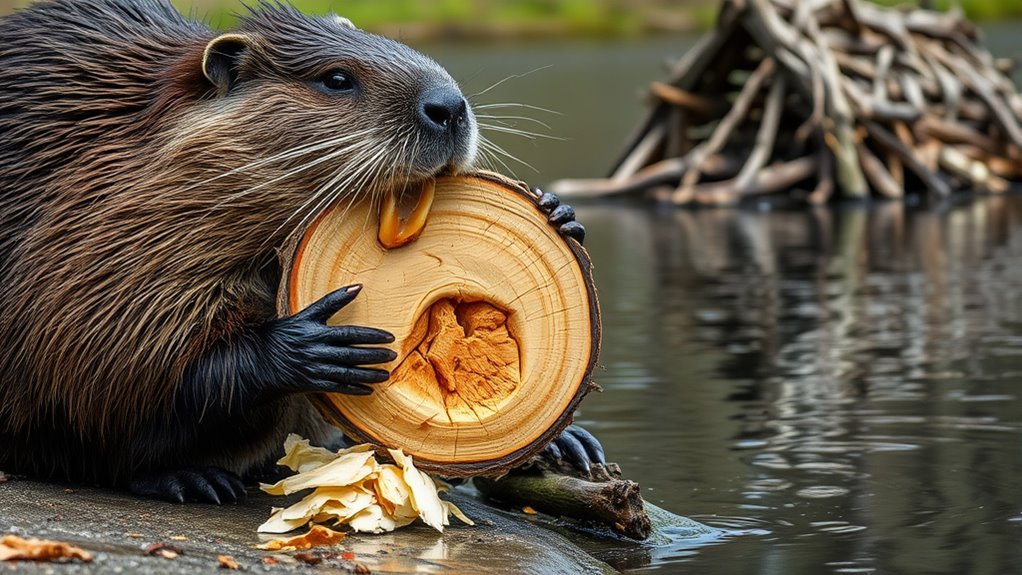
You might wonder why beavers go through the effort of cutting down trees if they don’t eat the wood itself.
Well, they do this mainly to gather materials for building dams and lodges. These structures create a safe, stable habitat for them.
Purpose of Tree Felling
Since beavers don’t eat the wood they cut, you might wonder why they spend so much effort felling trees. The purpose of tree felling is all about engineering—they use the branches and logs to build dams and lodges.
This creates a safe habitat, controls water flow, and supports their survival. By cutting trees, beavers shape their environment to store food and access water efficiently.
This purposeful activity benefits not just beavers but the entire ecosystem. It’s pretty amazing how their work helps keep everything in balance.
| Emotion | Reason | Outcome |
|---|---|---|
| Security | Building lodges | Safe shelter |
| Control | Modifying water flow | Prevents floods |
| Resourcefulness | Storing food and access | Sustained survival |
| Harmony | Ecosystem balance | Thriving habitat |
Building Materials Usage
When beavers cut down trees, they’re not after the wood for eating but for building. You’ll find that they use the tree trunks and branches as essential building materials to construct dams and lodges, creating safe, stable aquatic habitats.
Instead of consuming the wood itself, beavers gnaw through the cambium layer to access the nutritious inner bark, leaving most of the wood intact. By felling trees, they gather sturdy materials for reinforcing their homes and controlling water flow.
You’ll also notice that beavers store branches and logs underwater near their lodges, ensuring they have both food and building materials ready for the winter. This behavior highlights how beavers focus on habitat engineering rather than eating the wood they cut down.
How Do Beavers’ Teeth Help Them Cut Trees So Efficiently?
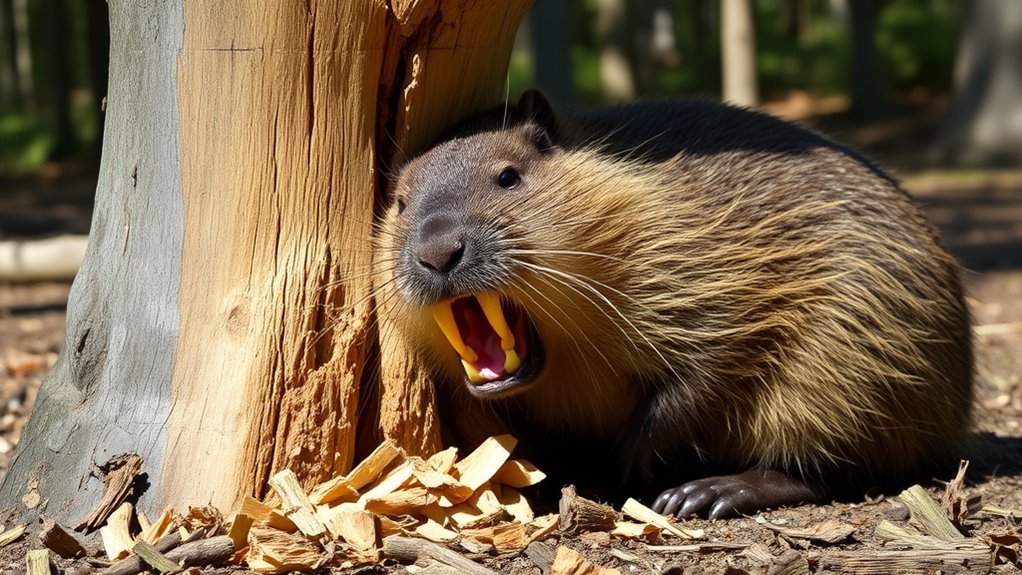
You’ll notice beavers have sharp, chisel-shaped teeth that grow continuously, so they never wear down. Their enamel is strengthened with iron, giving their teeth extra durability for cutting through tough wood.
This unique structure lets beavers gnaw efficiently and keep working without interruption. Pretty cool, right? It’s like they have built-in tools made just for the job!
Beaver Teeth Structure
If you want to understand how beavers cut trees so efficiently, you need to look closely at their unique teeth structure. Beavers have large, sharp incisors that grow continuously, about 20-25mm each year.
This constant growth guarantees their teeth stay sharp despite nonstop gnawing. The front edges of their incisors wear unevenly, creating a self-sharpening effect that works like built-in chisels.
These powerful teeth let beavers cut through trees up to 33 inches thick with ease. Plus, beavers have a second lip behind their incisors that prevents water from entering their mouths while chewing underwater or in wet conditions.
This specialized teeth setup makes beavers incredibly efficient wood-cutters in their natural habitat. Pretty cool, right?
Iron-Strengthened Enamel
Because beavers’ teeth contain a thick layer of iron-strengthened enamel, they can gnaw through tough wood without wearing down quickly. This special enamel gives their teeth a striking orange color and exceptional durability.
Here’s how the iron-strengthened enamel helps beavers cut trees so efficiently:
- It boosts the hardness of their incisors, allowing them to chew through trees up to 33 inches thick.
- The enamel’s iron content prevents rapid wear, so their teeth stay sharp longer.
- It creates a self-sharpening effect as the softer inner tooth wears faster than the iron-hardened outer layer.
- This durability lets beavers fell an 8-foot tree in about five minutes without damaging their teeth.
Thanks to iron-strengthened enamel, beavers are nature’s expert tree cutters.
Continuous Teeth Growth
The iron-strengthened enamel on beavers’ teeth gives them strength, but it’s their continuous teeth growth that keeps them sharp and ready to chew through wood. Their incisors grow about 4 inches each year, making sure their teeth don’t wear down despite constant gnawing.
As you watch a beaver chew, you’ll notice the softer interior of their teeth wears away faster than the hard enamel exterior. This naturally sharpens each tooth with every bite.
This self-sharpening effect, combined with continuous teeth growth, allows beavers to cut through tough trees quickly and efficiently. Without this unique adaptation, their teeth would dull or overgrow.
And that would make it impossible for them to fell trees and build their dams. Continuous teeth growth is truly key to their wood-cutting success.
Which Tree Parts Do Beavers Eat and Why?
When beavers chew on trees, they focus on the cambium layer—the soft, nutrient-rich inner bark—because it offers essential calories and is easier to digest than the hard wood. You’ll notice that beavers eat bark rather than the whole tree, stripping the inner layers while leaving the outer wood intact.
Beavers target the soft, nutrient-rich cambium layer, stripping bark while leaving the tough outer wood untouched.
They mainly target parts of the tree where access is easiest and nutrition highest. Here’s what you should know:
- Beavers prefer the cambium layer for its high nutrient content.
- They chew bark mostly at the tree base and lower branches.
The outer wood and branches are left untouched because they’re tough and less nutritious. This selective feeding helps beavers conserve energy while maximizing food intake, especially in winter.
How Do Beavers Digest Tough Plants?
If you’ve ever wondered how beavers manage to thrive on such tough, fibrous plants, their digestive system holds the key. Beavers have an enlarged cecum filled with bacteria and fungi that produce enzymes to break down cellulose, the main component of plant cell walls. This makes their digestion highly efficient despite the woody material they consume.
As hindgut fermenters, most of the microbial digestion happens in their large intestine after initial processing in the cecum. Their monogastric stomach also adapts to handle lignocellulose, a complex carbohydrate in wood.
To maximize nutrient absorption from cellulose-rich plants, beavers even eat their feces, a process called coprophagy. This clever strategy lets beavers extract essential nutrients from otherwise indigestible tough plants.
How Beaver Diets Change With Seasons
How do beavers adjust their eating habits as the seasons change? Beavers shift their diet seasonally to match food availability.
In warm months, they feast on fresh leaves, bark, and aquatic plants. When winter hits, they switch to stored wood and bark because fresh vegetation is scarce. Here’s how their seasonal diet evolves:
- Summer diet consists of nearly 50% fresh leaves, bark, and aquatic plants.
- Beavers gather and store woody material underwater or near their lodges before winter.
- During winter, they rely heavily on cached branches and softer wood layers for nutrition.
- This seasonal diet shift helps beavers survive harsh conditions by utilizing wood as a key food source when fresh plants aren’t accessible.
Understanding this cycle reveals how beavers expertly adapt their diet with the seasons.
How Much Tree Material Do Beavers Chew Daily?
Because beavers rely heavily on wood for both food and construction, they chew through about 1.4 to 1.5 pounds of tree material every day. When beavers eat wood, they focus on the cambium layer beneath the bark, which provides essential nutrients.
You’ll notice they can fell several small to medium-sized trees daily, depending on what’s available. Their chewing varies with the seasons, increasing during winter when storing wood is crucial for survival.
Common Misconceptions About Beavers Eating Wood
Although beavers are famous for chewing on trees, they don’t actually eat the wood itself. Many people mistakenly believe beavers consume wood, but beavers do not eat wood; they target the softer inner bark and plant materials instead.
Here are common misconceptions you should know:
- Beavers do not eat wood for nutrition; their diet focuses on bark, leaves, and aquatic plants.
- Their strong teeth are for gnawing and building, not digesting wood tissue.
- The wood you see felled is mostly a construction tool, not food.
- Beavers’ digestive systems are adapted to process cellulose from plants, not hard wood fibers.
Understanding these points helps clear up the myth that beavers consume wood as food.
How Beaver Feeding Habits Help Protect Their Habitats
When beavers feed on tree bark, leaves, and aquatic plants, they play a vital role in maintaining the health of their habitats. You’ll see that beavers use selective foraging to prevent overgrowth of certain plants, which promotes biodiversity in wetlands.
By consuming specific vegetation, beavers influence the structure and composition of riparian areas, supporting diverse plant communities. They also control the density of aquatic and semi-aquatic plants, keeping open water spaces available for other wildlife.
Because beavers use a seasonal diet, they adapt their feeding habits throughout the year, maintaining ecological balance continuously. This adaptive foraging not only sustains healthy vegetation but also protects the overall habitat. It really shows how their feeding behavior benefits the ecosystem they depend on.
Frequently Asked Questions
Do Beavers Eat the Wood or Just Chew It?
Beavers don’t eat wood itself; they just chew it to fell trees and access the softer inner bark.
You’ll see them gnawing, but their diet focuses on bark, leaves, and plants, not the solid wood.
What Is a Beaver’s Favorite Wood?
You’ll find that willows are a beaver’s favorite wood. They love eating the bark and softer layers of willows, poplars, and aspens.
But willows top their list for both food and building materials. It’s kind of like their go-to choice!
What Is a Beavers’ Weakness?
You’ll find a beaver’s weakness in worn teeth, scarce trees, and risky felling attempts.
You’ll see vulnerability in polluted waters, habitat loss, and disease.
You’ll notice their survival depends on balance and resilience.
What Happens if Beavers Don’t Chew Wood?
If beavers don’t chew wood, you’ll see their dams and lodges fall apart, leaving them exposed and vulnerable. They won’t create safe habitats or access food properly.
That would seriously threaten their survival and lifestyle. Basically, chewing wood is how they build their homes and stay safe. Without it, life gets really tough for them.
Conclusion
So, you might wonder—do beavers actually eat wood? Not quite. They chew bark, leaves, and twigs, using their sharp teeth to build and survive.
Think of beavers as nature’s architects, not lumberjacks for lunch. Their feeding habits protect their homes and keep ecosystems thriving.
Next time you spot a fallen tree, remember: it’s not dinner, but a dining table for a beaver’s brilliant design. Beavers don’t eat wood itself, but they rely on parts like bark and twigs to stay nourished and build dams.
In understanding does beaver eat wood, it’s clear they use wood mainly as a building material rather than food. This behavior helps them shape their environment, proving that beavers are truly nature’s engineers, balancing feeding and construction in their ecosystem.