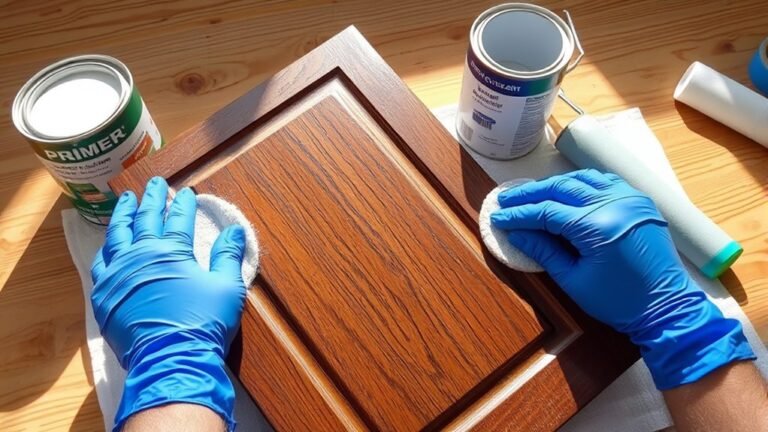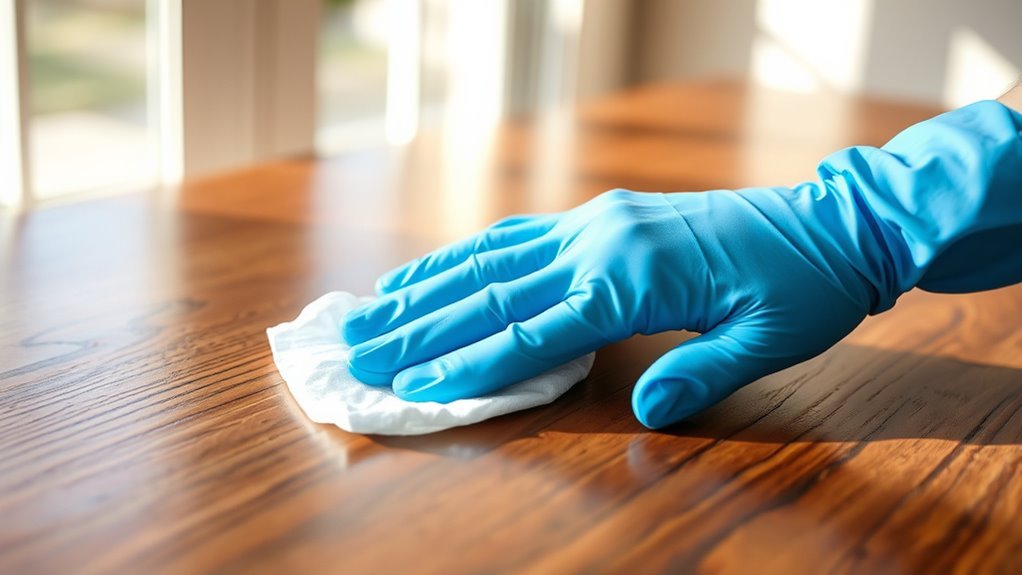
Can You Use Clorox Wipes on Wood?
You shouldn’t use Clorox wipes on wood because their harsh chemicals can strip the finish, cause discoloration, and lead to swelling or warping from moisture.
These wipes break down protective coatings, making your wood dull and more prone to scratches over time.
Instead, try gentler, wood-specific cleaners to keep surfaces safe and shiny.
If you want to protect your wood while disinfecting, there are smarter alternatives and care tips you might find helpful.
Trust me, your wood will thank you for it!
Key Takeaways
- Clorox wipes contain harsh chemicals that can strip wood’s protective finish and cause discoloration.
- Alcohol and bleach in wipes break down wood coatings, leading to dullness and damage.
- Moisture from wipes may seep into wood pores, causing swelling, warping, and long-term harm.
- Using Clorox wipes on untreated or porous wood significantly increases the risk of surface damage.
- It’s safer to clean wood with damp cloths and wood-specific gentle cleaners instead of Clorox wipes.
Why You Should Avoid Clorox Wipes on Wood
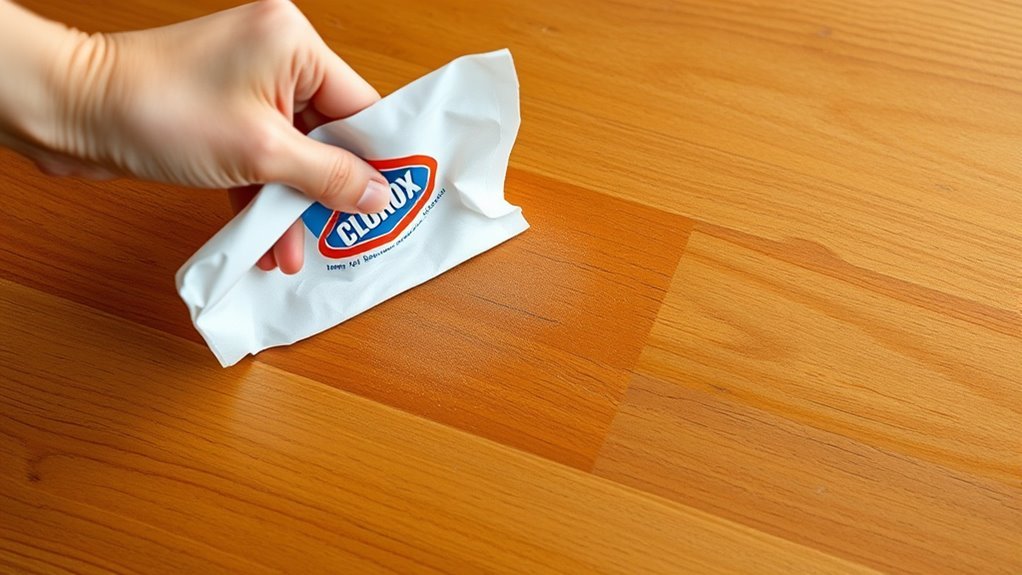
Although Clorox wipes are super convenient for quick cleaning, you should avoid using them on wood. Their chemicals can strip the protective finish and cause discoloration.
Clorox wipes may be handy, but their harsh chemicals can damage wood finishes and cause discoloration.
When you clean and disinfect wood surfaces with these wipes, the alcohol and bleach inside can break down the finish. This leaves your wood looking dull and faded over time.
Plus, the moisture from the wipes can seep into the wood’s pores, which might cause swelling or warping. Not exactly what you want for your furniture or flooring.
Instead of reaching for Clorox wipes, try using a damp cloth with water and a gentle cleaner made specifically for wood. That way, you can clean and disinfect safely without risking damage or voiding any warranties.
How Clorox Wipes Damage Wood Surfaces
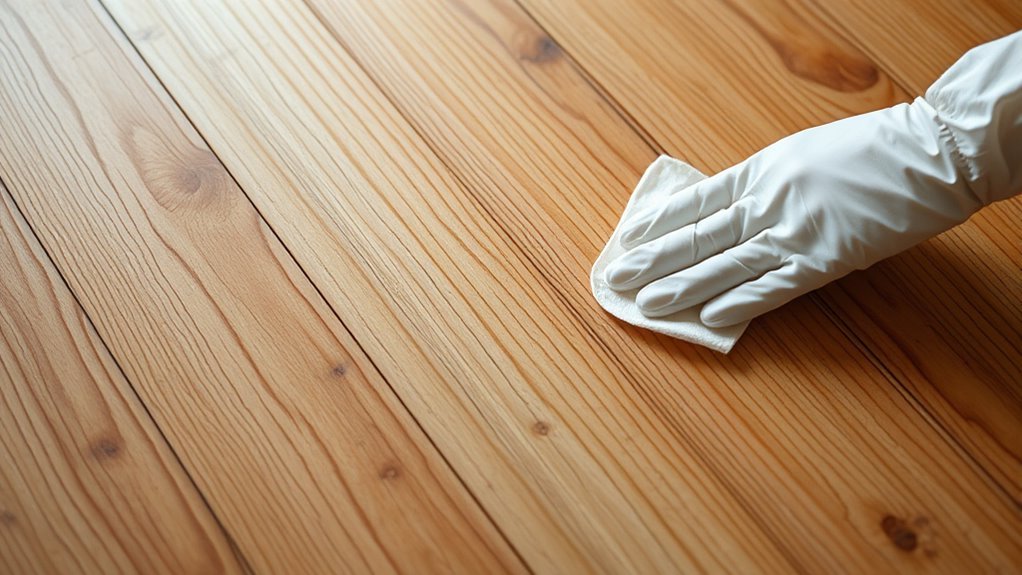
When you use Clorox wipes on wood surfaces, the harsh chemicals inside quickly break down the protective finish, causing it to lose its shine and durability. The alcohol and bleach can strip away coatings, leaving your wood vulnerable to stains and discoloration, especially if it’s untreated or porous.
Excess moisture from the wipes seeps into the wood, which may cause swelling, warping, or long-term structural damage. Over time, this weakens the surface, making it more prone to scratches and wear.
Using Clorox wipes on floors without proper sealing just speeds up this damage, and that can lead to costly refinishing or repairs. So, if you want to keep your wood looking its best, it’s really important to avoid these harsh wipes that compromise both appearance and integrity.
Safe Alternatives for Cleaning and Disinfecting Wood
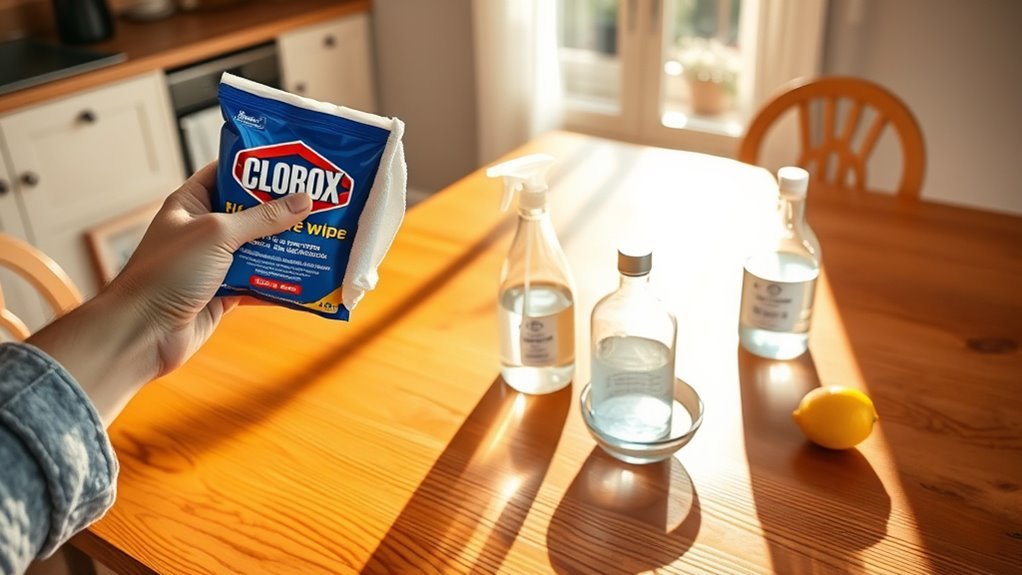
To protect your wood surfaces from damage caused by harsh chemicals like those in Clorox wipes, you’ll want to choose gentler cleaning methods. Start by testing any cleaning solution on a small area to make sure it doesn’t harm the finish.
Use a damp cloth with Murphy’s oil soap or furniture-specific oils and polishes to safely clean wood without stripping its protective layer. For disinfecting, select store-bought sprays containing quaternary ammonium compounds and apply them with a damp cloth rather than spraying directly.
Avoid bleach or alcohol-based cleaners since they can cause discoloration or warping. Regularly maintaining your wood with these gentle products keeps it clean and hygienic while preserving its natural beauty and finish over time.
Maintaining Wood Finish While Disinfecting
Since disinfecting wood surfaces often involves chemicals that can harm their finish, you need to choose your cleaning products carefully. Harsh ingredients like bleach and alcohol in Clorox wipes may discolor or dull your wood finish over time.
To maintain your wood finish while disinfecting, consider these tips:
- Avoid using Clorox wipes regularly to prevent surface etching.
- Opt for disinfectants formulated specifically for wood.
- Test cleaning products on a small, hidden area first.
Wipe gently to protect the finish from damage. And don’t forget to follow up with a wood-safe polish to restore shine.
Choosing the Best Cleaning Products for Wood
Although Clorox wipes might seem convenient, you should avoid using them on wood because their harsh chemicals can damage the finish over time. Instead, it’s a good idea to choose gentle, pH-balanced cleaning products designed specifically for wood.
Products like Murphy’s oil soap or furniture oils clean effectively without stripping the surface or causing discoloration. Harsh chemicals, including bleach-based wipes, can lead to dulling, water stains, and deterioration, especially on porous or finished wood.
By selecting the right cleaning solutions, you protect your furniture’s appearance and longevity. Remember, regular use of appropriate products helps maintain wood’s natural beauty while preventing damage.
Frequently Asked Questions
What Is the Best Cleaner for Hardwood Floors?
The best cleaner for hardwood floors is a pH-neutral, wood-specific solution. You want to avoid harsh chemicals because they can damage the finish over time.
Using a damp microfiber mop with recommended wood floor cleaners is the way to go. This helps keep your floors looking great and lasting longer. It’s really about gentle care that protects your wood.
Can I Use Lysol Power Clean on Wood Floors?
Using Lysol Power Clean on wood floors is like pouring bleach on a flower—it can damage and dull the finish. You shouldn’t use it.
Stick to cleaners made specifically for wood to keep floors looking great. That way, your floors stay beautiful and last longer.
What Can You Disinfect Wood With?
You can disinfect wood with store-bought sprays or wipes containing quaternary ammonium compounds. Spray lightly, wipe with a damp cloth, and avoid excess moisture to prevent damage.
It’s a good idea to test rubbing alcohol on a hidden spot first. That way, you can make sure it won’t harm the wood before you use it more widely.
What Is the Best Way to Clean Wood Floors?
You might think any cleaner will do, but the best way to clean wood floors is with a damp microfiber mop and a gentle, pH-neutral cleaner made for wood.
Avoid excess water to protect its finish. It’s all about keeping that wood looking great without causing damage.
Conclusion
You shouldn’t use Clorox wipes on wood—they can strip the finish faster than a tornado in a trailer park. Instead, opt for gentle cleaners designed for wood to keep your surfaces looking stunning.
With the right products, you’ll maintain that beautiful shine and protect your wood from damage. Remember, treating your wood with care isn’t just smart—it’s the only way to keep it lasting for years without losing its charm.
Using Clorox wipes on wood may seem convenient, but it can harm the finish and reduce the wood’s natural beauty over time. To preserve your wooden furniture and floors, always choose cleaners specifically made for wood surfaces. This helps maintain their strength and shine while avoiding any damage caused by harsh chemicals. So, when thinking about cleaning wood, skip the Clorox wipes and go for wood-friendly products instead. It’s the best way to keep your wood looking beautiful and protected for the long haul.