How Far Into the Woods Can a Dog Run Safely?
You can safely let your dog run several miles into the woods if they’re healthy, well-trained, and accustomed to the terrain. Being mindful of how far into the woods your dog can run safely is key to a fun adventure without stress. Start with shorter distances and watch for signs of fatigue, like heavy panting or lagging.
High-energy breeds handle longer runs better, but always consider age, weather, and local wildlife risks. Using proper gear and keeping water handy helps keep both of you safe out there. There’s a lot more to guarantee your adventures stay fun and worry-free.
So, take it slow, pay attention, and enjoy exploring the wilderness with your furry friend!
Key Takeaways
- A well-conditioned dog with strong recall can safely run 3-5 miles into the woods, depending on fitness and terrain. But remember, every dog is different, so keep an eye on how yours handles it.
- Avoid long runs in hot weather or with young puppies to prevent heat exhaustion and overexertion. It’s better to be safe than sorry when it comes to your pup’s health.
- Breed type and size affect stamina; high-energy breeds tolerate longer distances, while brachycephalic and small breeds require shorter runs. So, tailor the run to what your dog can handle.
- Monitor for fatigue signs—heavy panting, limping, or reluctance—and adjust distance or rest as needed. If your dog looks tired, don’t push it.
- Use visible, secure gear and carry water to maintain control, safety, and hydration during wooded runs. Staying prepared makes all the difference out there.
Factors Influencing Safe Running Distances for Dogs
While your dog’s safe running distance varies widely, several key factors determine how far they can safely venture into the woods. First, dogs’ health plays a major role—young, fit dogs handle longer runs better than older or less conditioned ones.
Training your dog is essential; well-trained dogs with reliable recall can explore farther without risk. Weather conditions also matter a lot; hot temperatures, especially above 55-80°F, can quickly lead to heat exhaustion, so shorter runs are necessary then.
Training ensures safe exploration, while hot weather demands shorter runs to prevent heat exhaustion.
Additionally, breed affects endurance—smaller or brachycephalic dogs usually need shorter distances to avoid breathing problems. Finally, the terrain and wildlife around you impact safety, so always monitor your dog’s response and adjust the distance accordingly.
Keeping these factors in mind helps ensure your dog’s outdoor adventures stay safe and enjoyable. Just remember to pay attention to how your dog is doing and don’t push them too far.
Ideal Dog Breeds for Trail Running
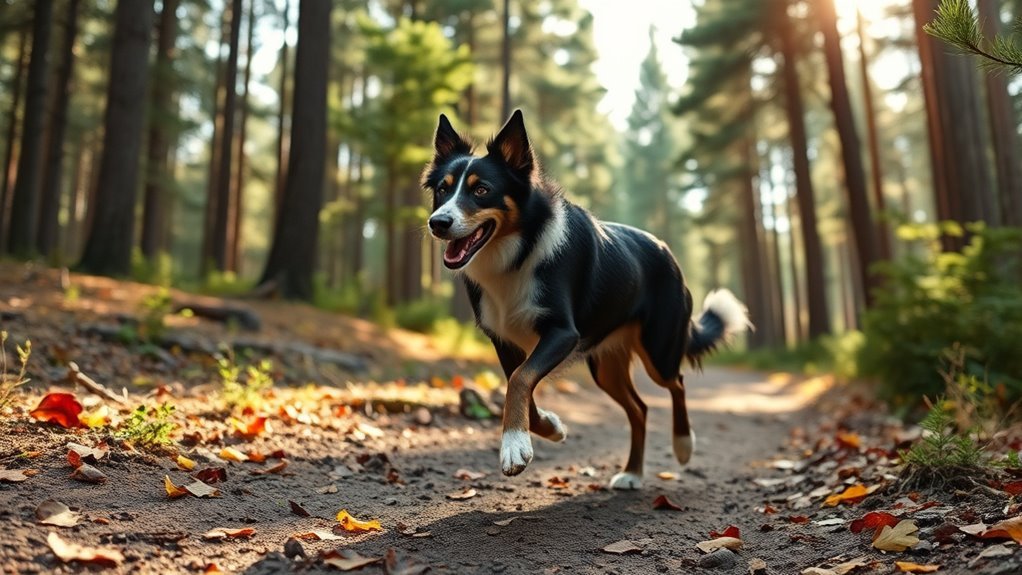
Which dog breeds thrive on trail runs through the woods? High-energy dog breeds like Border Collies, Labradors, Vizslas, and German Shorthaired Pointers excel in trail running thanks to their stamina and agility.
Medium to large breeds such as Golden Retrievers and Siberian Huskies also handle longer distances well in natural environments. They’re built for endurance and love being outdoors.
For safety, avoid brachycephalic breeds like Bulldogs and Pugs, as they struggle with breathing during intense exercise. Smaller breeds like Chihuahuas and Yorkies usually lack the stamina needed for extended runs and tire quickly.
When choosing ideal dog breeds for trail running, consider each dog’s individual health, age, and training level to ensure safety. Picking the right breed helps you enjoy long, safe adventures together in the woods.
Assessing Your Dog’s Fitness and Endurance
Before taking your dog on long trail runs, you need to evaluate their fitness and endurance carefully. Start by considering your dog’s age and breed, as puppies under 12 months shouldn’t engage in structured running.
High-energy breeds like Border Collies and Labradors usually have greater endurance, but even they need proper conditioning. When running with your dog, watch closely for signs of overexertion—heavy panting, lagging behind, limping, or refusal to continue.
These signs mean your dog might be pushing too hard. Keep an eye on their breathing, behavior, and recovery time to help gauge their limits. Most dogs can safely run 3-5 miles if properly prepared.
But remember, evaluating your dog’s fitness regularly helps ensure they stay healthy and enjoy their trail adventures safely.
Training Your Dog for Off-Leash Trail Runs
If you want your dog to enjoy off-leash trail runs safely, you need to build a strong foundation of reliable recall and obedience. Start training in low-distraction settings, gradually increasing distance and complexity to boost focus and responsiveness.
Use positive reinforcement—like treats and praise—to encourage your dog’s good behavior and recall. Practice off-leash commands regularly in enclosed areas before venturing into more remote trails.
Always assess your dog’s behavior and obedience during training; don’t let them off-leash in environments with high wildlife activity unless you’re confident in their recall. Consistent, patient training guarantees your dog listens to you, keeping them safe and allowing you both to enjoy off-leash adventures with peace of mind.
Managing Wildlife Encounters During Runs
While off-leash trail running offers freedom and fun, it also demands careful management of wildlife encounters to keep your dog safe. You need to guarantee your off-leash dogs have excellent recall ability to quickly call them back if they approach bobcats, hogs, or deer.
Knowing the local wildlife and their activity patterns helps you anticipate potential risks. Wildlife encounters can happen suddenly, so stay alert and monitor your dog’s behavior closely to avoid startling animals.
Carry safety equipment like whistles or bear spray, so you’re prepared to react fast if you spot wildlife nearby. By combining sharp recall skills with vigilance and proper gear, you’ll minimize dangerous encounters and help your dog enjoy the woods safely.
Monitoring Signs of Fatigue and Overexertion
Keeping an eye on your dog’s energy during off-leash runs is just as important as managing wildlife encounters. Dogs often don’t signal exhaustion clearly, so monitoring subtle signs of fatigue is vital.
Look for heavy panting, drooping ears, or lagging behind. These signs of overexertion mean it’s time to slow down or rest. Tracking your dog’s energy levels and recovery helps prevent injuries.
| Sign | What to Watch For | Action Needed |
|---|---|---|
| Heavy Panting | Rapid breathing | Pause, offer water |
| Lagging Gait | Slowing down, dragging | Slow pace or stop |
| Reluctance | Hesitation to continue | Allow rest, assess |
Weather and Terrain Considerations for Trail Runs
Because weather and terrain directly affect your dog’s safety on trail runs, you need to choose routes and times carefully. Avoid hot asphalt or rocky terrain that can burn paws or cause injuries.
Check the trail condition before heading out—muddy or uneven paths increase the risk of slips, sprains, and cuts. Rainy or damp weather often makes trails slippery and hides hazards like sharp rocks or roots, so be extra cautious then.
Extreme temperatures, above 80°F or below freezing, can lead to heatstroke or hypothermia. So, plan runs during early morning or late evening when it’s cooler and more stable.
Essential Safety Gear for Running With Dogs
When running with your dog in the woods, always use a well-fitting harness and a sturdy leash to keep control. It really helps to keep your furry friend safe and close by.
Make sure your dog wears a collar with up-to-date ID tags, and consider microchipping for extra security. You never know when that little extra step might come in handy.
Don’t forget reflective gear or LED lights to boost visibility in low-light conditions. It’s a simple way to make sure both of you stay seen and safe out there.
Leashes and Harnesses
Although running with your dog can be exhilarating, you need the right leash and harness to keep both of you safe. Choose a well-fitting harness designed specifically for running—it prevents strain on your dog’s neck and gives you better control.
Pair it with a sturdy, adjustable leash that can handle sudden pulls, ensuring safety whether you’re on- or off-leash. Hands-free waist leashes or bungee leashes are great options to absorb shocks and reduce jerks during your run.
Don’t forget to pick harnesses and leashes with reflective elements to improve safety in low-light or wooded areas. Always check your gear for wear and replace anything damaged to maintain maximum protection.
With the right equipment, you can enjoy your run without worrying about your dog’s safety. It just makes the whole experience way more fun and stress-free!
Visibility and Identification
To keep your dog visible and identifiable during runs, especially in low-light or wooded areas, equip them with reflective collars, harnesses, or LED safety lights. This safety gear enhances visibility, helping you spot your dog and alerting others to their presence.
Don’t forget to attach up-to-date ID tags and consider microchipping as a permanent ID solution in case your dog gets lost. Here are three essentials to ensure your dog’s safety:
- Use high-visibility, durable leashes and harnesses for better control and added visibility.
- Regularly check all safety gear for proper fit and good condition to avoid discomfort or failure.
- Carry a flashlight or glow stick to improve your own visibility and spot your dog in dark areas.
These steps keep your dog safe and easy to find.
Best Practices for Hydration and Nutrition on Trails
Keeping your dog properly hydrated and fueled is essential for safe trail runs, especially in warm weather or during long hikes. Always carry fresh water and a portable bowl to make sure your dog drinks regularly.
Offer small treats or food at intervals to maintain energy without overloading their stomach. Watch for signs of dehydration like excessive panting, dry gums, or lethargy. If you notice any, provide water immediately.
On extended runs, consider using hydration tablets or electrolyte supplements formulated for dogs to replace lost minerals. Avoid feeding large meals right before or after exercise to prevent discomfort or bloat.
Building a Responsible Trail Running Routine
You’ll want to set clear boundaries on the trail so your dog knows where they can safely roam.
Keep a close eye on their behavior to spot any signs of fatigue or stress early.
Staying attentive helps you maintain control and keep your dog safe during every run.
Establishing Clear Boundaries
Although trail running with your dog offers freedom and adventure, establishing clear boundaries is essential for safety. You need to build a foundation of reliable recall and off-leash obedience using positive reinforcement.
Here’s how to set safety boundaries effectively:
- Train your dog to respond consistently to recall commands, even with distractions like wildlife nearby.
- Start with short, controlled runs in familiar areas to build confidence and reinforce off-leash obedience.
- Always carry a leash or long line to regain control if your dog gets distracted or ventures too far.
Monitoring Dog’s Trail Behavior
Establishing clear boundaries sets the stage for safe trail running, but staying attentive to your dog’s behavior on the trail guarantees those boundaries work in practice.
Watch your dog’s body language and energy levels closely to spot signs of overexertion or fatigue. Check paw wear regularly, especially after rough terrain runs.
Use positive reinforcement to maintain reliable recall and obedience. Gradually increase trail difficulty while monitoring your dog’s responsiveness and recovery.
Here’s a quick guide:
| Aspect | What to Monitor |
|---|---|
| Body Language | Signs of fatigue or stress |
| Energy Levels | Sudden drops or erratic behavior |
| Paw Wear | Cuts, abrasions, and wear patterns |
| Overexertion | Heavy panting, limping, or slowing down |
Post-run hydration and rest help your dog recover and stay trail-ready. Keep these tips in mind and you’ll both enjoy the trails safely!
Frequently Asked Questions
How Far Can a Dog Run Into the Forest?
Your dog can run about halfway into the forest safely. Beyond that, they’re technically running out.
Keep your dog close, watch the terrain, and make sure they respond well to your calls to stay safe. It’s all about staying alert and connected with your furry friend.
What Is the 7 7 7 Rule With Dogs?
Imagine your puppy limping after a long walk—that’s why the 7-7-7 rule says don’t let dogs under seven months run over seven miles a day, seven days a week.
It’s all about protecting their growing joints and bones. You want to keep them safe while they’re still developing.
Why Do Dogs Love to Run?
You love to see your dog run because it taps into their natural instincts, burns off energy, and boosts their mood.
Plus, it sharpens their mind and strengthens your bond. Running simply makes your dog happy and healthy.
Isn’t it great how something so simple can mean so much to them?
What Is the 150 Rule for Dogs?
Think of the 150 Rule as your dog’s monthly mileage limit—don’t let them run more than 150 miles to avoid injury.
You’ll keep them happy and healthy while balancing exercise with proper recovery.
It’s like giving their body a chance to rest so they can keep enjoying their walks and playtime without any setbacks.
Conclusion
As you venture deeper into the woods with your dog, remember that safety isn’t just a rule—it’s a promise you make to your loyal companion. Every trail you explore together strengthens your bond, but knowing how far to go keeps those moments joyful and worry-free.
So, lace up, stay prepared, and let the wild whispers guide you both. Because the safest adventures are the ones that bring you home, tails wagging and hearts full.
When it comes to how far into the woods a dog can run safely, always keep an eye on their energy levels and surroundings. Stay aware of wildlife, weather changes, and trail conditions.
By balancing fun with caution, you ensure your dog’s safety and happiness on every woodland adventure.