What Conditions Allow Mold to Grow on Wood?
You’ll find mold growing on wood when moisture surpasses 20%, especially if relative humidity stays above 65%. Mold thrives in temperatures between 20°C and 30°C, with growth slowing below 4°C and stopping above 40°C.
Wood’s natural cellulose provides mold with plenty of nutrients, and poor ventilation or leaks can trap moisture, making conditions worse.
Keeping wood dry and well-ventilated helps prevent mold. There’s more you can do to protect your wood surfaces. Just remember, controlling moisture and airflow are key to stopping mold before it starts.
Key Takeaways
- Mold grows on wood when moisture content reaches 20-25% or relative humidity exceeds 65%.
- Temperatures between 20°C and 30°C provide ideal conditions for mold growth on wood.
- Poor ventilation and temperature fluctuations cause condensation, increasing wood moisture and promoting mold.
- Wood’s cellulose and organic compounds serve as nutrients that support mold development.
- Leaks, spills, or standing water create persistent dampness that triggers mold growth on wood surfaces.
What Moisture Levels Cause Mold to Grow on Wood?
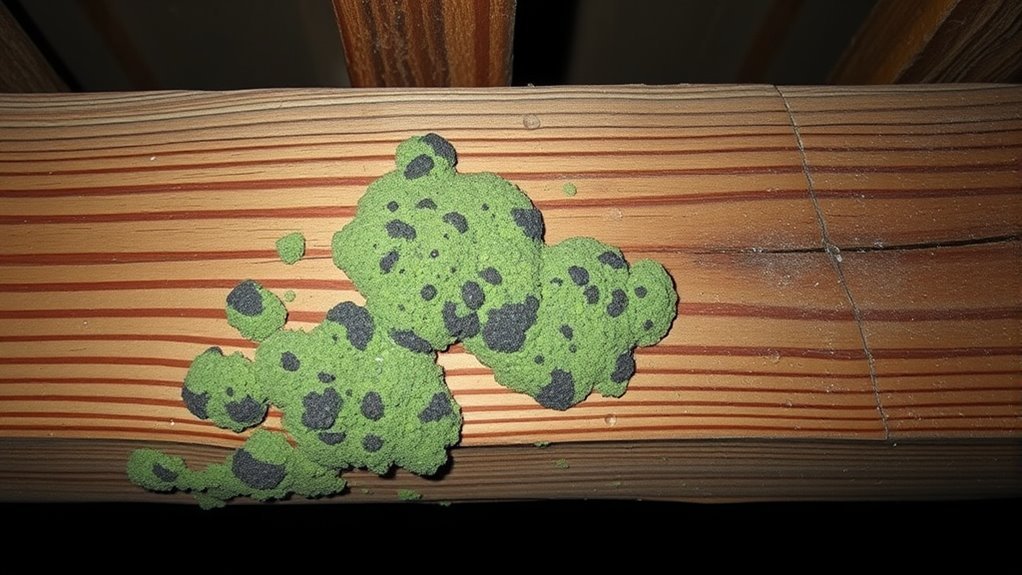
When wood’s moisture content hits around 20-25%, mold can start to grow. You’ll notice mold growth becomes more likely when the relative humidity stays above 65%, as this raises the wood’s moisture content.
If wood sits in conditions with continuous water exposure or high humidity, its moisture content can climb quickly—sometimes within 24 to 48 hours—creating an ideal environment for mold. Poor ventilation and dew point conditions let wood absorb moisture from the air, further boosting humidity levels around the wood.
Leaks, condensation, or flooding can also push moisture content beyond safe limits, triggering mold growth. To prevent this, you need to control both the wood’s moisture content and the surrounding humidity, keeping them low enough to stop mold from taking hold.
How Does Temperature Affect Mold Growth on Wood?
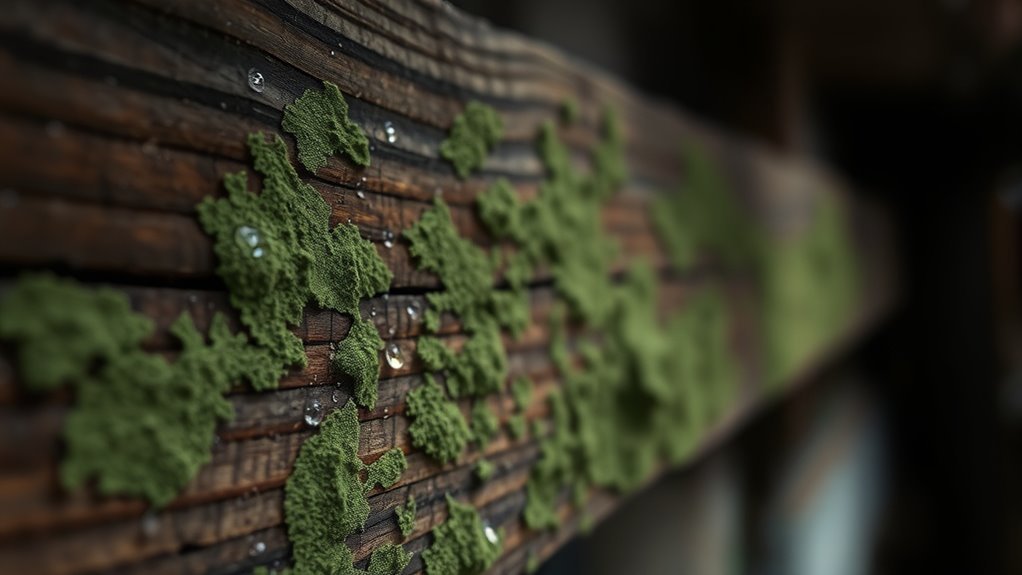
Although mold can grow on wood across a wide temperature range, it thrives best between 20°C and 30°C. When the temperature falls below 4°C, mold growth slows down a lot.
Mold grows on wood in many temperatures but thrives best between 20°C and 30°C, slowing below 4°C.
Temperatures above 40°C can actually inhibit or even kill mold spores. So, keeping indoor temperatures steady within that ideal range can encourage mold to grow on wood surfaces.
Temperature changes can also help mold grow because they cause condensation, which adds moisture to the wood. Moisture is a big deal when it comes to mold.
If you want to stop mold from growing, keeping wood in very cold or very hot environments can help prevent it from taking hold.
Knowing how temperature affects mold growth on wood is super important if you want to manage and prevent mold problems effectively.
Why Wood Is Perfect Food for Mold
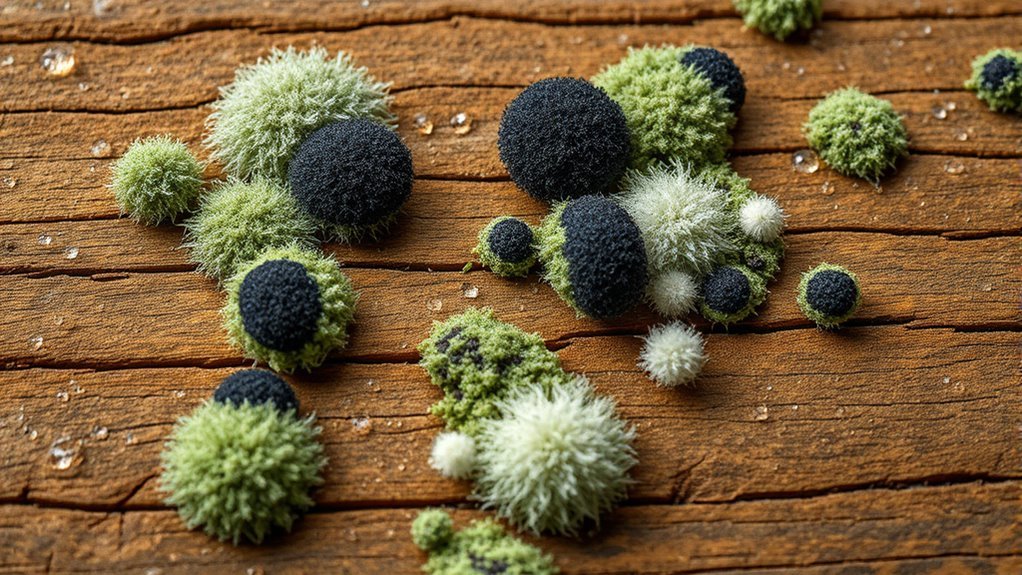
You’ll find wood is packed with nutrients like cellulose and lignin that mold fungi thrive on. Mold has adapted perfectly to break down these components and use them for growth.
When wood absorbs moisture, it becomes even easier for mold to settle and feed. It’s like wood becomes a cozy buffet for mold to dig into.
Wood Nutrient Composition
Three main components—cellulose, lignin, and hemicellulose—make wood an ideal food source for mold. Among these, cellulose stands out as the primary nutrient mold feeds on, breaking it down to thrive.
The porous structure of wood holds moisture, which you need to know is essential because mold requires damp conditions to digest these organic compounds effectively. Besides cellulose, wood contains sugars and proteins—organic compounds that provide additional nourishment for mold growth.
Even if wood is coated with paint or adhesives, mold can still access the underlying nutrients when moisture seeps in. So, when you have wood that stays moist, its rich composition of cellulose and other organic compounds creates the perfect environment for mold to establish and spread.
Mold Adaptation On Wood
Because wood offers abundant nutrients and retains moisture, mold finds it an ideal surface to colonize and grow. Its porous surface traps water, creating a damp environment perfect for mold growth.
When moisture penetrates the wood, it stays trapped, encouraging mold to thrive and decompose the wood’s structure over time. You’ll notice mold adapts quickly because:
- Wood contains cellulose, a key nutrient that fuels mold growth.
- Its porous surface enables excellent moisture retention, keeping mold spores alive.
- Mold breaks down organic compounds in wood, sustaining its habitat.
How to Identify Mold on Wood Surfaces
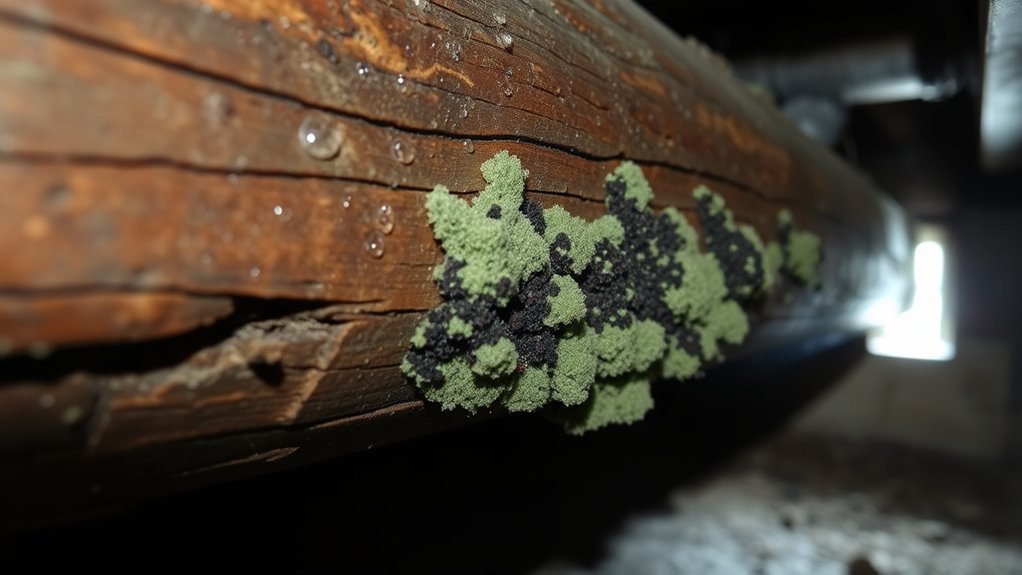
When wood surfaces show fuzzy patches in shades of black, green, white, or gray, you might be dealing with mold growth. Visible staining combined with moisture exposure from leaks or humidity often signals mold presence.
You should also watch for musty odors and soft or peeling wood. These signs suggest hidden mold beneath paint or within cracks. Early detection helps prevent damage.
| Sign | Description | What to Do |
|---|---|---|
| Fuzzy patches | Discolored spots on wood | Inspect and clean promptly |
| Visible staining | Dark or colored marks | Identify moisture source |
| Musty odor | Damp, earthy smell | Ventilate and dry area |
| Soft wood | Spongy or deteriorated texture | Check for hidden mold |
| Peeling paint | Flaking or bubbling paint | Investigate underlying wood |
How Ventilation and Airflow Help Prevent Mold
Although moisture encourages mold growth on wood, proper ventilation and airflow can considerably reduce this risk by keeping humidity levels low. When you improve ventilation, you remove stagnant, moisture-laden air, which lowers the chance mold spores will settle and grow on wood surfaces.
Proper ventilation reduces humidity and prevents mold spores from settling on wood surfaces.
Good airflow also helps dry out any moisture before it can cause damage. To keep mold at bay, focus on:
- Ensuring continuous air exchange to prevent humidity buildup
- Increasing airflow in damp areas like basements or attics
- Reducing condensation on wood surfaces by circulating dry air
Effective Ways to Prevent Mold on Wood
To keep mold off your wood, you need to control moisture by keeping humidity low and fixing leaks quickly. Make sure areas with wood have proper ventilation to prevent dampness.
Regularly maintaining your wood with inspections and protective coatings also plays a key role in stopping mold before it starts. It’s all about staying on top of things so mold doesn’t get a chance to grow.
Moisture Control Strategies
Since moisture is the primary factor that encourages mold growth on wood, controlling it is essential to prevention. You need to keep indoor moisture levels low to stop mold before it starts.
Here are some effective moisture control strategies you can use:
- Use dehumidifiers in damp areas to maintain humidity below 40%, preventing excess moisture buildup.
- Repair leaks and water intrusion promptly around windows, roofs, and plumbing to avoid moisture seeping into wood.
- Apply mold-resistant coatings or sealants on wood surfaces to create a barrier against moisture.
While ventilation helps reduce moisture, you’ll find more detailed tips on that in the next section. By actively managing moisture, you can greatly reduce the chances of mold growing on your wooden surfaces.
Proper Ventilation Techniques
Managing moisture isn’t just about fixing leaks and using dehumidifiers—you’ll also want to focus on proper ventilation to keep mold at bay. Good ventilation reduces indoor humidity levels to between 40-65%, limiting mold growth on wood surfaces.
You can use exhaust fans in bathrooms and kitchens to remove excess moisture that encourages mold on wooden structures. Ensuring adequate airflow in attics and basements prevents moisture buildup, which is essential for moisture prevention.
Regularly opening windows and using air purifiers improve air circulation and decrease moisture retention on wood. Installing ventilation systems with humidity control helps maintain ideal moisture levels, stopping mold spores from settling on wood.
Regular Wood Maintenance
Regular wood upkeep plays a crucial role in preventing mold from establishing on your wooden surfaces. By concentrating on moisture regulation and controlling indoor humidity, you can effectively deter mold development.
Start by routinely inspecting your wood for any signs of water damage or dampness. It’s important to address these issues early before they get worse.
Maintain indoor humidity levels between 40-50%. This helps create an environment where mold finds it hard to flourish.
Finally, protect your wood with sealants or finishes that act as moisture barriers. These coatings keep the wood safe from excess moisture.
Here are three essential wood maintenance tips to prevent mold:
- Monitor and repair leaks or spills promptly to eliminate moisture sources.
- Use dehumidifiers or ventilation to keep indoor humidity in check.
- Apply protective coatings to wood surfaces regularly.
Frequently Asked Questions
How Do You Stop Mold From Growing on Wood?
You stop mold on wood by keeping humidity low, sealing surfaces with mold-resistant paint, and ensuring good ventilation. Fixing leaks quickly also helps a lot.
Using dehumidifiers can make a big difference too. Plus, drying wood thoroughly after water exposure is key to preventing moisture buildup.
Is 10% Moisture in Wood Bad?
At 10%, wood isn’t bad; you won’t face mold mayhem yet. But don’t get careless—keep levels low, or moisture might multiply mold risks,
making your wood vulnerable to unwelcome fungal foes.
What Are the First Signs of Mold Sickness?
You’ll notice coughing, sneezing, and throat irritation first. You might also get nasal congestion, itchy eyes, or skin rashes.
Headaches, fatigue, and wheezing can follow, especially if you’re sensitive to mold exposure. It’s kind of like your body’s way of saying, “Hey, something’s not right here.”
How Can I Remove Mold at Home?
Start by scrubbing stubborn spots with soapy solutions or sprays like vinegar. Slip on gloves, goggles, and a mask.
Sand or toss tough, porous patches. Then, swiftly secure surfaces dry to stop spores’ spread.
It’s pretty straightforward once you get going! Just take your time and be thorough.
Conclusion
You can combat creeping, clinging mold by controlling conditions carefully. Keep moisture minimal and monitor temperature to make your wood less welcoming.
Remember, mold feeds on wood’s natural nutrients, so maintaining dry, well-ventilated spaces stops spores from spreading swiftly. Spotting signs of sneaky spores early saves surfaces.
With vigilant ventilation and wise waterproofing, you’ll ward off unwanted, unwelcome mold and win the war against wood’s worst wrecker. Controlling moisture and temperature is key because mold thrives in damp, warm environments. So, by keeping your wood dry and ensuring good airflow, you create conditions that don’t allow mold to grow.
In short, preventing mold on wood means managing moisture, temperature, and ventilation carefully. Stay alert for early signs, and use waterproofing measures to protect your wood from mold damage effectively.