How Do You Use Pine-Sol Safely on Wood Floors?
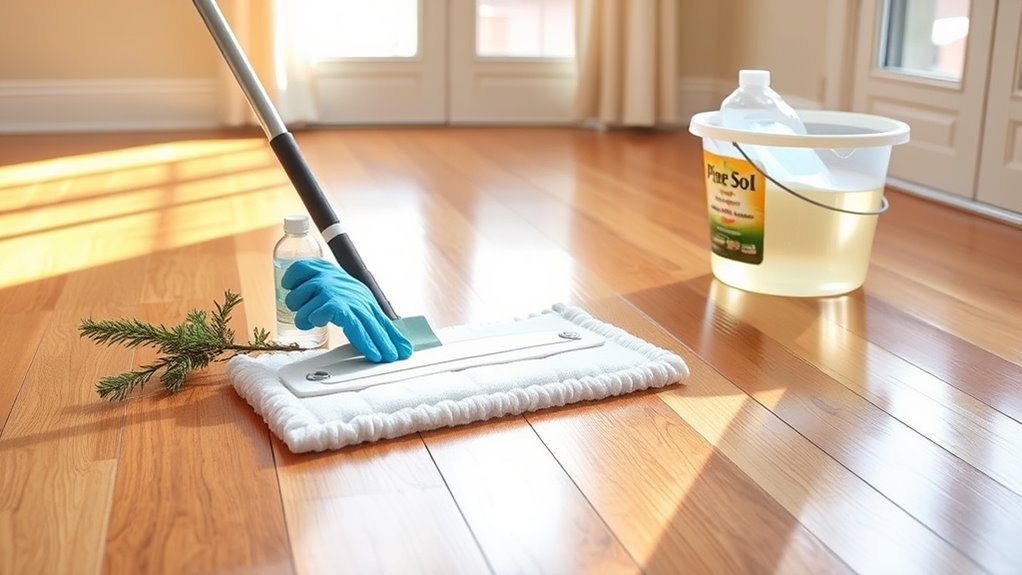
You can safely use Pine-Sol on sealed, finished wood floors by diluting about 1/4 cup per gallon of water and applying it with a damp microfiber mop. This method helps keep your wood floors clean without damaging the finish.
Just be sure to avoid using too much water, as excess moisture can cause warping or dull spots.
Never use Pine-Sol on unsealed, oiled, or laminate floors because it can cause damage. Always test a small hidden area first to make sure the cleaner won’t harm your floor’s finish.
And once you’re done cleaning, dry the floor quickly to avoid any water damage.
Stick to occasional use and follow the manufacturer’s guidelines to keep your floors looking great.
Want more tips? Keep exploring to find out how to prevent damage and discover alternative cleaners that are safe for wood floors.
Key Takeaways
- Only use Pine-Sol on sealed, finished wood floors that the manufacturer has approved. This helps avoid damage to unsealed or oiled surfaces.
- Dilute 1/4 cup of Pine-Sol per gallon of water. Never apply it undiluted directly on wood floors.
- Use a damp microfiber mop to apply the solution, and be sure to avoid using too much water. It’s a good idea to test the solution on a hidden spot first.
- Wipe up any excess moisture right away and make sure the floors dry quickly in a well-ventilated area. This prevents warping or swelling.
- Try to limit Pine-Sol use to just occasional cleaning. For regular maintenance, it’s better to stick with pH-neutral cleaners.
Is Pine-Sol Safe for Wood Floors?
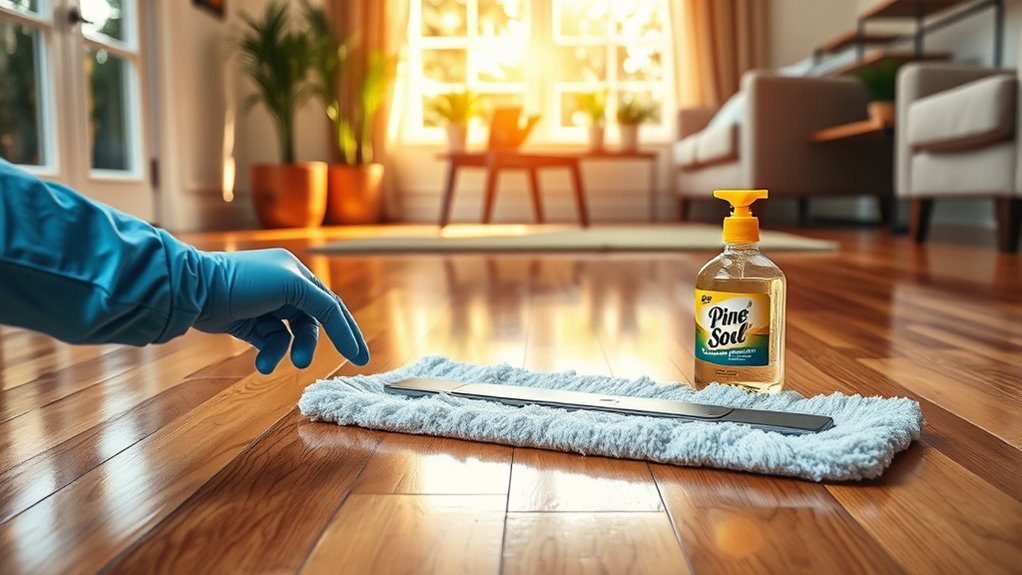
Although Pine-Sol is a popular cleaner, you shouldn’t use it on unsealed, unfinished, or oiled wood floors because its chemicals can cause damage. The acidic ingredients can erode the protective topcoat, leading to dullness and surface wear.
To keep your wood floors safe, it’s best to avoid Pine-Sol unless your floors have a sealed, finished surface. Even then, you must dilute the cleaner properly and follow manufacturer guidelines to prevent weakening the finish.
If you’re unsure about using Pine-Sol, consider a gentler cleaning solution like distilled white vinegar mixed with water. This alternative won’t harm your protective topcoat and keeps your wood floors looking their best without risking damage from harsh chemicals.
Always verify your floor type before choosing a cleaner.
Which Wood Floors Are Suitable for Occasional Pine-Sol Use
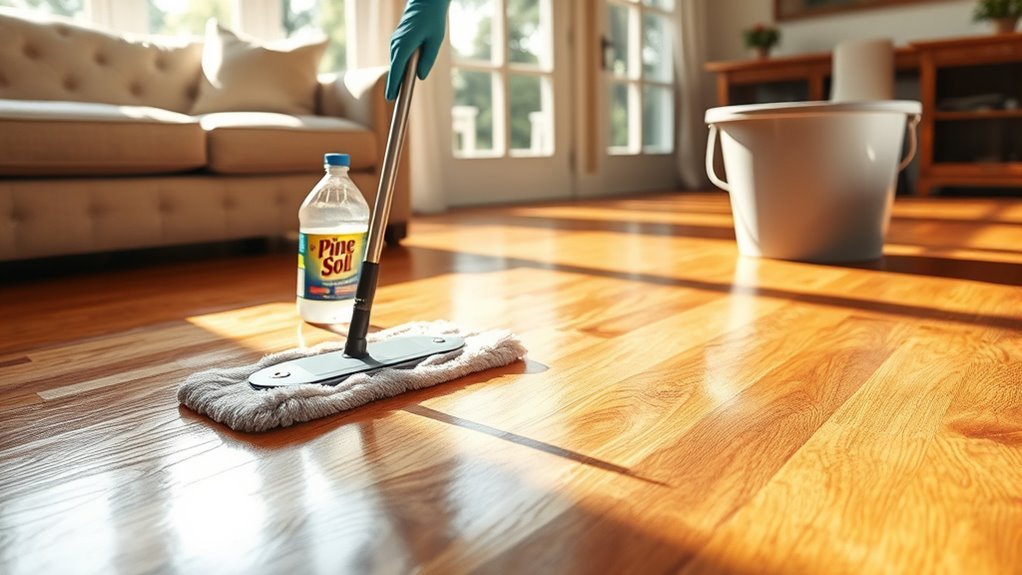
If your wood floors have a sealed finish, you can use Pine-Sol occasionally, but only when it’s properly diluted and applied sparingly. Sealed floors with a durable protective layer, like polyurethane or varnish, are suitable for this occasional cleaning method.
You should mop no more than once a month using the Original Pine-Sol diluted with water to avoid damaging the finish or the wood beneath. Always check your floor’s manufacturer guidelines or consult the installer before using Pine-Sol to guarantee compatibility.
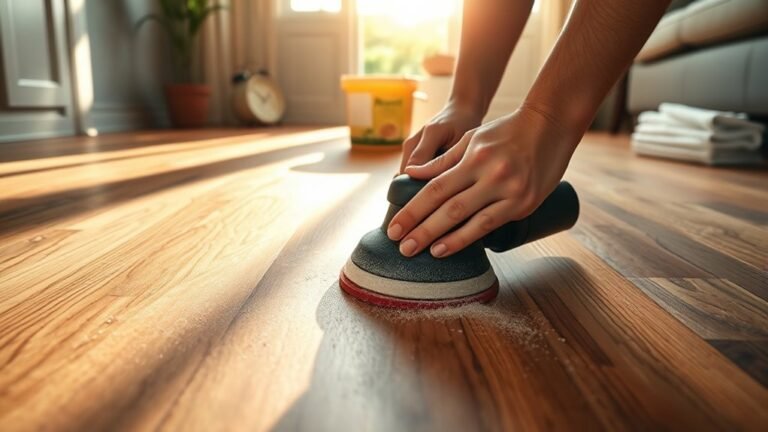
Use a damp microfiber mop to minimize moisture exposure, as excessive water can harm wood floors. Sticking to these precautions helps keep your sealed wood floors clean without risking damage from frequent or concentrated Pine-Sol use.
Wood Floors and Surfaces to Avoid With Pine-Sol
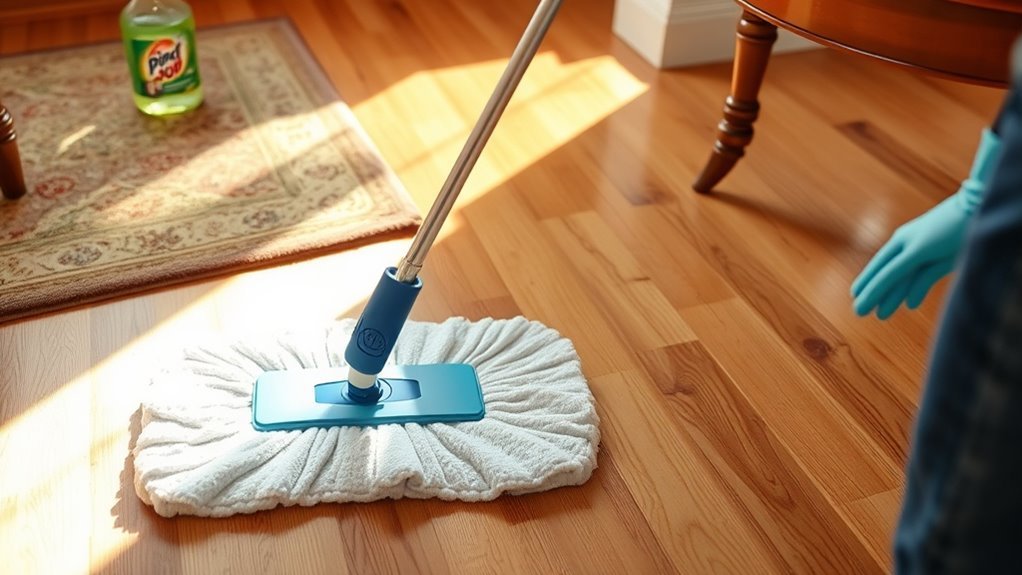
Since Pine-Sol contains acidic ingredients, you should avoid using it on certain wood floors and delicate surfaces to prevent damage. Avoid applying Pine-Sol on wood that is unfinished, unsealed, or oiled, as it may cause staining, discoloration, or strip the finish.
The acidic components can erode polyurethane finishes on hardwood floors, leading to dullness and damage over time. Also, steer clear of using Pine-Sol on laminate floors since it can create microscopic pitting and dull the wear layer, reducing the floor’s shine.
Excess moisture from mopping can seep into seams, causing swelling, cupping, or delamination of both wood and laminate surfaces. Additionally, don’t use Pine-Sol on sensitive materials like aluminum, copper, or marble, as it can cause corrosion or etching.
How to Dilute Pine-Sol for Safe Wood Floor Cleaning
When you want to clean your wood floors safely with Pine-Sol, you need to dilute it properly to protect the finish. Typically, you’ll mix about 1/4 cup of Pine-Sol per gallon of water, following the label instructions.
Always use the least concentrated solution recommended to reduce the risk of damaging your floor’s polyurethane coating or causing dullness. Never apply undiluted Pine-Sol directly, as it can erode the finish and seep into floor seams.
Before cleaning the entire floor, test your diluted mixture on a small, hidden spot to make sure it won’t cause any damage. Use a damp microfiber mop—make sure it’s only slightly moist—to apply the diluted Pine-Sol, avoiding excess water that could harm your wood floors.
Why Damp Mopping Is Better Than Wet Mopping
Although both damp and wet mopping can clean wood floors, damp mopping offers a safer approach by limiting the amount of water applied. When you use damp mopping with a lightly moist microfiber cloth or mop, you reduce excess water that can seep into seams or beneath the finish.
Wet mopping, on the other hand, soaks the mop and increases the risk of warping, swelling, or discoloration. Damp mopping controls moisture exposure, helping preserve the wood’s protective finish and preventing damage like cupping.
Studies confirm damp mopping cleans effectively while markedly lowering the chance of moisture-related harm. So, by choosing damp mopping, you maintain your wood floors’ integrity and appearance while still achieving a clean, fresh surface.
How to Dry Wood Floors After Pine-Sol Mopping
After mopping with Pine-Sol, you should immediately remove any excess water using clean, absorbent materials like microfiber cloths. This helps prevent water damage and keeps your floor looking great.
Make sure the room is well-ventilated to help the floor dry faster and prevent moisture buildup. Opening windows or turning on a fan can really speed things up.
Avoid walking on the floor until it’s completely dry to protect the finish. Trust me, it’s worth the wait to keep your wood floors in top shape!
Immediate Water Removal
Why should you immediately dry your wood floors after mopping with Pine-Sol? Immediate water removal is essential to prevent moisture from seeping into the wood. This can cause warping or swelling if left too long.
Use a clean, dry microfiber cloth or mop to blot and absorb any remaining liquid within minutes of mopping. Try to avoid letting the floor air dry because prolonged moisture can lead to damage like cupping or crowning.
| Action | Purpose |
|---|---|
| Use microfiber cloth | Absorb excess moisture |
| Blot gently | Prevent water pooling |
| Dry within minutes | Minimize water absorption |
| Avoid air drying | Prevent long-term damage |
| Use clean, dry tools | Maintain floor’s finish |
Immediate water removal keeps your wood floors safe and looking great. So, grab that cloth and dry up right away!
Use Absorbent Materials
When you finish mopping with Pine-Sol, grab a clean, absorbent microfiber cloth or towel to dry your wood floors promptly. This helps prevent excess moisture from soaking into the wood, which can cause warping or swelling.
Use a dry, soft mop or another microfiber cloth to gently remove any remaining dampness, especially along seams and edges. Avoid leaving standing water or overly wet cleaning tools on the floor to keep the wood safe.
Consider investing in a high-quality, absorbent microfiber mop pad designed to soak up moisture efficiently without scratching the finish. Make sure you thoroughly dry the floor within minutes after cleaning to maintain its finish and protect the wood’s integrity for years to come.
Ensure Proper Ventilation
Once you’ve dried your wood floors with an absorbent cloth or mop, the next step is to guarantee proper ventilation to speed up the drying process. Open windows and doors to increase airflow, allowing moisture to dissipate quickly.
You can also use fans or a dehumidifier to circulate air and reduce humidity. This helps prevent water from soaking into the wood.
Proper ventilation not only helps your floors dry faster but also prevents lingering Pine-Sol fumes, keeping your indoor air fresh. Remember, avoid walking on the floor until it’s completely dry to protect the finish from streaks or smudges.
How to Spot Pine-Sol Damage on Your Wood Floors
Although Pine-Sol is a popular cleaner, it can damage your wood floors if used improperly. You might notice dulling, hazing, or streaking, which means the acidic components are eroding the finish.
Check for a rough texture or loss of natural shine, as these signs indicate finish degradation. Discoloration or uneven patches often suggest chemical damage from Pine-Sol exposure.
If you spot swelling or warping of the wood planks, it means the cleaner has penetrated beneath the surface. Take a close look for microscopic pitting or wear marks, which reveal finish erosion from prolonged or improper use.
Catching these signs early helps you prevent further damage and maintain your wood floors’ beauty. So, keep an eye out and treat your floors with care!
Alternatives to Pine-Sol for Regular Wood Floor Cleaning
Noticing damage from Pine-Sol on your wood floors means it’s time to rethink your cleaning routine. Exploring alternatives can help preserve your floors and maintain their finish.
Opt for pH-neutral cleaners made specifically for hardwood or laminate floors. Regular dry dust mopping or vacuuming with a soft brush attachment minimizes dirt buildup and reduces how often you need to do wet cleaning.
When mopping, use a microfiber cloth dampened with distilled water or a recommended cleaner. This helps avoid excess moisture, which is a big no-no for wood floors.
| Alternative Cleaner | Key Benefit |
|---|---|
| pH-neutral hardwood cleaner | Safe for finish, gentle |
| Microfiber damp mop | Controls moisture, effective |
| Soft brush vacuum | Removes debris, prevents scratches |
And one more thing—avoid acidic or homemade solutions like vinegar. They can actually harm your wood floors over time.
What Flooring Manufacturers Recommend for Safe Cleaning
You should always check your flooring manufacturer’s guidelines before choosing a cleaner. Most recommend pH-neutral or approved cleaning products to protect your wood floors.
Using harsh chemicals like Pine-Sol can damage finishes and may even void your warranty. So, it’s really important to stick with what they suggest to keep your floors looking great.
Manufacturer Cleaning Guidelines
How should you clean wood floors to keep them looking their best? Following manufacturer cleaning guidelines is key to preserving your floor’s finish and warranty. Most manufacturers recommend using pH-neutral, non-abrasive cleaners designed specifically for wood floors.
Avoid acidic products like Pine-Sol, since they can damage finishes and break down protective sealants. Instead, use a damp microfiber mop and steer clear of soaking your floor. Always check your flooring’s care instructions before trying any new cleaning chemical.
Keep these tips in mind:
- Use pH-neutral, wood-safe cleaners
- Avoid acidic or abrasive products
- Damp mop with microfiber cloths only
- Don’t saturate floors with water
- Follow your manufacturer’s specific care instructions
These steps really help maintain your floor’s beauty and durability. Just a little care goes a long way!
Approved Cleaning Products
A key part of keeping your wood floors in top condition is using approved cleaning products recommended by manufacturers. Most flooring brands suggest pH-neutral cleaners made specifically for wood floors to prevent damage from acidic or alkaline substances like Pine-Sol.
Before using any product, always check your flooring’s care guide or manufacturer’s instructions to guarantee it’s safe. Many manufacturers warn against harsh chemicals that can erode finishes and void warranties.
Instead, they recommend cleaning with a damp microfiber cloth or mop paired with mild, approved cleaning products designed for wood surfaces. Sticking to these approved cleaning products helps maintain your floor’s appearance and durability, protecting your investment while avoiding costly repairs or refinishing.
How to Fix Pine-Sol Damage on Wood Floors
Although Pine-Sol can leave unwanted residue on wood floors, you can minimize damage by promptly wiping the area with a damp microfiber cloth. If you notice dullness or hazing, take action quickly to protect your floor’s finish and clear coating.
Here’s how to fix Pine-Sol damage:
- Use a pH-neutral wood floor cleaner to gently remove chemical buildup.
- Lightly buff the affected area with a soft cloth to restore shine.
- Apply a matching wood floor polish or sealant if the clear coating is compromised.
- Avoid harsh chemicals that can worsen damage.
- For severe or widespread damage, consult a flooring professional for sanding, refinishing, or replacement.
Following these steps helps maintain your floor’s beauty and longevity after Pine-Sol exposure. It’s all about acting fast and being gentle with your floors.
Frequently Asked Questions
Should You Use Pine-Sol on Real Wood Floors?
You shouldn’t use Pine-Sol on real wood floors because it can damage the finish and cause swelling.
Instead, stick to pH-neutral, manufacturer-approved cleaners to keep your wood floors safe and looking great. Trust me, your floors will thank you!
Can I Use Dawn to Clean Luxury Vinyl Plank Flooring?
Imagine a gentle breeze wiping dust away—yes, you can use Dawn on luxury vinyl plank flooring.
Just mix a few drops with water, mop softly, then rinse and dry to keep your floors gleaming without damage.
It’s an easy and effective way to keep things clean without worrying about harm. Give it a try!
What’s the Best Homemade Wood Cleaner?
The best homemade wood cleaner mixes equal parts water and vinegar. Use a damp microfiber cloth to clean gently. Add a few drops of natural oil for shine.
Always test a small area first to avoid damage. It’s a simple trick that really helps keep your wood looking great without any fuss.
What Should You Not Clean Laminate Floors With?
You might think Pine-Sol is safe, but don’t use it on laminate floors. Avoid acidic, abrasive cleaners, harsh solvents, ammonia, steam mops, and excessive water—they’ll damage the surface, cause swelling, or ruin your flooring’s finish.
Seriously, these things can mess up your floors pretty fast. So, it’s best to stick with gentle cleaners made specifically for laminate. Your floors will thank you!
Conclusion
Now that you know how to use Pine-Sol safely on wood floors, won’t you agree it’s all about careful dilution and cautious application? Remember, not all wood floors can handle Pine-Sol, so always check your floor type first.
Stick to damp mopping and avoid overusing this cleaner to protect your wood’s finish. When in doubt, opt for gentler alternatives or follow your flooring manufacturer’s advice.
Using Pine-Sol safely on wood floors means you’re taking the right steps to maintain their beauty and durability. Careful dilution prevents damage, and cautious application keeps the finish intact. Always consider your specific wood floor type before applying Pine-Sol, because some finishes may be more sensitive than others. Damp mopping is key—it cleans without soaking the wood. If you’re unsure, choosing gentler cleaning options or checking with your floor’s manufacturer can save you from costly repairs. So, for safe and effective wood floor cleaning, think careful dilution, cautious application, and know your floor type. That’s how you keep your wood floors looking their best with Pine-Sol.